
Leopard Print Area Rugs: 3 Sizes and Styles Compared

For leopard print area rugs, DweIke Leopard Rug, 8×10 suits rooms that need broad coverage, with its 8×10-foot size and low-pile surface. Choose Leopard Faux-Wool Rug, 5×7 or Lairep Leopard Shag Rug, 4×6 instead for a smaller footprint and a fluffier feel.
Area rugs cover a defined part of a floor rather than wall-to-wall; size and pile height shape how they fit under furniture and how easily doors clear them.
We earn a commission if you buy through links on this page. As an Amazon Associate I earn from qualifying purchases. Products are compared on manufacturer specifications, not hands-on testing.
- Best overall: DweIke Leopard Rug, 8×10 – Its 8×10-foot size covers more floor area, and its low pile is suited to frequent foot traffic.
- Best for soft cushioning: Leopard Faux-Wool Rug, 5×7 – The 5×7-foot faux-wool rug has a fluffy surface and TPR backing.
- Best for a compact room: Lairep Leopard Shag Rug, 4×6 – Its 4×6-foot footprint is the smallest of these options, with a plush shag surface.
| Product | Best for | Size | Surface | Backing | Shop |
|---|---|---|---|---|---|
| DweIke Leopard Rug, 8×10 | Large rooms | 8 x 10 ft | Low-pile faux wool | TPE rubber | Check Price on Amazon |
| Leopard Faux-Wool Rug, 5×7 | Soft cushioning | 5 x 7 ft | Fluffy faux wool | TPR coating | Check Price on Amazon |
| Lairep Leopard Shag Rug, 4×6 | Small spaces | 4 x 6 ft | Velvet shag | — | Check Price on Amazon |
Leopard Print Area Rugs Compared
Compare the footprint, surface feel, and backing to match a rug to the room and its furniture.
DweIke Leopard Rug, 8×10
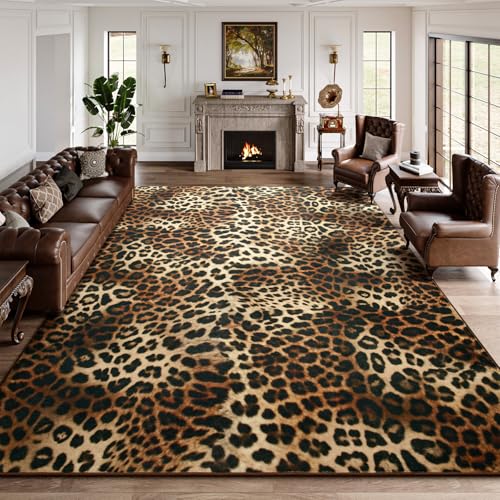
DweIke Leopard Rug, 8×10 is the largest option here and uses a low-pile surface rather than a fluffy or shaggy one. The maker describes its artificial-wool fibers as soft and stain resistant, and says the rug does not shed. Its 8×10-foot rectangular footprint suits a living or dining area where a smaller rug would leave more floor uncovered. The TPE rubber backing is intended to help keep it in place. Low pile can be easier to clear with a door, but buyers seeking a plush underfoot feel should consider the shaggier alternatives.
Bottom line: Pick this for broad coverage and a lower-pile surface.
Leopard Faux-Wool Rug, 5×7

Leopard Faux-Wool Rug, 5×7 offers the middle footprint among these rugs and a fluffier surface than DweIke Leopard Rug, 8×10. Its faux-wool pile is described by the maker as soft and fade resistant, with cushioning underfoot. The 5×7-foot rectangular size can define a smaller seating or bedroom area without extending as far as an 8×10. The TPR-coated backing is designed for grip. Its fluffy texture can be a drawback where a chair rolls across the rug or where a lower profile is needed; measure door clearance and furniture placement before choosing it.
Bottom line: Choose this when a cushioned feel matters more than a low profile.
Lairep Leopard Shag Rug, 4×6

Lairep Leopard Shag Rug, 4×6 has the most compact footprint and the deepest, shag-style feel among these choices. The maker says its surface uses high-density velvet and its center layer includes thickened shock-absorbing sponge for cushioning. At 4×6 feet, the rectangular rug is better suited to a smaller zone, such as beside a bed or in a dorm, than to covering a broad living-room seating group. Its plush construction may not suit a doorway with little clearance or furniture that needs to sit level on a low pile.
Bottom line: Pick this for a small area where plush texture is the priority.
Choose a rug size by furniture layout
Measure the furniture zone before choosing a leopard print area rug, because placement matters as much as the room’s total dimensions. An 8×10-foot rug generally accommodates the front legs of a sofa and chairs in a larger seating group; a 5×7-foot rug can anchor a smaller arrangement, while a 4×6-foot rug typically defines a compact spot. These are planning ranges, not fixed rules: leave visible floor around the rug and keep walkways clear. Measure the intended rug footprint with painter’s tape, then check that chair legs stay on the rug when pulled out. For a living-room seating group wider than 8 feet, confirm that the chosen rug can reach beneath the front legs rather than stopping at the coffee table.
Compare low pile, fluffy pile, and shag
Low-pile rugs have shorter fibers and are often easier to vacuum and fit beneath doors than higher-pile rugs. Fluffy and shag surfaces feel plusher, but can hold more debris between fibers and may make furniture less stable. Pile height matters at transitions: measure the floor-to-door gap and leave clearance for the rug, especially at a door that swings over it. A simple choice rule is to favor low pile when a door has less than about 1 inch of clearance above the bare floor; a taller rug may catch. Check the rug’s edge and the door swing, since a threshold or hinge can reduce usable clearance.
Keep a rug stable and clean
A nonslip backing helps reduce movement, but it does not make every floor or placement safe. Use the rug on a clean, dry, level surface; dust, moisture, and curled corners can reduce grip and create a trip hazard. Smooth the rug flat after unpacking and keep its edges out of busy walking paths. Vacuum regularly using a setting suited to the pile; a beater bar can pull or tangle long fibers, so use suction-only for shag if the vacuum allows it. For spills, blot promptly rather than rubbing liquid deeper into the fibers, and follow the care label before washing. Check that the rug and floor are fully dry before putting the rug back.
Match rug placement to room use
Bedroom rugs often work beside or partly beneath a bed, while living-room rugs usually anchor a seating group; those layouts require different footprints. In a dining area, measure with chairs pulled out so chair legs do not repeatedly catch the rug edge. A rug should not block a door, cover a floor vent, or sit where its edge creates a trip point. Before moving furniture onto a plush rug, check that table or chair legs sit evenly and that rolling casters still move safely. If children or pets use the room, keep loose corners flat and clean spills promptly; a nonslip backing is helpful, but supervision and a clear walking path remain important.
Frequently Asked Questions
How much floor should an area rug cover?
A living-room rug often works when it reaches under at least the front legs of the seating. Measure the furniture group first; an 8×10-foot rug is a common starting point for larger arrangements, while compact zones may suit 4×6 or 5×7 feet.
Will a shag rug fit under a door?
A shag rug fits only if the door clears its total thickness and any raised threshold. Measure the gap above the bare floor and test the full swing; less than about 1 inch of clearance favors a low-pile rug.
How should I clean a fluffy area rug?
Vacuum a fluffy rug regularly with suction appropriate to its pile, since a rotating beater can snag longer fibers. Blot fresh spills without rubbing, and check the care label before attempting machine washing.
Do nonslip rug backings replace a rug pad?
A nonslip backing may reduce movement on a clean, dry, level floor, but it cannot guarantee grip in every condition. If the rug shifts or curls, a compatible rug pad can help stabilize it; check compatibility with the floor finish.
What size rug works under a dining table?
Choose a rug large enough that chairs remain on it when pulled back from the table. Measure the table and add the chair pull-out distance on every side, then compare that footprint with the room’s clear floor area.