
Best Pillow for Cervical Stenosis: 3 Options Compared

Among these options, Osteo Hollow Cervical Pillow, Queen is the clearest starting point because its Queen size gives two listed profile heights, 5.2 and 4.1 inches. A cervical pillow is shaped to support the neck, but no pillow can treat cervical stenosis or open a narrowed spinal canal.
Choose based on the height that keeps your neck comfortable and aligned in your usual sleep position, and ask your clinician before changing sleep support if symptoms are new or worsening.
We earn a commission if you buy through links on this page. As an Amazon Associate I earn from qualifying purchases. Products are compared on manufacturer specifications, not hands-on testing.
- Best overall: Osteo Hollow Cervical Pillow, Queen – Its Queen dimensions include two listed profile heights, 5.2 and 4.1 inches.
- Best for cooling: Ultra Pain Relief Cooling Pillow, Queen – The product name emphasizes cooling, and its design includes a hollow concave center.
- Best for compact sizing: Derila Ergo Cervical Pillow, 21.25 in – Its dimensions are 21.25 by 14.17 by 4.72 inches.
| Product | Best for | Size | Profile height | Sleep positions | Shop |
|---|---|---|---|---|---|
| Osteo Hollow Cervical Pillow, Queen | Two-height profile | 25.5 × 16.5 in | 5.2 / 4.1 in | Side, back | Check Price on Amazon |
| Ultra Pain Relief Cooling Pillow, Queen | Hollow contour | Queen | — | Side, back, stomach | Check Price on Amazon |
| Derila Ergo Cervical Pillow, 21.25 in | Compact dimensions | 21.25 × 14.17 in | 4.72 in | Side, back | Check Price on Amazon |
Cervical Pillows for Neck Support
Compare the pillow shape, stated dimensions and sleep-position guidance before choosing a height.
Osteo Hollow Cervical Pillow, Queen
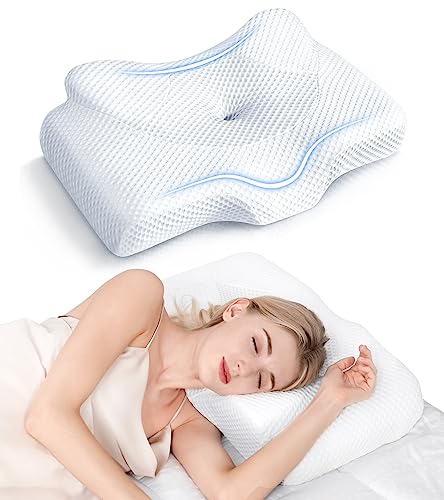
Two listed profile heights set Osteo Hollow Cervical Pillow, Queen apart: its Queen pillow measures 25.5 by 16.5 inches and is described with 5.2- and 4.1-inch heights. The hollow center and memory foam are intended to cradle the head, while the product name identifies a cooling case. The maker says the design supports cervical alignment; that is a design claim, not evidence that it treats stenosis. This option may suit side or back sleepers comparing two heights. Its sleep-position guidance does not include stomach sleeping, so stomach sleepers should consider whether the shape suits their posture.
Bottom line: Choose this if you sleep on your side or back and want the two-height profile.
Ultra Pain Relief Cooling Pillow, Queen
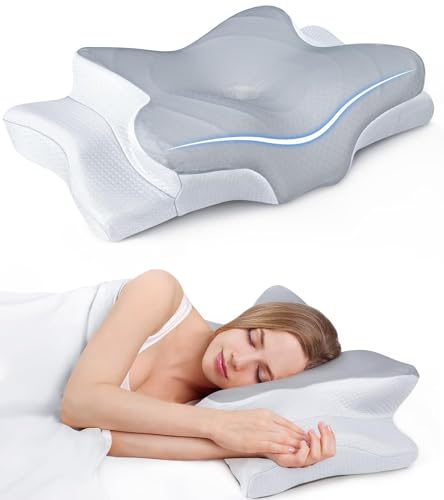
A 15-degree tilted hollow concave surface distinguishes Ultra Pain Relief Cooling Pillow, Queen, alongside six contour zones and a Queen size. The maker says the shape cradles the head and maintains the neck’s natural curve; this is a design claim, not proof of relief for cervical stenosis. The product name also emphasizes cooling, and the fit includes side, back and stomach sleepers. It may suit someone seeking a multi-zone contour rather than a simple flat pillow. The dimensions do not give a usable profile height, which matters because a contour that is too high or low can feel uncomfortable.
Bottom line: Choose this if the six-zone hollow contour and broad sleep-position fit match your preferences.
Derila Ergo Cervical Pillow, 21.25 in

A defined 4.72-inch height and a smaller 21.25-by-14.17-inch footprint distinguish Derila Ergo Cervical Pillow, 21.25 in. Its high-density memory foam is described as adapting to the sleeper’s shape, and a cooling pillowcase is included. The maker presents the pillow for back and side sleepers; stomach sleepers are not among those named positions. This option may suit a buyer comparing a compact contour pillow with a known height. A fixed height can be a limitation if that loft does not keep the neck comfortable in your sleeping posture, so check your alignment rather than assuming contour means a fit.
Bottom line: Choose this if the compact dimensions and 4.72-inch height suit your side- or back-sleeping posture.
How to Choose a Cervical Pillow for Stenosis
Choose the pillow height that keeps your head level with your spine in your usual sleep position; a contour shape alone cannot address cervical stenosis. Side sleepers generally need enough loft to fill the space between shoulder and head, while back sleepers usually need less. Shoulder width and mattress softness change the gap, so there is no single height that fits everyone. Use a measurable check: when lying on your side, your nose should point straight ahead rather than toward the mattress or ceiling. Stop using a pillow that increases arm tingling, weakness, or pain, and contact a clinician about changing symptoms. A pillow is sleep support, not treatment for narrowing in the cervical spinal canal.
Pillow Height and Sleeping Position
Match pillow height to posture before comparing cooling covers or contour features. Side sleepers need to bridge the shoulder-to-head gap; back sleepers need a lower support that does not push the chin toward the chest. Stomach sleeping commonly twists the neck to one side, so a thick contour pillow can make that posture less comfortable. Mattresses also matter: a soft mattress lets the shoulder sink farther and may reduce the loft needed. Try a neutral-neck check in your normal position for several minutes; if your head tilts up, down, or sideways, the height is a poor match. The products differ in how clearly they identify a height, so compare dimensions rather than relying on words such as ergonomic.
Contour Foam and Cooling Features
Contour pillows use shaped areas or a central hollow to position the head and support the neck, while cooling usually refers to a cover or material feature rather than a medical effect. Memory foam responds to body heat and pressure, so it may feel firmer in a cool room and softer as it warms. A removable or washable cover can help with routine cleaning; follow its care label because foam cores often need different care than fabric covers. Do not assume a hollow center relieves nerve compression: cervical stenosis is a structural narrowing that needs individualized medical guidance. Choose the shape you can rest on without worsening symptoms, not the one with the most dramatic health wording.
When to Seek Medical Guidance
New or worsening weakness, numbness, coordination problems, or trouble walking deserve prompt medical attention rather than a pillow adjustment. Cervical stenosis can affect nerves or the spinal cord, and symptoms differ by person; a pillow cannot diagnose the cause. If ordinary repositioning causes radiating arm pain or tingling, stop that position and ask a clinician how to sleep comfortably. Avoid forcing the neck into a deep contour or stretching it aggressively to “correct” alignment. A useful pillow decision is modest: it should keep the neck comfortable and neutral through your usual sleep posture. Bring the pillow’s dimensions or product name to a clinician if you are unsure whether its height or shape is appropriate for your condition.
Frequently Asked Questions
Can a cervical pillow cure cervical stenosis?
No, a pillow cannot reverse narrowing of the cervical spinal canal. It can only provide sleep support, and worsening weakness, numbness, or coordination problems should be discussed promptly with a clinician.
What pillow height works for side sleepers?
The right height fills the gap between the shoulder and head while keeping the nose pointed straight ahead. Shoulder width and mattress softness change that gap, so use neutral alignment rather than a universal inch measurement.
Is a contour pillow good for stomach sleeping?
A thick contour can be uncomfortable for stomach sleepers because that posture turns the neck to one side. If stomach sleeping is your normal position, avoid forcing your head into a raised hollow or ridge.
Can memory foam feel different in cold rooms?
Yes, memory foam often feels firmer when cool and softens as it warms under body heat. Give it time to adapt, but switch positions or stop using it if symptoms worsen.
When should neck symptoms need medical attention?
Seek prompt medical advice for new or worsening arm weakness, numbness, coordination trouble, or difficulty walking. These signs need assessment rather than an attempt to fix alignment with a different pillow.