
Best Plastic to Glass Adhesive: 4 Options Compared

For most small plastic-to-glass repairs, Loctite Glass Glue, 0.07 oz is the clearest match because it bonds glass to certain plastics and dries clear. Choose Gorilla Super Glue Brush & Nozzle, 12 g if you want brush-or-tip application; for mosaic work, 200 g Mosaic Tile Glue is made for tiles rather than quick repairs.
Adhesives do not bond every plastic equally: identify the plastic first, especially if the part is load-bearing or exposed to water.
We earn a commission if you buy through links on this page. As an Amazon Associate I earn from qualifying purchases. Products are compared on manufacturer specifications, not hands-on testing.
- Best overall: Loctite Glass Glue, 0.07 oz – Its use directly covers glass and certain plastics, with a clear, fast bond and no clamping requirement.
- Best for precise application: Gorilla Super Glue Brush & Nozzle, 12 g – The dual brush and precision-tip applicator gives two ways to control placement.
- Best for mosaics: 200 g Mosaic Tile Glue – Its mosaic-specific formulation is intended to secure glass and mirror mosaic pieces.
| Product | Best for | Pack size | Drying or set time | Application | Shop |
|---|---|---|---|---|---|
| Loctite Glass Glue, 0.07 oz | Small repairs | 0.07 oz | Fast-drying | Tube | Check Price on Amazon |
| Gorilla Super Glue Brush & Nozzle, 12 g | Controlled placement | 0.42 oz | 10–45 seconds | Brush and precision tip | Check Price on Amazon |
| Glass Super Glue Liquid, 1 oz Thick | Thicker application | 1 oz | 60–180 seconds | Thick liquid | Check Price on Amazon |
| 200 g Mosaic Tile Glue | Mosaic projects | 7.05 oz | About 2 hours | Mosaic adhesive | Check Price on Amazon |
Plastic to Glass Adhesives
Match the adhesive’s surfaces and application style to the repair before choosing a formula.
Loctite Glass Glue, 0.07 oz

For a small, clear glass-to-plastic repair, this formula is specifically described as bonding glass to certain plastics, as well as glass to itself. The 0.07-ounce tube is a compact option for limited work, and the fast bond requires no clamping. It is also described as waterproof, heat resistant, and dishwasher safe, but its indoor-only use is an important boundary: do not choose it for an exterior repair. Plastic compatibility is selective, so confirm that the specific plastic is among the compatible materials before relying on the bond.
Bottom line: Pick this for a small indoor repair when the plastic is compatible.
Gorilla Super Glue Brush & Nozzle, 12 g

The brush-and-nozzle format is the key distinction here: use the brush for broader coverage or the precision tip for a narrow application. The clear, all-purpose formula lists both glass and plastic among its compatible materials and dries in 10–45 seconds without clamping. Its quick set leaves little time to reposition parts, so align the pieces before applying adhesive and work on a small area at a time. This is a practical choice for repairs where application control matters more than a dedicated glass-glue formula.
Bottom line: Choose this when a brush or precision tip suits the repair.
Glass Super Glue Liquid, 1 oz Thick
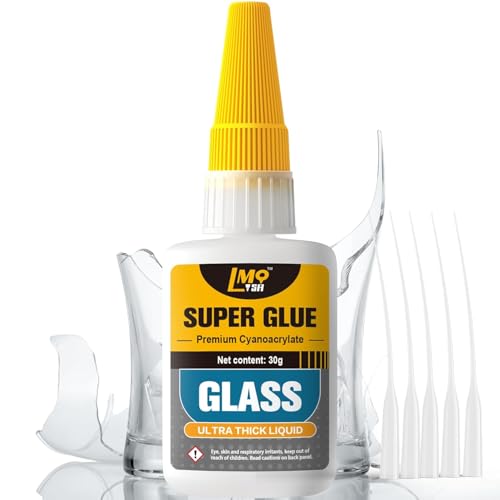
The thick liquid consistency and 1-ounce size distinguish this glass-focused cyanoacrylate from the smaller repair tubes. Its use includes glass and plastic, and the maker says it dries in 60–180 seconds and fully cures within 24 hours. That slower initial set may give more handling time than a 10–45-second formula, while the clear finish suits repairs where appearance matters. The broad surface claims do not establish compatibility with every plastic, and the product is not presented as a specialist solution for load-bearing joints.
Bottom line: Pick this when a thicker glass-repair adhesive is useful.
200 g Mosaic Tile Glue

For decorative projects rather than a quick spot repair, this 200-gram adhesive is formulated for mosaic glass pieces and mirror mosaic tiles, with plastic also included among its surfaces. Its slow drying time—about two hours, with full cure in 24 hours—contrasts with instant super glues and suits arranging tile pieces before the bond sets. The maker describes it as waterproof and weather resistant. Its mosaic-oriented use and slower set make it a poor fit for a small repair that needs a rapid, precise bond.
Bottom line: Choose this for mosaic pieces, not a fast household repair.
How to Choose Plastic to Glass Adhesive
Start by confirming both surfaces are compatible with the adhesive, not merely that the label names glass and plastic. Plastic families differ: polyethylene (PE) and polypropylene (PP) are particularly difficult to bond with ordinary adhesives because their surfaces have low surface energy; cyanoacrylate products may need a compatible primer or a different adhesive system. Clean, dry surfaces help prevent dust, oil, or moisture from interfering with contact. For small, closely fitting areas, a fast-setting adhesive can work; for a decorative project that needs positioning time, a slower mosaic adhesive may be more manageable. If the joint carries a load or faces outdoor exposure, select only a product explicitly intended for those conditions.
Surface Fit and Bond Strength
A close-fitting joint is a better match for thin super glue than a wide gap: cyanoacrylate works best in a thin bond line and can form a brittle joint when flexed or struck. Roughen only the plastic if its material guidance permits; scratching glass can weaken it and create a safety hazard. Pressing parts together evenly helps keep the adhesive layer thin, but avoid squeezing glue onto visible glass. For a cracked pane, a handle, or a joint that supports weight, do not assume a general-purpose adhesive restores the original strength. Check the plastic resin mark where available and test compatibility on a hidden area before committing to a visible repair.
Repair Glue Versus Mosaic Adhesive
Use fast-setting super glue for small, aligned repairs; use a mosaic adhesive when the job is assembling decorative tile pieces and slower positioning is useful. The table distinguishes these approaches by their intended work, not by a universal strength ranking. A clear-drying label helps reduce visible residue but does not guarantee an invisible seam, especially if the fracture leaves a gap or excess adhesive spreads across the surface. For transparent joints exposed to sunlight, UV-curing glass adhesive is another common category, but it requires suitable light access and plastic compatibility. Match the adhesive system to the exact plastic, glass type, joint design, and exposure.
| Need | Suitable adhesive approach | Key limitation |
|---|---|---|
| Small, close-fitting repair | Fast-setting super glue | Limited repositioning time |
| Decorative tile arrangement | Mosaic adhesive | Slower cure |
| Flexible or impact-loaded joint | Adhesive specified for that load and material | General-purpose glue may be brittle |
Safe Application and Curing
Cyanoacrylate glue bonds skin quickly and can irritate eyes, so keep fingers clear of the joint and work with ventilation; avoid cotton or wool contact because cyanoacrylate can react with these fibers and generate heat. Use only a small amount, keep the parts still through the initial set, and allow the full cure time before exposing the bond to water or stress. A fast set is not the same as full cure: follow the product’s cure window. Do not use an adhesive on food-contact surfaces, aquariums, or safety-critical glass unless its instructions specifically permit that use.
Frequently Asked Questions
Can super glue bond plastic to glass?
Yes, some cyanoacrylate formulas bond glass and certain plastics, but compatibility depends on the plastic resin. Polyethylene and polypropylene are especially difficult to bond with ordinary super glue.
How long should plastic to glass glue cure?
Initial setting and full cure are different stages: some super glues set in seconds, while full cure can take up to 24 hours. Keep the joint still and avoid loading or wetting it until its cure period ends.
Should I sand glass before gluing plastic?
Do not sand glass for a glue repair, since scratching can weaken the pane and create a safety risk. Clean both surfaces and use only surface preparation allowed for the specific plastic.
Can glued plastic and glass go in a dishwasher?
Only use a bond in a dishwasher when the adhesive specifically permits dishwasher exposure and both parts are dishwasher-safe. Heat and repeated water exposure can stress a joint even when an adhesive is described as waterproof.
Is super glue suitable for a load-bearing glass joint?
A general-purpose super glue should not be assumed safe for a load-bearing joint because cyanoacrylate bonds can be brittle under flex or impact. Use an adhesive specifically rated for the materials and load, or replace the damaged part.