
Best Pool Table Pocket Reducers: 5 Sets Compared

MAOTUWEILAI 6-Piece Reducers suits most players because it specifies fit for standard 6- to 12-foot tables and both corner and side pockets. Choose 6-Piece Flush-Mount Reducers instead if a low-profile, flush-to-rail design is the deciding factor, or 6-Pack Decorative Pocket Reducers if removable decorative panels matter.
We earn a commission if you buy through links on this page. As an Amazon Associate I earn from qualifying purchases. Products are compared on manufacturer specifications, not hands-on testing.
- Best overall: MAOTUWEILAI 6-Piece Reducers – Its compatibility covers standard 6- to 12-foot tables and both corner and side pockets.
- Best for a clear stroke area: 6-Piece Flush-Mount Reducers – The flat-mounted spring design is intended to sit flush with the rail and minimize cue interference.
- Best for customization: 6-Pack Decorative Pocket Reducers – Its decorative panels can be replaced with custom artwork or logos.
| Product | Best for | Table fit | Distinct feature | Shop |
|---|---|---|---|---|
| MAOTUWEILAI 6-Piece Reducers | Wide table-size fit | Standard 6–12 ft tables | Spring steel and rubber | Check Price on Amazon |
| 6-Piece Flush-Mount Reducers | Low-profile design | Standard pockets | Flush-to-rail spring | Check Price on Amazon |
| 6-Pack Removable Spring Reducers | Full-table drills | Compatible pocket shapes | Removable spring tension | Check Price on Amazon |
| Chonway 6-Piece Reducers | Several table sizes | Standard 6–12 ft tables | Spring rods and rubber | Check Price on Amazon |
| 6-Pack Decorative Pocket Reducers | Custom artwork | Most standard tables | Replaceable artwork panels | Check Price on Amazon |
Pool Table Pocket Reducers Compared
Compare the fit and design features to choose a set that suits your table and practice setup.
MAOTUWEILAI 6-Piece Reducers
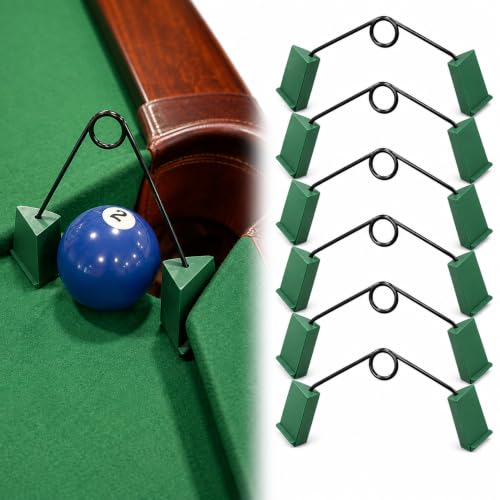
MAOTUWEILAI 6-Piece Reducers gives the widest table-size range in this group: standard 6- to 12-foot tables, including corner and side pockets. The six-piece set uses spring steel and rubber, and the maker says it installs and removes without damaging the table. That breadth makes it a practical match for players whose table size or pocket positions need to be accounted for. Its fit claim is for standard tables, so buyers with an unusual or nonstandard pocket shape should confirm compatibility before ordering.
Bottom line: Choose this set if broad standard-table size compatibility is your priority.
6-Piece Flush-Mount Reducers

6-Piece Flush-Mount Reducers stands apart for its flat-mounted spring design, which is meant to sit flush against the rail rather than above it. The maker says this layout keeps the shooting area clear and minimizes cue interference while preserving the pocket’s natural shape. Its six-piece count is suited to a full table setup. The fit description focuses on standard pockets rather than a specific table-size range, so players with unusual pocket geometry should check fit before choosing it.
Bottom line: Pick this design if keeping the cue area clear is more important than a table-size range.
6-Pack Removable Spring Reducers

6-Pack Removable Spring Reducers emphasizes full-table coverage for corner and side pockets where the pocket shape is compatible. Its removable spring-tension installation is presented as tool-free, and rubber contact blocks are part of the design. The inward extensions make off-center shots easier to notice during aim and stroke drills, according to the maker. The qualification about compatible pocket shapes matters: players should compare their pocket geometry rather than assuming the set suits every table.
Bottom line: Choose this set for six-pocket practice when your pocket shapes are compatible.
Chonway 6-Piece Reducers

Chonway 6-Piece Reducers names standard 6-, 7-, 8-, 9-, 10- and 12-foot tables, covering the sizes individually. The set is intended for both corner and side pockets. Assembly involves inserting both ends of each spring rod into a rubber block, so it differs from a set described as ready to use immediately. That setup step may matter to buyers who want to start practice without assembling parts; the compatibility still applies to standard tables.
Bottom line: Pick this set if you want a fit across several standard table sizes.
6-Pack Decorative Pocket Reducers

6-Pack Decorative Pocket Reducers is the decorative option: each reducer has a pre-installed panel, and the panel can be removed and replaced with custom artwork, logos or personal designs. The six-piece set is described as fitting most standard pool tables. That makes it a fit for players who want a personalized look alongside tighter-pocket practice. Its compatibility wording is broader and less specific than sets that name table sizes, so owners of a nonstandard table should verify the fit first.
Bottom line: Choose this set if interchangeable decorative panels are part of the appeal.
How to Choose Pool Table Pocket Reducers
Choose a six-piece set when you want to practice across all six pockets; a smaller set would leave some pocket positions unaltered. Compare the table-size range and whether corner and side pockets are both included, since side and corner pockets have different shapes. Mounting style also matters: low-profile designs are intended to sit near the rail, while spring-and-rubber designs may require assembly. A useful decision rule is to choose a set that explicitly names your table size and both pocket positions; if your table is nonstandard, confirm the pocket shape before buying. Reducers narrow the target opening, so they are best used as a deliberate practice variation rather than a permanent change to the table.
| Need | What to compare |
|---|---|
| Cover all pockets | Six-piece set |
| Fit a known table size | Named size range |
| Keep the rail area clear | Flush-mount design |
| Personalize appearance | Replaceable panels |
Pool Table Size and Pocket Fit
Pool table length alone does not guarantee reducer fit: pocket shape and the way a reducer contacts the rail also matter. Standard home tables are commonly 7, 8 or 9 feet long, while the products here include claims covering additional sizes; measure or identify the table before choosing by range. A full-size table has six pockets—four corners and two side pockets—so a six-piece set is the typical count for full coverage. Side pockets are shaped differently from corner pockets, which is why a fit claim should mention both positions or suitable pocket shapes. If your table uses nonstandard pockets, confirm fit instead of relying on its length alone.
Using Pocket Reducers for Practice
Pocket reducers make the target smaller, increasing the demand for accurate aim and clean contact; they do not change the table’s underlying pocket shape or cushion layout. Start with straight-in shots from several distances, then try angled shots and position drills only after you can repeat the simpler shot. Keep the reducers installed consistently across the pockets used in a drill so the target does not change from shot to shot. A practical rule is to remove the aids for ordinary play or whenever another player expects the table’s normal openings. Before shooting, check that each insert is seated securely and clear of the cue’s path, especially with a design that stands above the rail.
Frequently Asked Questions
How many pocket reducers does a pool table need?
A pool table has six pockets, so six reducers provide full-table coverage. A partial set can be used for focused drills, but the untreated pockets will keep their normal openings.
Do pool table pocket reducers fit side pockets?
Some sets are specified for both side and corner pockets, but fit can depend on pocket shape. Check that the set covers both positions or confirms compatibility with your table’s pocket geometry.
Can pocket reducers damage pool table rails?
Reducer attachment methods differ, including spring and rubber contact designs. Check that each piece seats securely without forcing it against the rail, and remove it if it shifts or interferes with the cue.
Do pocket reducers make pool practice harder?
Yes, a narrower opening makes accurate aim more demanding. Begin with straight shots before adding distance or angle so you can isolate changes in aim and stroke.