
Best Portable Water Pick: 4 Cordless Flossers Compared

Waterpik Cordless Advanced WP-580 is the best portable water pick for most people because it combines three settings, four tips and a travel kit with a maker-claimed battery life of up to four weeks per charge. Choose COSLUS C20 Water Flosser instead if a larger 10.1 oz tank matters more than a travel kit; choose usmile C10 Portable Water Flosser for its maker-claimed 95-day battery life.
A portable water pick is a handheld irrigator that directs water between teeth and along the gumline. It can help clean around braces or dental work, but it does not replace brushing or any interdental cleaning your dentist recommends.
We earn a commission if you buy through links on this page. As an Amazon Associate I earn from qualifying purchases. Products are compared on manufacturer specifications, not hands-on testing.
- Best overall: Waterpik Cordless Advanced WP-580 – Three settings, four tips and a travel kit suit varied routines; the maker claims up to four weeks per charge.
- Best for a large tank: COSLUS C20 Water Flosser – Its 10.1 oz reservoir is larger than the other capacities.
- Best for long battery life: usmile C10 Portable Water Flosser – The maker claims up to 95 days of battery life, and the unit has four modes.
| Product | Best for | Reservoir capacity | Settings | Tips included | Shop |
|---|---|---|---|---|---|
| Waterpik Cordless Advanced WP-580 | Travel kit | — | 3 | 4 | Check Price on Amazon |
| COSLUS C20 Water Flosser | Large reservoir | 10.1 fl oz | — | — | Check Price on Amazon |
| usmile C10 Portable Water Flosser | Long battery interval | 6.1 fl oz | 4 | — | Check Price on Amazon |
| Waterpik Cordless Pulse 3100 WF-20 | Simple controls | 6 fl oz | 2 | 2 | Check Price on Amazon |
Portable Water Picks Compared
Compare tank capacity, controls and included tips to match a cordless flosser to your routine.
Waterpik Cordless Advanced WP-580

Waterpik Cordless Advanced WP-580 stands out for its travel accessories: it comes with a microfiber travel bag, tip-storage case and water plug, alongside four tips and three settings. The maker claims up to four weeks of use per charge, and the unit has a rotating tip and a rechargeable battery. Its ADA Seal of Acceptance is relevant if that credential matters to your choice. This is a strong fit for someone who wants options for shared or changing oral-care needs while traveling.
Bottom line: Choose this if a travel kit and multiple tips matter more than a tank size.
COSLUS C20 Water Flosser

COSLUS C20 Water Flosser has the largest reservoir at 10.1 fl oz, making tank capacity its clearest advantage over the other options. The maker says it uses dual-thread pulses at 1,400–1,800 pulses per minute and identifies the model as ADA accepted. Its cordless design and rechargeable format suit home use or travel when reducing refills matters more than packing size. The limitation is that the maker does not give its settings or tip count, so buyers who want several pressure choices or replacement tips included should compare those features before choosing.
Bottom line: Pick this if a large tank is your main priority.
usmile C10 Portable Water Flosser
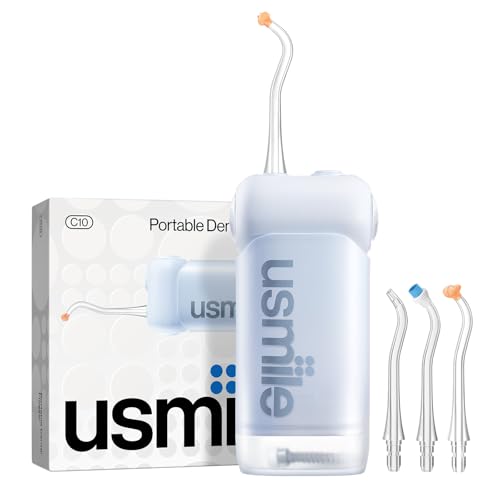
usmile C10 Portable Water Flosser differentiates itself with a maker-claimed battery life of up to 95 days and a collapsible design. Its 6.1 fl oz tank and four modes give travelers a capacity and several flow choices in a cordless format; the maker also identifies it as IPX7. This can suit someone who wants to pack a compact flosser and avoid frequent charging. The tank is smaller than COSLUS C20 Water Flosser’s, so people who prefer fewer refills may favor that larger reservoir.
Bottom line: Choose this if a collapsible design and long maker-claimed battery life fit your travel routine.
Waterpik Cordless Pulse 3100 WF-20
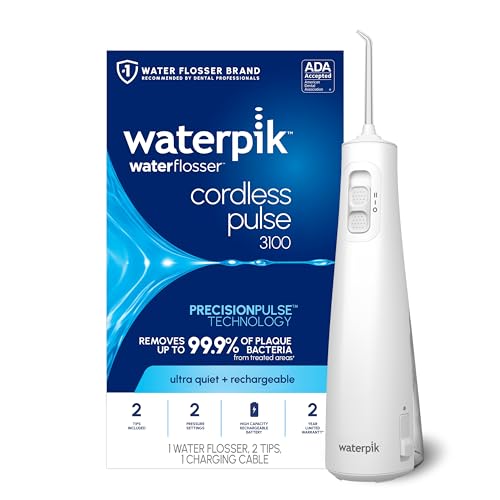
Waterpik Cordless Pulse 3100 WF-20 keeps the controls simple with two settings and includes a precision tip plus a tongue-cleaner tip. Its 6 fl oz removable reservoir is top-rack dishwasher safe, and the maker says the rechargeable unit can be used in the shower. The non-slip grip and quiet water-flossing feature distinguish it from options with more modes or travel accessories. This suits someone who wants a compact routine with a tongue-cleaning tip included. The tradeoff is fewer pressure settings than Waterpik Cordless Advanced WP-580 or usmile C10 Portable Water Flosser, which matters if you want more adjustment choices.
Bottom line: Pick this for two straightforward settings and a tongue-cleaner tip.
How to choose a portable water pick
Choose by tank size and control options first: larger reservoirs reduce refills, while more settings provide more flow choices. In these picks, stated tanks run from 6 fl oz to 10.1 fl oz, and settings range from two to four where given. A 6 fl oz reservoir holds ¾ cup; a 10 fl oz tank holds 1¼ cups, useful reference points when estimating how often you may refill. Water flossers pulse a stream through a nozzle, so aim along the gumline and between teeth rather than forcing the stream into gum tissue. If you have braces, implants, or recent dental work, ask your dentist which tip and pressure setting to use. Keep brushing with fluoride toothpaste; a water flosser is an interdental-cleaning aid, not a toothbrush.
Portable water pick tank size and travel fit
Match reservoir capacity to your willingness to refill: a 10.1 fl oz tank gives more water per fill than a 6 fl oz tank, while collapsible construction may pack more easily. Handheld cordless irrigators commonly use reservoirs around 5–10 fl oz, compared with larger countertop tanks, so portable capacity involves a tradeoff between size and refilling. Check the unit’s overall measurements against your toiletry bag and the space available at the sink; these products vary in shape as well as capacity. For air travel, rechargeable devices belong in carry-on baggage under common lithium-battery guidance, but airline rules and battery limits can differ. A travel bag or voltage compatibility can help with trips, but those features do not establish that a charger or plug will work in every destination.
Portable water pick types and features
Portable water picks generally fall into rechargeable handheld models and larger countertop irrigators. Handheld models trade tank volume for a smaller footprint and fewer cords; countertop units commonly offer larger reservoirs and a base-mounted handle. Within handheld designs, prioritize the features that solve a real need: extra tips can support different cleaning tasks, while extra pressure settings allow more adjustment. ADA acceptance is a credential to look for when comparing oral-care products; it reflects review against safety and effectiveness criteria, not a guarantee of a particular result for every user. Use the table as a practical decision guide, then compare the exact tank size and included accessories against your routine.
| Need | Feature to prioritize | Tradeoff |
|---|---|---|
| Fewer refills | Larger stated reservoir | More bulk to pack |
| More flow choices | Multiple settings | More controls to navigate |
| Travel convenience | Compact or collapsible build, travel accessories | Smaller tank may need refilling |
Safe use and care for a portable water pick
Start at a comfortable low setting, especially if you are new to water flossing or have sensitive gums; a forceful stream can irritate tissue. Guide the tip slowly along the gumline and pause briefly between teeth instead of holding the stream in one spot. Empty and rinse the reservoir after use, and let it air-dry to limit standing water. Removable tanks that are dishwasher safe may be cleaned that way only as directed for the specific unit; the Cordless Pulse reservoir is identified as top-rack dishwasher safe. Replace worn tips when the stream becomes irregular or the tip shows damage, and use a tip recommended for your device. Anyone with recent oral surgery or a specific dental condition should ask a dental professional about pressure and timing before use.
Frequently Asked Questions
Can a portable water pick replace string floss?
A portable water pick should not automatically replace string floss or other interdental cleaning your dentist recommends. Water flossers direct water around teeth and gumlines, while brushing remains essential for cleaning tooth surfaces.
How much water does a portable water flosser hold?
Portable models commonly hold about 5–10 fl oz, though capacity varies by design. A 6 fl oz tank is ¾ cup, while a 10 fl oz tank is 1¼ cups.
What pressure setting should a beginner use?
Start on the lowest comfortable setting and increase only if it feels comfortable. People with braces, implants, sensitive gums, or recent dental work should ask a dentist which pressure and tip are appropriate.
How often should I clean a water flosser reservoir?
Rinse and empty the reservoir after each use, then let it air-dry to limit standing water. Follow the device-specific cleaning method; only use a dishwasher for a tank identified as dishwasher safe.
Can I bring a rechargeable water flosser on a plane?
Rechargeable devices are generally carried in cabin baggage under common lithium-battery guidance, but airline rules and battery limits can differ. Check the airline’s current requirements before travel, especially for spare batteries.