
Best Pot for Cooking Beans: 5 Options Compared

For most people, the 6-quart DENMARK cast-iron bean pot is the best pot for cooking beans because its capacity suits a substantial batch and its maker says it works on gas, electric, ceramic, and induction cooktops. Choose a lighter or wider pot if easier handling or a broader base matters more.
A bean pot is a lidded vessel for gently cooking beans; the right choice depends on your batch size, cooktop, and how much pot weight you can manage.
We earn a commission if you buy through links on this page. As an Amazon Associate I earn from qualifying purchases. Products are compared on manufacturer specifications, not hands-on testing.
- Best overall: DENMARK 6-Quart Cast-Iron Bean Pot – Its 6-quart capacity and maker-specified compatibility with four cooktop types suit many home kitchens.
- Best for lighter handling: Granite Ware 4-Qt Porcelain-Enamel Bean Pot – The 4-quart enamel-coated steel pot is smaller than the cast-iron option.
- Best for larger batches: IMUSA 7.5-Quart Caldero – The 7.5-quart caldero offers the largest capacity.
| Product | Best for | Capacity | Construction | Cooktop or oven compatibility | Shop |
|---|---|---|---|---|---|
| DENMARK 6-Quart Cast-Iron Bean Pot | All-around batches | 6 qt | Cast iron | Gas, electric, ceramic, induction | Check Price on Amazon |
| Granite Ware 4-Qt Porcelain-Enamel Bean Pot | Small batches | 4 qt | Porcelain enamel over steel | Not suitable for glass stovetops | Check Price on Amazon |
| IMUSA 7.5-Quart Caldero | Large batches | 7.5 qt | Cast aluminum | Oven-safe without lid | Check Price on Amazon |
| GOTHAM STEEL 5-Qt Ceramic Stock Pot | Strain-and-pour use | 5 qt | Ceramic nonstick | — | Check Price on Amazon |
| IMUSA 6-Qt Enamel Stock Pot | Enamel stock-pot use | 6 qt | Steel with glass enamel | Oven-safe | Check Price on Amazon |
Pots for Cooking Beans
Compare capacity and construction first, then choose a pot that fits your cooktop and usual batch size.
DENMARK 6-Quart Cast-Iron Bean Pot

The DENMARK is the only option here explicitly named a bean pot and pairs a 6-quart capacity with a cast-iron lid. Its pre-seasoned cast iron is suited to cooks who want a substantial pot for beans, soups, stews, or chili. The maker says it is compatible with gas, electric, ceramic, and induction cooktops and safe for oven and grill use up to 450°F. The bail handle supports carrying and positioning, but the 13-pound stated weight makes it a less convenient choice for anyone who wants a light, easy-to-lift pot.
Bottom line: Pick this if you want a dedicated, 6-quart cast-iron bean pot and can handle its weight.
Granite Ware 4-Qt Porcelain-Enamel Bean Pot

The Granite Ware bean pot is the smallest dedicated bean pot in this group, with a 4-quart capacity and porcelain-enamel over steel. Its non-porous cooking surface and lighter steel construction distinguish it from the heavier cast-iron option. The maker describes the surface as naturally nonstick and chip-resistant, and says the pot is not suitable for glass stovetops. That cooktop restriction matters: choose another pot if your kitchen has a glass surface, and check your usual batch size before opting for the smaller capacity.
Bottom line: Choose this for smaller batches if your cooktop is not glass.
IMUSA 7.5-Quart Caldero

The IMUSA caldero has the largest capacity here at 7.5 quarts, making it the option to consider when a 6-quart pot feels too small. Its cast-aluminum body, easy-grip handles, and tight-fitting glass lid with a steam vent differ from the lidded cast-iron and enamel bean pots. The maker says it suits beans as well as rice, soups, sauces, and stews; it is oven-safe without the lid. It is a general-purpose caldero rather than a dedicated bean pot, so choose it for capacity and versatility, not a bean pot-specific design.
Bottom line: Pick this for larger bean batches and general-purpose cooking.
GOTHAM STEEL 5-Qt Ceramic Stock Pot
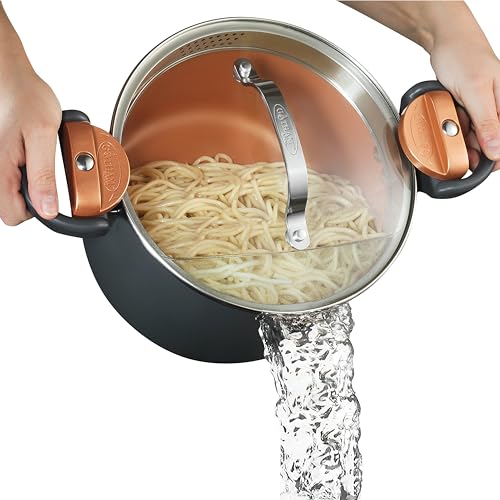
The GOTHAM STEEL stock pot stands apart with a twist-and-lock strainer lid, a feature the other options do not have. Its 5-quart capacity is between the two dedicated bean pots, and the maker describes it as a ceramic nonstick pot for pasta, soup, rice, and vegetables. The strainer lid is designed for draining liquid without a separate colander, but that function is less relevant when beans are cooked in their liquid. The features do not establish cooktop compatibility, so confirm that before choosing it for your stove.
Bottom line: Consider this if you also want a locking strainer lid for draining other foods.
IMUSA 6-Qt Enamel Stock Pot

The IMUSA enamel stock pot combines a 6-quart capacity with a steel body and blue glass-enamel coating, rather than a dedicated bean pot shape or cast-iron construction. The maker describes it for soups, stews, and pasta and says its surface is smooth and easy to clean. That makes it a general stock-pot alternative for someone who wants one vessel for several dishes. The features do not give cooktop compatibility or an oven-temperature limit, so verify those points if your cooking setup depends on them.
Bottom line: Choose this if you want a 6-quart enamel stock pot for beans and other simmered meals.
How to Choose a Bean Pot
Choose a bean pot by batch size, material, and cooktop before considering extra features. A 4-quart vessel is suitable for smaller batches; 6 to 7.5 quarts gives more room for a larger pot of beans and cooking liquid. Leave headroom rather than filling a pot to its rim, since beans expand as they absorb water and liquid can bubble during simmering. Cast iron retains heat well but is heavy; steel-based enamel and aluminum are lighter alternatives, though they differ in cooktop compatibility. A measurable rule: if your batch needs more than 6 quarts of total space, choose the 7.5-quart option rather than filling a 6-quart pot to the brim. Check pot and lid oven limits before moving cookware into an oven.
Bean Pot Materials and Cooking Methods
Cast iron, enamel-coated steel, and aluminum behave differently in the kitchen. Cast iron holds heat and is heavy, while aluminum generally responds more quickly to burner changes and is lighter to lift. Enamel provides a glass-like cooking surface over metal; avoid striking or scraping enamel because chips can expose the underlying metal. A stovetop pot gives direct control over simmering, while an oven can provide steady surrounding heat when the cookware is rated for that use. Use a burner close to the pot’s base size to reduce uneven heating, and avoid dragging cookware across a glass surface. For a glass cooktop, do not use the Granite Ware pot; its maker specifically excludes that surface.
| Need | Useful capacity or feature | Trade-off |
|---|---|---|
| Smaller batch | 4 qt | Less room for extra liquid |
| General home batch | 5–6 qt | Capacity and material vary |
| Largest batch | 7.5 qt | Requires more storage space |
How to Prepare Dried Beans Safely
Most dried beans benefit from sorting, rinsing, and soaking for 8 to 12 hours, though lentils and split peas usually cook without a soak. Soaking hydrates beans and can shorten cooking time; discard the soaking water if you want to reduce some of the compounds that cause gas. Kidney beans need special care: boil them in fresh water for at least 10 minutes before slow cooking, because a slow cooker may not reach a high enough temperature to destroy their natural toxin. Keep beans covered with water while simmering and add more hot water if the level drops. Acidic ingredients such as tomatoes or vinegar can slow softening, so add them after beans are tender.
Common Bean Pot Mistakes
Overfilling is a common mistake because dry beans swell and simmering liquid needs room to move. Keep the pot below its brim and use a gentle simmer rather than a hard boil, which can split beans and make liquid foam over. A heavy cast-iron pot needs dry, secure handling; use both hands or a suitable mitt when it is hot, and do not assume the bail handle stays cool. Match cookware to the cooktop: a pot excluded from glass surfaces can scratch or heat poorly on that burner type. For longer cooking, check liquid periodically and stir gently so beans near the bottom do not stick.
Frequently Asked Questions
How much dried beans fit in a 6-quart pot?
A 6-quart pot can hold roughly 1 to 1½ pounds of dried beans with room for water and expansion, depending on the bean and cooking method. Do not fill the pot to the rim; beans expand as they hydrate.
Do dried beans need to soak overnight?
Many dried beans can be soaked for 8 to 12 hours, but soaking is optional for most varieties. Lentils and split peas generally cook without soaking, while older beans may take longer to soften.
Can I cook kidney beans in a slow cooker?
Yes, but first boil kidney beans in fresh water for at least 10 minutes. Slow cookers may not reach a high enough temperature to destroy the toxin in raw kidney beans.
When should I add tomatoes to cooking beans?
Add tomatoes and other acidic ingredients after the beans are tender, since acid can slow softening. Salt can generally be added during cooking; keep the beans covered with liquid as they simmer.
How do I keep beans from sticking to the pot?
Cook beans at a gentle simmer, keep them covered with liquid, and stir occasionally without crushing them. Add hot water if the liquid drops below the beans, especially during a long cook.