
Best Powder for Pipe Blockage: 4 Options Compared

For most people, 18-Pack Drain Clog Remover Powder is the better match for an active pipe blockage because its powder targets hair, grease, soap scum, and food debris and comes in 18 individually wrapped packs.
Drain powders are poured into drains to address buildup, but the right choice depends on whether the drain is slow or fully blocked and what is causing the obstruction.
We earn a commission if you buy through links on this page. As an Amazon Associate I earn from qualifying purchases. Products are compared on manufacturer specifications, not hands-on testing.
- Best overall: 18-Pack Drain Clog Remover Powder – Eighteen individually wrapped packs target common clog materials including hair, grease, soap scum, and food debris.
- Best for material cautions: Magic Powder Drainage Blockage Remover – The directions identify an aluminum restriction and recommend ventilation during use.
| Product | Best for | Treatment count | Drain-use focus | Shop |
|---|---|---|---|---|
| 18-Pack Drain Clog Remover Powder | Common clogs | 18 packs | Kitchen, bath, floor drains | Check Price on Amazon |
| 400g Drain Cleaner Powder, 4-Pack | Kitchen and bath | 4 packs | Kitchen, bath, toilet pipes | Check Price on Amazon |
| Magic Powder Drainage Blockage Remover | Aluminum-free drains | — | Kitchen, bath, sewer pipes | Check Price on Amazon |
| Liapu Pipeline Dredging Agent Powder | Odor-focused use | — | Toilet, sink, floor drains | Check Price on Amazon |
Pipe blockage powders compared
Match the powder to the obstruction and the drain’s intended use before choosing.
18-Pack Drain Clog Remover Powder

For a broad mix of everyday clogs, this 18-pack powder targets grease, hair, soap scum, and food debris. Each dose is individually wrapped, and the directions say to let it sit for the recommended time before flushing with cold water. Its range includes kitchen sinks, bathrooms, showers, tubs, floor drains, and toilets, which makes it the most versatile active-clog option here. The main limitation is that the specifications do not identify a specific active ingredient or a wait time, so confirm the drain is compatible and use the package directions rather than improvising a dose.
Bottom line: Choose this for an active blockage involving common household debris.
400g Drain Cleaner Powder, 4-Pack

This four-pack is positioned for kitchen and bathroom pipe buildup, with claims covering grease, hair, and soap scum. It is a straightforward option when those are the likely causes of a slow or blocked sink, shower, or tub drain. That makes it harder to plan repeat maintenance; buyers who need a clearly described dose routine may prefer a product that specifies one.
Bottom line: Pick this when kitchen or bathroom buildup is the primary concern.
Magic Powder Drainage Blockage Remover
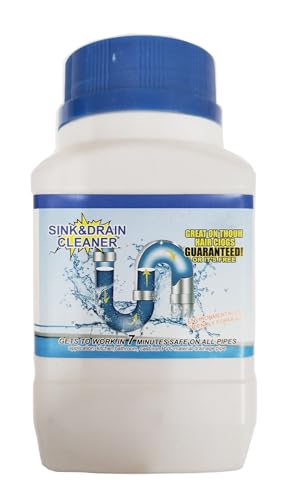
This powder stands out for its explicit material warning: the directions say not to use it on aluminum products. They describe pouring powder into the pipe and using about 60°C hot water, followed by a rinse, and recommend ventilating the room. Its use spans kitchen, bathroom, tub, shower, and sewer pipes.
Bottom line: Consider it only when the drain materials and hot-water directions are suitable.
Liapu Pipeline Dredging Agent Powder
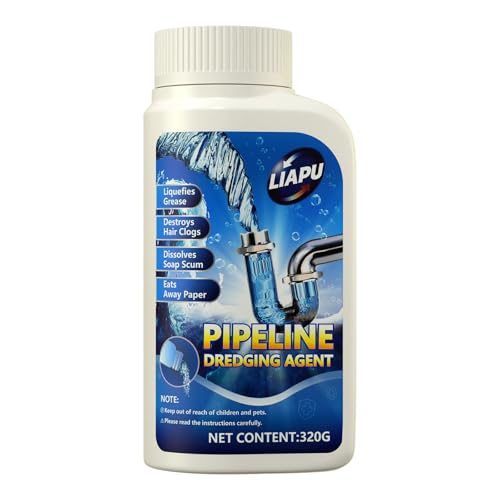
Liapu’s powder combines clog-clearing claims with an emphasis on freshness, and it names food, grease, soap scum, hair, and paper among the materials it is intended to dissolve. Its use includes toilets, kitchen sinks, and floor drains, making it relevant when odor and slow flow occur together. For a blockage, verify the instructions and material compatibility before use instead of assuming every drain is suitable.
Bottom line: Choose it when odor control and common clog materials are both priorities.
How to choose a powder for pipe blockage
Start by identifying whether the drain is slow or fully blocked and what is likely causing the problem. Hair, grease, soap scum, and food are common organic clog materials; a product naming those materials is a closer fit than an enzymatic maintenance powder that excludes hair. Enzymatic powders generally work gradually on organic residue and are better suited to upkeep than clearing a solid stoppage. For a totally backed-up drain, stop adding products if the first dose does not restore flow; repeated chemicals can leave hazardous liquid standing in the pipe. Never mix drain cleaners with bleach, acids, or another cleaner, because reactions can release heat or toxic gas.
Pipe material and drain fit
Check the material of the pipe and nearby fittings before using a drain powder, especially when directions give a specific restriction. One powder here explicitly says not to use it on aluminum and recommends ventilation; that warning should determine whether it is suitable. Kitchen and bathroom products may name several drain locations, but a toilet blockage can result from an object or excess paper rather than grease or hair, so a chemical powder may not be the right intervention. For a repeated clog in the same fixture, inspect the trap or ask a plumber rather than treating the same line repeatedly. Never combine products even if one seems ineffective.
Powder versus enzymatic maintenance cleaners
Clog-removal powders and enzymatic maintenance powders have different jobs. A powder that names hair, grease, soap, or food is aimed at common blockage material, while the enzymatic option here is for slow-running drains and preventive use and excludes hair clogs and inorganic buildup. Enzymes are typically slower acting than caustic drain openers and are not a fast response to standing water. Use this comparison to match the drain condition to the product type rather than treating a maintenance product as an emergency unblocker.
| Drain condition | Better product type | Why |
|---|---|---|
| Slow drain, organic residue | Enzymatic maintenance powder | Intended for routine upkeep |
| Hair, grease, soap, or food blockage | Clog-removal powder naming that material | Closer match to the obstruction |
| Unknown material or standing water | Pause chemical treatment | Identify cause before adding more cleaner |
Safe use and common mistakes
Drain-cleaning chemicals can burn skin and eyes, so keep children away, avoid splashes, and use gloves and eye protection when handling a powder. Ventilate the room, particularly when the product directions call for it, and use only the water temperature and flush method specified on the package; hot water is not universally safe for every pipe or cleaner. Do not plunge a drain after adding chemical cleaner because it can splash corrosive liquid. If a drain remains blocked after one correctly used dose, avoid stacking treatments and seek mechanical clearing or professional help.
Frequently Asked Questions
Can drain powder clear a completely blocked pipe?
A drain powder may help when the obstruction is made of materials the formula targets, such as hair or grease. Standing water or a blockage caused by an object can prevent the cleaner from reaching the clog, so do not keep adding doses if flow does not return.
How long should drain cleaner powder sit?
Use the wait time on the product directions; there is no safe universal dwell time for all formulas. One powder here says to allow the recommended time and then flush with cold water, while other products require their own directions.
Can drain cleaner powder damage aluminum pipes?
Yes, at least one powder in this comparison explicitly warns against use on aluminum products. Identify the pipe and fittings before use, and do not assume a general pipe-safe claim overrides a specific material warning.
Is enzymatic drain powder good for hair clogs?
No; the enzymatic powder here specifically excludes hair-clogged drains. It is intended for slow-running drains and preventative maintenance, so choose a product whose target includes hair for that obstruction.
Should I use hot water with drain powder?
Only use hot water when that product’s directions call for it and specify a suitable temperature. One powder recommends about 60°C water, while another directs a cold-water flush; mixing these directions can create a safety or compatibility problem.