
Best Rear Main Seal Sealer: 5 Options Compared

For a rear main seal sealer, Bar’s Leaks Rear Main Seal Repair is the direct match because it is an oil additive made for rear main seal leaks. Choose a replacement cover or seal kit instead when the repair calls for removing parts; those products are not pour-in sealers.
A rear main seal closes the back of the crankshaft where it exits the engine toward the transmission, so confirm the leak source before choosing an additive.
We earn a commission if you buy through links on this page. As an Amazon Associate I earn from qualifying purchases. Products are compared on manufacturer specifications, not hands-on testing.
- Best overall: Bar’s Leaks Rear Main Seal Repair – It is the only pour-in additive here, and its maker says most leaks stop within 100 miles or two days.
- Best for LS cover replacement: LS Rear Main Seal Cover Kit – The kit includes a cover, gasket, and 12 bolts for listed LS-based engines.
- Best for seal service: BS 40640 Rear Main Seal Kit – The kit is intended for rear crankshaft seal and rear cover gasket service.
| Product | Best for | Type | Application | Included | Shop |
|---|---|---|---|---|---|
| Bar’s Leaks Rear Main Seal Repair | Pour-in leak additive | Oil additive | Engine crankcase | 16.9 oz bottle | Check Price on Amazon |
| LS Rear Main Seal Cover Kit | LS cover replacement | Cover kit | Selected LS engines, 1997–2013 | Cover, gasket, 12 bolts | Check Price on Amazon |
| Rear Main Seal Cover Kit, Chevy/GMC Applications | Listed GM vehicles | Cover kit | Selected Chevy and GMC applications | Cover, gasket, bolt | Check Price on Amazon |
| Dorman 635-518 Rear Main Seal Cover | Cover and gasket repair | Cover kit | Select models | Cover, gasket, hardware | Check Price on Amazon |
| BS 40640 Rear Main Seal Kit | Seal replacement service | Seal kit | Selected LS Gen III/IV applications | Seal, O-ring, rear cover gasket | Check Price on Amazon |
Rear Main Seal Sealer and Replacement Parts
Separate oil additives from mechanical repair parts, then match any replacement kit to the engine and vehicle.
Bar’s Leaks Rear Main Seal Repair
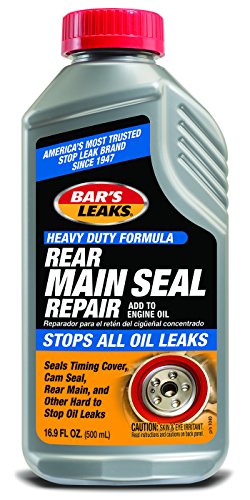
Unlike the other options here, this is a pour-in treatment rather than a replacement part. Bar’s Leaks says to add the full 16.9-ounce bottle to the crankcase, where engine oil is added, at or between oil changes, without overfilling. The maker says most leaks stop within 100 miles or two days of driving. It is the closest fit for someone seeking an additive for a suspected rear main seal seep. It is not a substitute for replacing a damaged seal or cover, so a persistent leak may still need mechanical diagnosis and repair.
Bottom line: Choose this for a pour-in treatment when the leak source and oil level are being monitored.
LS Rear Main Seal Cover Kit

This is a mechanical cover kit, not a fluid sealer, and its engine range makes it the most specifically identified LS option here. The package includes a cast-aluminum rear cover, gasket, and 12 bolts; the product describes compatibility with selected 4.8L, 5.3L, 5.7L, 6.0L, and 6.2L LS-based engines from 1997–2013. It suits an owner planning cover service on a matching engine. It does not provide the pour-in treatment sought by someone trying to avoid disassembly, and the wide vehicle list still calls for engine-level fit verification.
Bottom line: Choose this for a matching LS engine when replacing the rear cover.
Rear Main Seal Cover Kit, Chevy/GMC Applications

This cover kit stands out for its lengthy Chevy and GMC application list, rather than an identified crankcase additive. It is described for multiple vehicles and engine sizes, including selected 4.8L, 5.3L, 6.0L, and 6.2L applications, and replaces part numbers 635-518, 12633579, and 12639250. That makes it a possible route for a vehicle-specific mechanical repair when the engine matches. The compatibility spans many model years and configurations, so verify the exact engine and year before selecting it; this kit will not seal a leak simply by adding it to engine oil.
Bottom line: Choose this only when the vehicle and engine match its applications.
Dorman 635-518 Rear Main Seal Cover

This Dorman option is a replacement cover kit with a new gasket, installation hardware, and an updated seal design; it is not a pour-in sealer. Its die-cast aluminum cover measures 11.4 inches long by 11.1 inches wide and 1.5 inches high. The package is aimed at a mechanical repair where this specific cover fits, rather than an attempt to slow a leak with an oil additive. The fitment is limited to select models, so it is less useful without an exact vehicle match; confirm the vehicle application before choosing a cover-based repair.
Bottom line: Choose this for a verified application needing the Dorman cover and gasket kit.
BS 40640 Rear Main Seal Kit
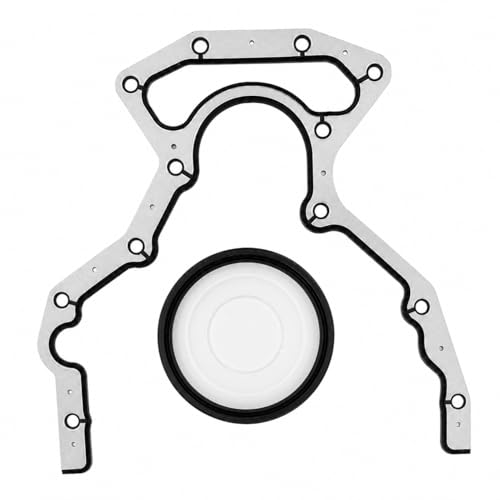
Unlike cover-only kits, this option is intended for rear crankshaft seal and rear cover gasket service, and its contents include a rear main seal, O-ring, and rear cover gasket. It is described for selected 4.8L, 5.3L, 5.7L, 6.0L, and 6.2L LS Gen III/IV engine applications. This fits a repair plan involving worn or damaged sealing components, not a pour-in additive approach. Its application is not universal: compare the engine code, seal shape, gasket style, O-ring size, and mounting surface with the original parts before committing to the repair.
Bottom line: Choose this for a matched LS seal-and-gasket service rather than an additive.
How to choose a rear main seal sealer
A pour-in additive and a replacement seal solve different repair problems. The rear main seal sits at the back of the engine around the crankshaft, while a rear cover supports or houses sealing components; replacing either generally means mechanical service, not simply adding a product to the oil. Use an additive only when you are specifically seeking a crankcase treatment and have a reasonable basis to suspect a seal seep. Choose a mechanical kit when inspection points to a damaged seal, cover, gasket, or mounting surface. A useful decision rule is simple: if the leak source has not been confirmed, identify it before selecting a remedy, because oil from above can run down and appear near the rear of the engine.
When a pour-in additive may fit
A pour-in rear main seal treatment is intended to go into engine oil, not onto the outside of the engine. Such products are generally aimed at minor seepage associated with aging elastomer seals; they cannot restore a broken seal, correct a damaged crankshaft surface, or repair a loose or cracked cover. Bar’s Leaks Rear Main Seal Repair gives a maker-claimed timeframe of 100 miles or two days for most leaks to stop, but that is not a guarantee for every leak or engine. Keep the oil level within the vehicle maker’s range and do not overfill while adding treatment. For a steady drip, rapidly falling oil level, or oil reaching hot exhaust components, prioritize diagnosis and repair rather than waiting for an additive to work.
When a rear main seal kit is the better fit
A replacement kit is the relevant choice when service requires removing the transmission or other components to reach the engine’s rear seal. Many rear seal designs are one-piece elastomer seals; some older engines use a two-piece design, so the engine determines the correct part and procedure. The crankshaft sealing surface, seal orientation, and cleanliness of the mating surfaces all matter: a new seal can still leak if it is installed crooked or the surface is scored. Cover kits and seal kits are not interchangeable by name alone. Use the engine code and part number to narrow the choice, then confirm the actual application before work begins.
How to distinguish a leak from other oil sources
Oil at the engine-to-transmission joint does not by itself prove the rear main seal is leaking. Oil can travel down from higher sources such as valve covers or the oil pan area, and wind or vehicle movement can spread it across the underside. Clean the area and inspect again after a short drive, or have a shop trace the leak, before replacing a rear cover or seal. A UV dye formulated for engine oil can help reveal the source under an ultraviolet lamp; use only dye labeled for the vehicle fluid. Treat oil on exhaust parts as an urgent concern because hot surfaces can produce smoke or a fire hazard.
Frequently Asked Questions
Can rear main seal sealer stop a large oil leak?
A pour-in treatment is intended for seepage, not a torn seal or damaged crankshaft surface. If oil drips steadily or the engine oil level falls quickly, arrange diagnosis and repair rather than waiting for an additive.
How long does rear main seal additive take to work?
The maker of Bar’s Leaks Rear Main Seal Repair says most leaks stop within 100 miles or two days of driving. That is a product claim, not a guarantee that a mechanically damaged seal will stop leaking.
Can I drive with a leaking rear main seal?
A small seep may not immediately prevent driving, but oil loss can leave the engine underfilled and cause serious damage. Check the dipstick before driving and stop if the oil-pressure warning appears or oil reaches hot exhaust parts.
How can I tell if the rear main seal is leaking?
Oil near the engine and transmission joint can be a clue, but oil from higher engine areas can run down and mimic a rear seal leak. Clean and recheck after a short drive, or use engine-oil-compatible UV dye to trace the source.
Does replacing a rear main seal require removing the transmission?
On many vehicles, access to the rear main seal requires moving or removing the transmission, though the exact procedure depends on the engine and drivetrain. Check the service procedure for the specific engine before planning the repair.