
Stove Polish for Cast Iron Stoves: 5 Options Compared

For most cast iron stove owners, Imperial KK0057 Liquid Stove Polish is the practical starting point because its 8 fl oz liquid format provides more polish per container than the paste options. Choose a paste instead if you prefer applying and buffing a thicker product by hand.
Stove polish is a surface finish for restoring the dark look of cast iron, not a repair for cracks or damaged metal. Anyone working with a painted stove or stainless steel should verify the product is suitable for that surface before applying it.
We earn a commission if you buy through links on this page. As an Amazon Associate I earn from qualifying purchases. Products are compared on manufacturer specifications, not hands-on testing.
- Best overall: Imperial KK0057 Liquid Stove Polish – Its 8 fl oz liquid format is the largest container size among these options.
- Best for wax blend: Rutland Triple Wax Stove Polish Paste – The paste combines three waxes with deep black pigments.
- Best for included applicator: Cast Iron Polish with Sponge, Black – The black paste comes with a sponge for spreading and buffing.
| Product | Best for | Format | Package size | Application aid | Shop |
|---|---|---|---|---|---|
| Imperial KK0057 Liquid Stove Polish | Larger liquid supply | Liquid | 8 fl oz | — | Check Price on Amazon |
| Rutland Triple Wax Stove Polish Paste | Wax-blend paste | Paste | 2.3 fl oz | — | Check Price on Amazon |
| Cast Iron Polish with Sponge, Black | Sponge application | Paste | — | Sponge | Check Price on Amazon |
| NICCAT Cast Iron Stove Polish with Sponge | Small two-pack | Paste | 1 fl oz total | Sponge | Check Price on Amazon |
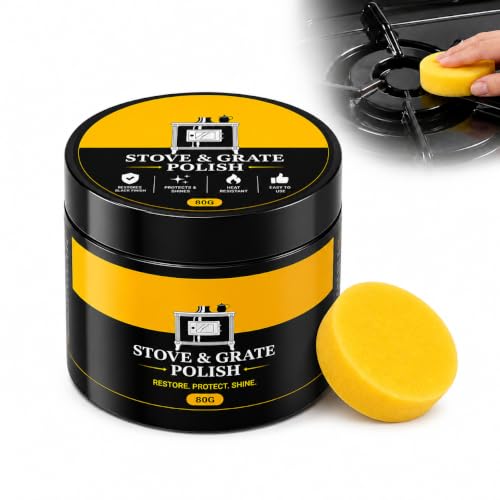
| Cast Iron Stove Polish with Sponge, 80g | Protective finish claims | Paste | 1 oz | Sponge | Check Price on Amazon |
Stove Polish for Cast Iron Stoves
Compare the formulas and application formats to find an option that suits your stove-care routine.
Imperial KK0057 Liquid Stove Polish

Imperial KK0057 Liquid Stove Polish stands apart with an 8 fl oz liquid format, larger than the containers for the other options here. The water-soluble, low-odor formula is made to restore and preserve cast iron and steel, so it suits owners caring for more than one metal surface. The maker describes it as virtually odorless and non-flammable. Liquid polish may feel less controlled than paste on small or detailed areas, so apply a small amount at a time and keep it off surfaces you do not intend to finish.
Bottom line: Choose this if you want a liquid polish and the largest container size.
Rutland Triple Wax Stove Polish Paste

Rutland Triple Wax Stove Polish Paste is the wax-blend option: its paste combines three waxes with deep black pigments. It is formulated for cast iron and steel and is described by the maker as non-toxic, non-flammable, and virtually odorless. That combination suits buyers who want a black paste rather than a liquid treatment. The key limitation is surface compatibility: the maker says not to use it on painted surfaces, stainless steel, raw steel, or sandblasted steel. Check your stove’s actual surface before choosing it.
Bottom line: Pick this for a black paste blend when the stove surface is compatible.
Cast Iron Polish with Sponge, Black
Cast Iron Polish with Sponge, Black differentiates itself by including a sponge for spreading and buffing the black polish. Its application is a small amount on a clean, cool surface, followed by even spreading and buffing. The product is positioned for cast iron stoves, fireplace grates, and other cast iron items, so it may suit someone maintaining several cast iron pieces. The package size is inconsistent across its naming and size fields, so verify the amount before buying if container quantity is decisive.
Bottom line: Choose this if an included sponge matters more than a clearly stated quantity.
NICCAT Cast Iron Stove Polish with Sponge

NICCAT Cast Iron Stove Polish with Sponge is the only option with a two-container pack: two 0.5 fl oz units, totaling 1 fl oz. The black polish includes a sponge and is intended for cast iron stoves, fireplace grates, grills, and other cast iron surfaces. That format can suit someone who prefers divided portions or wants to keep one container separate. The product text cuts off during its application directions, so use only the clearly provided surface guidance and confirm the full instructions before applying.
Bottom line: Pick this if you prefer two small containers and an included sponge.
Cast Iron Stove Polish with Sponge, 80g

Cast Iron Stove Polish with Sponge, 80g emphasizes a protective, heat-resistant coating and includes a sponge, distinguishing it from the simpler restoration-focused options. The maker says the coating is intended to resist re-oxidation, rusting, and fading, making this a fit for owners prioritizing a protective finish on cast iron or ferrous metal. Apply only to a cool surface as directed for similar paste products.
Bottom line: Choose this if a protective-coating focus is your priority.
How to choose stove polish for cast iron
Choose by surface compatibility first, then by application format and container size. Liquids spread readily over broad flat sections, while pastes are easier to place in smaller amounts on narrow trim and detailed castings. A cool, clean surface is the practical starting point for paste application; dust and loose residue can interfere with an even finish. The specifications here range from 8 fl oz liquid to smaller paste packs, so consider how much stove area you intend to cover rather than assuming every container covers the same area.
Use this guide to narrow the format; confirm that the specific polish is suitable for the stove’s finish, especially if any part is painted or stainless steel.
| Need | Format to consider | Reason |
|---|---|---|
| Cover broad surfaces | Liquid | Easy to spread across wider areas |
| Work small sections | Paste | Apply in controlled amounts |
| Buff by hand | Paste with sponge | Applicator is included |
Surface preparation and application
Apply stove polish only when the stove is completely cool; heat can make handling and spreading hazardous. For the sponge-included pastes described here, the product directions call for a clean, cool surface, a small amount, even spreading, and buffing. A clean surface matters because loose soot and dust can become trapped in a fresh finish. Work in small sections and use only enough product to leave an even coat rather than a thick smear.
Polish is a cosmetic surface treatment, not a substitute for repairing cracked castings, loose stove parts, or damaged seams. Keep treatment on the intended exterior metal and avoid transferring residue to hearth materials or nearby finishes. If the stove includes painted panels, stainless trim, or a mixed-material body, check compatibility before applying a polish formulated for cast iron.
Cast iron, steel, and coated stove surfaces
Cast iron and bare steel are the surfaces these products are principally aimed at, but one polish does not suit every metal finish. The Rutland paste explicitly excludes painted surfaces, stainless steel, raw steel, and sandblasted steel, so do not treat those materials as interchangeable. A stove can combine a cast iron top with painted steel sides or stainless trim; identify the exact area before applying any black polish.
Finish appearance also matters: black pigment is intended to darken the surface, which can change the look of neighboring areas if accidentally spread. Mask or protect adjacent surfaces where a boundary is visible, and use a separate cloth or sponge for the polish rather than a tool that may carry abrasive debris. If surface identity is uncertain, confirm compatibility before treating the whole stove.
Common stove polish mistakes to avoid
The most avoidable mistake is applying polish to a hot stove or using a product on a finish it excludes. Work with the appliance fully cool, and do not assume a formula labeled for cast iron is suitable for paint, stainless steel, or every type of steel. Another common error is applying too much at once; small amounts are easier to spread evenly and buff without leaving visible excess.
Do not use polish to conceal corrosion that has weakened metal or to address a crack, leak, or failed joint. Those are condition issues rather than surface-finish problems. After polishing, follow the specific container’s directions for drying and any first-heating step; the specifications do not give a shared cure time or heating schedule, so do not invent one.
Frequently Asked Questions
Can stove polish be applied while the stove is warm?
No; apply stove polish only to a completely cool stove. A warm surface can make handling and spreading hazardous, and the sponge-paste directions specify a cool surface.
Can cast iron stove polish go on painted steel?
Do not assume that it can. Rutland specifically says its paste is not for painted surfaces, so check the chosen polish’s surface compatibility before applying it to painted stove panels.
Should I clean cast iron before polishing it?
Yes; the sponge-paste application directions call for a clean, cool surface. Remove loose soot and dust first so debris is not worked into the finish.
How much stove polish should I apply at once?
Start with a small amount and spread it evenly over a cool surface. That approach follows the included paste directions and helps avoid a heavy, uneven layer.
Does stove polish repair cracks in cast iron?
No; stove polish is for the surface appearance and does not repair cracked castings or failed joints. Have structural damage assessed rather than covering it with a finish.