
Best Rock Tumblers for Adults: 5 Models Compared

C1 2.5LB Rock Tumbler Kit suits most adults starting a rock-tumbling hobby because its 2.5-pound capacity is paired with beginner guidance, three speeds, and a timer. Choose a larger model if you expect to polish bigger batches, or a kid-focused starter kit if you want a smaller, ready-to-go activity set.
A rotary rock tumbler slowly rolls stones with abrasive grit and water to smooth and polish them over multiple stages.
We earn a commission if you buy through links on this page. As an Amazon Associate I earn from qualifying purchases. Products are compared on manufacturer specifications, not hands-on testing.
- Best overall: C1 2.5LB Rock Tumbler Kit – The 2.5-pound barrel and beginner guide make it a practical starting point with room to grow.
- Best for regular batches: KomeStone G1 4LB Professional Tumbler – Its 4-pound capacity, three speeds, and 9-day timer suit hobbyists who want more control.
- Best for parallel batches: AtoRock A1 Pro 8LB Dual-Barrel – Two barrels and 8-pound capacity let collectors run separate batches at once.
- Best for large workloads: AtoRock A3 22LB Rock Tumbler – The 22-pound capacity is built for substantially larger batches.
| Product | Best for | Capacity | Controls | Construction | Shop |
|---|---|---|---|---|---|
| C1 2.5LB Rock Tumbler Kit | Adult beginners | 2.5 lb | 3 speeds; 9-day timer | Rubber barrel | Check Price on Amazon |
| KomeStone G1 4LB Professional Tumbler | Regular hobbyists | 4 lb | 3 speeds; 9-day timer; memory | Metal base | Check Price on Amazon |
| AtoRock A1 Pro 8LB Dual-Barrel | Separate batches | 8 lb | Adjustable speed and timer | Metal base | Check Price on Amazon |
| AtoRock A3 22LB Rock Tumbler | Large workloads | 22 lb | Real-time output and runtime display | Metal base | Check Price on Amazon |
| National Geographic Hobby Tumbler Kit | Starter activity | — | — | Rubber barrel | Check Price on Amazon |
Best rock tumblers for adults
Match barrel capacity and controls to the size and frequency of the batches you plan to polish.
C1 2.5LB Rock Tumbler Kit

For an adult beginner who wants more capacity than a small starter tumbler, this 2.5-pound model combines a rubber barrel with beginner-oriented guidance. It has three speeds, a 9-day timer, pause and memory functions, and a tumbling guide. The maker says the rubber barrel produces up to 75% less noise than typical plastic barrels. The larger batch size can be useful for an ongoing hobby, but it still handles less material per batch than the 4-, 8-, and 22-pound options; choose a larger capacity if you routinely collect enough suitable rough to fill it.
Bottom line: Choose it for a guided start and a moderate batch size.
KomeStone G1 4LB Professional Tumbler

The 4-pound capacity gives regular hobbyists a middle ground between a small home batch and the much larger dual-barrel or 22-pound machines. The G1 has a brushless motor, metal base, three speeds, a 9-day timer, and memory. Its maker positions it for adults, hobbyists, and collectors, including stones such as agate, jasper, tiger eye, and quartz. Replaceable parts and US-based support are also named features. Its single barrel means it cannot run two separate batches at the same time, so choose a dual-barrel setup if separating stones or stages matters more than keeping the machine simple.
Bottom line: Pick it for regular single-barrel batches with adjustable controls.
AtoRock A1 Pro 8LB Dual-Barrel

Two barrels set this 8-pound model apart: they allow separate batches to tumble at the same time, which can help collectors keep different stones or stages apart. The A1 Pro uses a brushless motor and a metal base, with adjustable speed and timer controls. If you need a specific per-barrel amount, confirm it before choosing; total capacity alone does not tell you how much each batch can hold.
Bottom line: Choose it when two simultaneous batches matter more than a single barrel.
AtoRock A3 22LB Rock Tumbler

The 22-pound capacity makes the A3 the largest option here, aimed at adults and collectors with substantial workloads rather than someone just trying a first batch. Its brushless motor, metal base, and real-time motor output and runtime display distinguish it from smaller models. The maker says core parts including belts, barrel, and drive parts are replaceable, and describes the design as intended for a 10-plus-year service life. A large capacity requires correspondingly more suitable rough and grit; if you only have a small amount of rock to polish, a smaller tumbler avoids choosing a machine around unused capacity.
Bottom line: Pick it for large batches and serviceable core components.
National Geographic Hobby Tumbler Kit
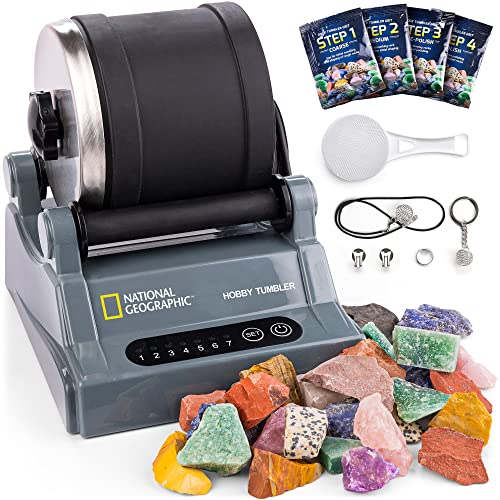
This kit emphasizes an all-in-one introduction rather than the larger capacities of the adult hobbyist machines. It includes a tumbler, four polishing grits, a sifter, nine types of rough gemstones, and a full-color guide. The maker says its leakproof rubber barrel is 75% quieter than other plastic models and describes the motor as durable. Its audience includes children ages 8 and up as well as adults, making it a fit for a shared activity or a new hobbyist who wants included rough stones.
Bottom line: Choose it for an included-stones starter activity rather than a specified batch capacity.
How to choose an adult rock tumbler
Choose capacity based on how much suitable rough you can collect and process, not just the biggest batch number. The options here span 2.5 to 22 pounds, with a 4-pound single-barrel model and an 8-pound dual-barrel model between them. A larger batch can suit frequent collecting, while two barrels can keep separate batches apart. Speed, timer, and memory controls can make operation more configurable, but they do not remove the need to run grit stages in order. A practical rule: if you have less than a full batch of rough for the larger machine, start with a smaller capacity rather than planning around future collecting. Confirm a per-barrel capacity when a dual-barrel total is given.
Rock hardness and batch consistency matter too: tumbling stones of similar hardness together helps avoid softer pieces wearing away faster than harder ones.
Rock tumbler capacity and batch fit
Use capacity as a first filter, then consider whether a barrel is single or divided into two. This table compares the capacities and the kind of use each suggests; the use descriptions are buying guidance, not a guaranteed output rate.
| Capacity | Configuration | Likely fit |
|---|---|---|
| 2.5 lb | Single rubber barrel | Beginner or moderate batch |
| 4 lb | Single barrel | Regular hobby batch |
| 8 lb | Dual barrels | Two separate batches |
| 22 lb | Extra-large barrel | Large workload |
The 8-pound figure is the total capacity, not a capacity for each barrel. Avoid filling a tumbler with stones alone: rotary tumbling needs room for stones, water, and grit to move through the barrel, so use the machine’s fill guidance for the exact load.
How rock tumbling stages work
Rock polishing usually takes multiple abrasive stages, moving from coarse grit toward finer grit and a final polish. A common sequence uses four stages, and a stage often runs about a week, though rough shape and stone hardness can make the process longer. The included four grits in a kit may support a staged process, but verify that the grit supplied matches the steps you intend to run. Rinse stones and barrel thoroughly between stages; leftover coarse grit can scratch stones during a finer stage and undermine the finish. Keep batches with similar hardness together, since softer material can wear down faster and leave uneven results.
Do not dry-sand or breathe rock dust: silica-containing dust can harm the lungs. Keep grit and stones wet during handling and cleanup, and avoid pouring dry powder into the air.
Rock tumbler noise, placement, and care
Rotary tumblers run for long stretches, so placement matters as much as the control panel. Set the machine on a stable, level surface where its vibration will not disturb nearby items, and keep it away from sleeping areas if nighttime operation would be disruptive. Rubber barrels are intended to cushion rock impacts; the maker claim for a quieter barrel is not a guarantee of silence. Check the barrel seal before a run and clean grit residue from the rim before closing it, since grit caught at the seal can interfere with a tight closure. Inspect belts and drive parts periodically, especially on machines designed with replaceable components, and stop use if a part is damaged.
Frequently Asked Questions
How long does a batch of rocks take to polish?
A typical four-stage rotary process often takes about four weeks when each stage runs roughly a week. Hard stones or rough, angular pieces can need additional time in a coarse stage.
How full should a rock tumbler barrel be?
A barrel generally needs to be about two-thirds full with rocks, leaving room for movement; add water and grit as directed for the tumbler. Too little material can tumble poorly, while overfilling restricts the rolling action.
Can different kinds of rocks tumble together?
Tumble rocks of similar hardness together to reduce uneven wear. Mixing soft stones with much harder material can leave the softer pieces undersized or damaged before the harder stones are polished.
Is rock tumbler grit safe to breathe?
No—avoid breathing dry grit or rock dust, since some rock material contains silica that can damage lungs. Keep material damp during handling and cleanup, and do not sweep or blow dry grit into the air.
Why do polished rocks come out scratched?
Coarse grit left behind can scratch stones during a finer polishing stage. Rinse the stones and barrel carefully between stages, including the lid and seal area.