
Best Running Headbands for Cold Weather: 4 Picks Compared

The adidas Alphaskin Cold Weather Fleece Headband suits most runners because its fleece-lined interior and lightweight poly-spandex build combine warmth with a close-fitting design. Choose a different style if you need a ponytail opening, a two-pack, or a fleece ear warmer with a less technical construction.
Running headbands cover the ears while leaving the crown more exposed than a hat, which can help runners who overheat under full head coverage.
We earn a commission if you buy through links on this page. As an Amazon Associate I earn from qualifying purchases. Products are compared on manufacturer specifications, not hands-on testing.
- Best overall: adidas Alphaskin Fleece Headband – Fleece lining and a lightweight poly-spandex build balance ear warmth with a close fit.
- Best for ponytails: Ponytail Trail Fleece Ear Warmer – A dedicated opening lets you wear a high or low ponytail through the band.
- Best for a two-pack: ZYXBBD Fleece Ear Warmers, 2-Pack – The package contains two fleece ear warmers, and the brand says they fit under helmets.
| Product | Best for | Material or construction | Pack count | Dimensions | Shop |
|---|---|---|---|---|---|
| adidas Alphaskin Fleece Headband | Most winter runs | Fleece-lined poly-spandex | 1 | 9.65 × 4.8 in. | Check Price on Amazon |
| Ponytail Trail Fleece Ear Warmer | Ponytail runners | Double-lined fleece | 1 | 9.4 × 3.9 in. | Check Price on Amazon |
| JOEYOUNG Fleece Ear Warmer | Simple fleece coverage | Fleece and polyester | 1 | — | Check Price on Amazon |
| ZYXBBD Fleece Ear Warmers, 2-Pack | Two-band sets | Fleece lining | 2 | — | Check Price on Amazon |
Running Headbands for Cold Weather
Compare ear coverage, construction, and fit details to choose a band that suits your winter runs.
adidas Alphaskin Fleece Headband
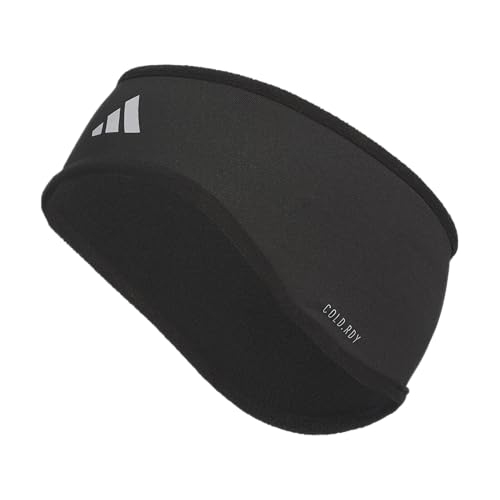
The fleece-lined interior and lightweight poly-spandex construction distinguish this band from the simpler fleece ear warmers. The brand positions it for cold-weather workouts and says its reflective elements are decorative only, not suitable as a safety feature. Its one-size design measures 9.65 inches long by 4.8 inches wide and weighs 0.04 ounces. That streamlined build suits runners who want ear coverage without a bulky earmuff shape. The limitation is the absence of a ponytail opening or a temperature range, so runners who need either feature should consider another style.
Bottom line: Choose this for a lightweight, fleece-lined fit; don’t rely on its reflective accents for visibility.
Ponytail Trail Fleece Ear Warmer

The ponytail opening is the defining difference: it accommodates a high or low ponytail while the band covers the ears. The brand says its double-lined fleece blocks wind chill and is intended for temperatures down to 25°F; treat that as a maker claim, not a universal comfort threshold. Its dimensions are 9.4 by 3.9 inches, and the close-fitting shape is designed to layer under a cycling or ski helmet. The opening makes this a useful choice for runners who tie their hair back, but it is less suitable if you want full-head warmth or do not need the ponytail feature.
Bottom line: Pick this if you need a ponytail opening and want a band designed to fit under a helmet.
JOEYOUNG Fleece Ear Warmer
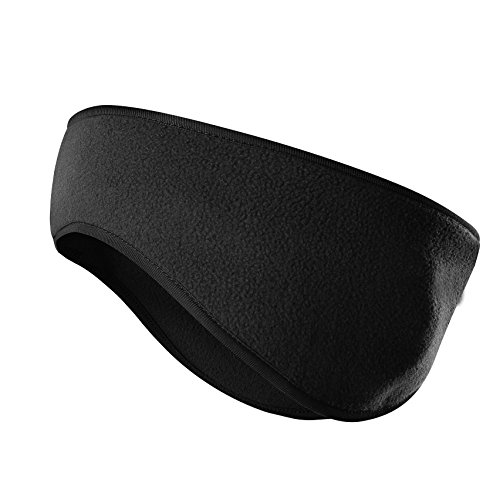
This fleece-and-polyester ear warmer takes a straightforward approach to cold-weather coverage rather than adding a technical fabric blend or ponytail slot. The brand says its shape is intended to stay in place during activities including running, and describes the material as soft. It comes as one black band. That makes it a reasonable option for someone who wants a simple ear-covering style for outdoor exercise and indoor wear. The tradeoff is that the specifications do not give dimensions or a temperature range, so runners who need a specific fit or cold-weather threshold should favor a style with those attributes.
Bottom line: Choose this for a simple fleece ear warmer without a ponytail opening.
ZYXBBD Fleece Ear Warmers, 2-Pack

The two-pack is the main distinction, giving this choice a spare band compared with the single-band options. The brand says the fleece-lined style can be worn under bicycle or motorcycle helmets and alongside earplugs, and describes it for activities such as jogging, hiking, and cycling. The black-and-red set weighs about 0.09 ounces according to the weight, with no dimensions provided. This suits someone who wants two basic fleece bands or plans to layer one beneath a helmet. Because fit dimensions and a temperature range are absent from the specifications, runners with a precise fit requirement should choose accordingly.
Bottom line: Pick this if having two fleece bands and helmet-compatible layering matter most.
How to choose a cold-weather running headband
Choose by coverage, layering, and how much warmth your run requires. A headband covers the ears but leaves the top of the head open, while a beanie adds crown coverage; the more exposed skin you have, the more the choice can matter in wind. Fleece adds a soft insulating layer, and a closer fit can reduce gaps around the ears. For a run with a helmet, favor a low-profile band intended to fit underneath rather than a bulky earmuff shape. If you run with a ponytail, check for an opening before choosing. For low-light routes, do not treat decorative reflective accents as a substitute for dedicated visibility gear.
How much ear coverage do runners need
Ear coverage should extend over both ears without slipping or pinching. Headbands vary in width and shape, so compare the measurements when available and consider how the band sits with your hairstyle or eyewear. A simple fit check is to bend and turn your head: the band should stay in place without needing constant adjustment. Fleece can feel warm during a hard effort, so a band that is easy to remove or stow may be preferable when temperatures rise or the pace increases. Wind and exertion change comfort, so a temperature claim attached to one product is not a guarantee for every runner.
Headbands compared with ear warmers
Running headbands and ear warmers overlap: both can cover the ears while leaving much of the scalp uncovered. The practical difference is often construction and fit rather than a strict category boundary. Use this guide to match the style to your priority.
| Need | Look for | Tradeoff |
|---|---|---|
| Low-profile warmth | Fleece-lined stretch band | Less crown coverage than a hat |
| Ponytail access | Band with a ponytail opening | Opening may not suit every hairstyle |
| Helmet layering | Close-fitting, helmet-compatible style | Check fit with your own helmet |
A headband is not a replacement for a warm hat when conditions call for full head coverage. Build your cold-weather outfit around the run and conditions rather than relying on a single accessory to cover every need.
Cold-weather running safety and visibility
Reflective decoration alone should not be relied on to make a runner visible in low light. Add dedicated reflective clothing or lights when running near traffic, and choose a route where drivers can see you. Keep a hat or hood available for conditions where ear coverage is not enough, and avoid using a band that blocks hearing when you need to monitor traffic or other people. A snug fit should not interfere with vision or press uncomfortably against the ears. Since winter conditions can change during a run, plan for the coldest and windiest part of the route, not only the starting temperature.
Frequently Asked Questions
Can a running headband keep ears warm in winter?
A fleece headband can cover the ears while leaving the crown exposed. Wind, effort, and personal comfort affect how much warmth you need, so use a hat or hood when ear coverage alone is insufficient.
Is a headband warmer than a running hat?
A hat covers more of the head, while a headband mainly covers the ears. Choose the headband when you want less coverage; choose a hat when exposed scalp needs insulation.
Can I wear a running headband under a helmet?
A close-fitting style can layer under a helmet, but confirm it does not change the helmet’s secure fit. Try the combination before a ride or ski session, not during one.
Are reflective headband accents enough for night running?
No; decorative reflective details should not be treated as safety equipment. Use dedicated visibility gear or lights and choose routes where drivers have time to see you.
What should I wear over my ears on a windy run?
A fleece band that covers both ears is a practical starting point. If wind or cold reaches beyond the ears, add a hat or hood rather than relying on a narrow band alone.