
Best Sand Socks for Beach Volleyball: 5 Options Compared

The Sand Socks Small Black is the best fit for most beach volleyball players because its breathable Spandex upper, adjustable fastener and neoprene toe and heel are designed for sand sports. Choose a 3 mm neoprene water sock instead if warmth and sole coverage in cool water matter more than a breathable sand-sport upper.
We earn a commission if you buy through links on this page. As an Amazon Associate I earn from qualifying purchases. Products are compared on manufacturer specifications, not hands-on testing.
- Best overall: Sand Socks Small Black – An adjustable fastener secures the breathable upper, while neoprene heel and toe sections help shield those areas.
- Best for medium sizing: Sand Socks Medium Black – It offers the same sand-sport construction as the small option, in a medium size.
- Best for cool water: XUKER 3 mm Neoprene Water Socks – Its 3 mm neoprene construction is aimed at insulation in cooler water.
| Product | Best for | Material | Closure or fit | Size | Shop |
|---|---|---|---|---|---|
| Sand Socks Small Black | Small-size players | Neoprene, Spandex | Adjustable fastener | Small | Check Price on Amazon |
| Sand Socks Medium Black | Medium-size players | Neoprene, Spandex | Adjustable fastener | Medium | Check Price on Amazon |
| ShocSox Beach Volleyball Socks | Mixed-surface play | — | Stretch fit | Medium | Check Price on Amazon |
| XUKER 3 mm Neoprene Water Socks | Cool-water play | 90% neoprene, 10% nylon | Ergonomic stretch fit | Medium | Check Price on Amazon |
| SUJAYU 3 mm Neoprene Diving Socks | Small-size water use | 3 mm neoprene | Stretch fit | Small | Check Price on Amazon |
Sand Socks for Beach Volleyball
Compare sand-sport uppers, neoprene coverage and size before choosing a pair.
Sand Socks Small Black
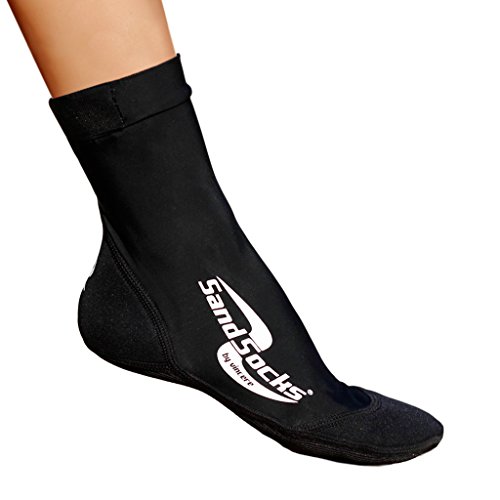
For a sand-sport design in a small size, this pair combines a breathable Spandex upper with neoprene at the heel and toe. The maker says the Action Flex Sole is intended for beach volleyball and sand soccer; a Duratex-coated sole adds stretch, and the adjustable fastener helps secure the fit. The upper is designed to keep sand out while allowing airflow. The small size is the key limitation: players who need a medium should choose the matching medium version instead.
Bottom line: Choose this pair if you need a small size and want an adjustable, breathable sand-sport sock.
Sand Socks Medium Black
This medium version offers the sand-sport construction for players who need more room than the small option. Its breathable Spandex upper, adjustable fastener, neoprene heel and toe, and Duratex-coated sole are intended for beach play; the maker also describes use in or out of shoes. A snug fit matters because excess fabric can shift during quick lateral steps. This pair is not a 3 mm full neoprene water sock, so choose one of those styles if insulation in cool water is the main need.
Bottom line: Choose this option if medium is your size and you want the sand-sport upper and adjustable fastening.
ShocSox Beach Volleyball Socks

The maker says the stretch fit is shaped for women and designed to stay put during play. That broader surface use may suit players who cross paths between matches. The size is medium, and the maker gives no sole material or closure to compare, so prioritize a confirmed fit if either detail is important to you.
Bottom line: Pick these if your beach play includes transitions onto paths or other surfaces.
XUKER 3 mm Neoprene Water Socks
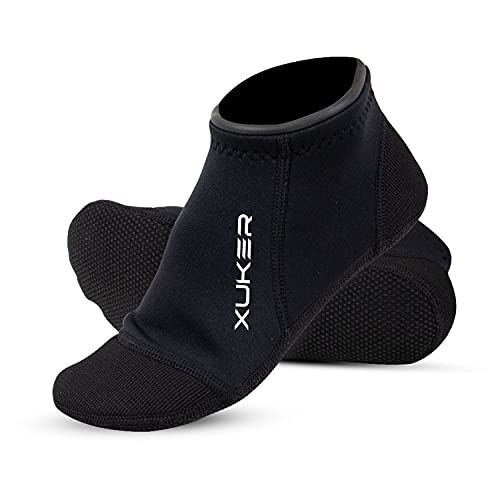
Unlike the sand-sport pairs with breathable uppers, these are 3 mm neoprene water socks for beach and water activities. The maker says the neoprene provides insulation in cooler water and describes the sole as tougher than standard with an anti-slip finish. This construction may suit players who also spend time in cool water and want more continuous neoprene coverage. The medium size is the option here; check that it fits before choosing this pair for volleyball, where a close fit helps limit shifting.
Bottom line: Choose these if cool-water insulation matters more than a breathable sand-sport upper.
SUJAYU 3 mm Neoprene Diving Socks
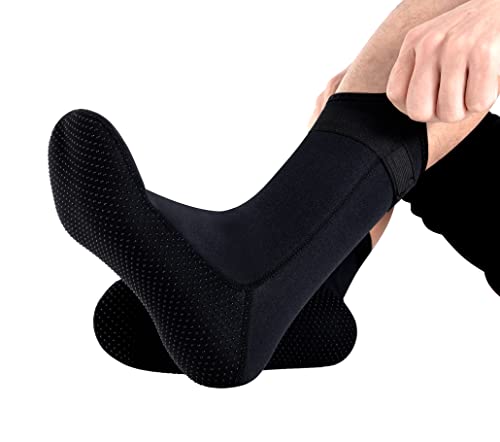
These small 3 mm neoprene socks combine a flexible water-sport design with rubber grip on the sole, making them a water-oriented alternative to the sand-sport pairs. The maker says the neoprene is intended to insulate in cooler water and the reinforced grip to help on sandy, rugged or slippery surfaces. That combination may appeal to a player who also dives or surfs. The diving-sock construction is less focused on a breathable upper for volleyball, so consider it chiefly when water use is part of the plan.
Bottom line: Pick these if you want a small neoprene sock for both water activities and sandy terrain.
How to Choose Sand Socks for Beach Volleyball
Choose by surface temperature, coverage and fit rather than thickness alone. Sand-sport socks commonly use an upper that breathes and a reinforced sole or protected heel and toe; neoprene water socks prioritize insulation and more continuous coverage. A 3 mm neoprene layer is a useful reference for cool-water designs, but the options do not provide a direct thickness comparison for every sand-sport sole. If you play only on hot sand, favor a breathable upper; if cool water is also involved, consider a neoprene style. A sock that shifts can rub, so use the maker’s size guidance and check the fit before a full match.
Sand Sock Fit and Coverage
Fit should be close without pinching: excess material can bunch at the toes, while a tight opening can be uncomfortable during movement. Sand-sport designs here protect the heel and toe, while the neoprene styles describe broader sole coverage. If you need coverage for the whole foot, confirm the construction before choosing. Remove snug neoprene socks by turning them inside out rather than pulling hard at the opening, as the maker advises for one pair.
Sand-Sport Socks Versus Neoprene Water Socks
Sand-sport socks and neoprene water socks solve different problems: the former emphasize airflow and a secure fit for court movement, while the latter emphasize warmth and sole protection in water. Use this quick distinction when the playing setting is clear.
| Need | Construction to consider | Tradeoff |
|---|---|---|
| Volleyball on sand | Breathable upper, secured fit, protected heel or toe | Less insulation-focused |
| Cool water with sand play | Neoprene water sock, including 3 mm styles | More coverage can feel warmer |
| Sand plus paths | Design described for multiple surfaces | Confirm fit for your foot |
Care and Safe Use for Sand Socks
Rinse sand and salt from socks after beach use and let them dry fully before storage; trapped grit can abrade fabric and damp gear can develop odor. Neoprene should be handled gently around seams and openings, since forceful pulling can stress the material. Sand socks reduce direct contact with hot sand and rough debris, but they are not a substitute for checking the playing area for sharp objects. Stop if a sock bunches or slips, and refit it before returning to play. A sole grip does not guarantee traction on every wet or uneven surface.
Frequently Asked Questions
Are neoprene socks too warm for beach volleyball?
They can feel warmer than a breathable sand-sport upper, especially on hot, dry sand. A 3 mm neoprene construction is aimed at insulation in cooler water, so choose it when warmth or water use is part of the need.
How tight should beach volleyball sand socks fit?
They should stay in place without pinching or bunching at the toes. If the sock shifts during a few lateral steps, try a better size or a more secure closure before playing a full match.
Can sand socks protect feet from hot sand?
Sand socks add a layer between the sole and sand, and some designs also cover the heel and toe. They do not eliminate burn risk, so avoid prolonged contact with very hot surfaces and check for debris.
Should I choose a breathable upper or neoprene?
Choose a breathable upper for volleyball-focused play in warm conditions, and neoprene when cool water insulation is also useful. A 3 mm neoprene style offers a clear thickness reference, while fit and coverage still decide comfort.