
Best Sealant for Differential Cover: 4 RTV Picks

Richmond Gear RTV Sealant is the strongest match for most differential-cover jobs because it is specifically intended for differential and manual-transmission assembly. Choose another option if you need a multi-tube supply or prefer a general-purpose RTV with broader stated applications.
We earn a commission if you buy through links on this page. As an Amazon Associate I earn from qualifying purchases. Products are compared on manufacturer specifications, not hands-on testing.
- Best overall: Richmond Gear RTV Sealant – Specifically intended for differential covers and other drivetrain assembly surfaces.
- Best for bulk supply: Permatex Ultra Blue RTV, 12-Pack – The pack includes twelve 3.35-ounce tubes and names differential covers among suggested applications.
- Best for black RTV: Stnkeno Black RTV, 3.53 oz – The 3.53-ounce black RTV is described for differential use and resistance to oils and water.
| Product | Best for | Differential use | Package | Stated feature | Shop |
|---|---|---|---|---|---|
| Richmond Gear RTV Sealant | Drivetrain assembly | Differential covers | — | Flexible seal | Check Price on Amazon |
| Permatex Ultra Blue RTV, 12-Pack | Bulk maintenance | Suggested application | 12 × 3.35 oz | Oil resistant | Check Price on Amazon |
| Stnkeno Black RTV, 3.53 oz | Black RTV preference | Differential use | 3.53 oz | Oil and water resistant | Check Price on Amazon |
Differential Cover Sealants
Compare these RTV options by their drivetrain applications, package sizes and formulation features.
Richmond Gear RTV Sealant

Richmond Gear RTV is the most drivetrain-focused choice here: its applications include differential covers, transmission cases and bearing retainers. It is intended for assembly surfaces during rebuilds, overhauls and service work, so it suits buyers looking for a sealant specifically tied to drivetrain assembly. The product is described as forming a durable, flexible seal. The fields do not give a package size, which matters if you need to plan for multiple covers or keep a spare tube on hand. Check the vehicle maker’s service procedure for bead placement and cure timing.
Bottom line: Pick this for a sealant specifically intended for differential assembly.
Permatex Ultra Blue RTV, 12-Pack
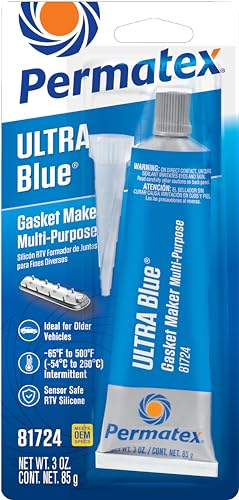
Permatex Ultra Blue stands apart as a twelve-tube case, making it the practical choice when you need a supply for repeated service rather than one repair. Each tube is 3.35 ounces, and differential covers are among its suggested applications; it is also described as sensor-safe, low-odor and non-corrosive. The maker states that it is three times more oil resistant than conventional silicones and eight times more flexible than cork or composite gaskets. Its case quantity is excessive for a single cover, so choose it only if the extra tubes fit your maintenance needs.
Bottom line: Choose this when you want multiple tubes for recurring drivetrain or engine work.
Stnkeno Black RTV, 3.53 oz

Stnkeno Black RTV is the black, single-tube option, with differential use named among its applications. The 3.53-ounce tube is described as resisting oils and water while remaining flexible in demanding environments, which may suit buyers who want a general silicone gasket maker rather than a drivetrain-only product. Like other RTV sealants, it depends on clean mating surfaces and proper application to seal effectively.
Bottom line: Pick this if you want a black RTV tube with differential use stated.
How to choose differential cover sealant
Choose an RTV that names differential or drivetrain assembly use when the cover is sealed with a formed-in-place gasket. RTV silicone cures as moisture in the air reacts with the material; a common general-purpose RTV guideline is about 24 hours for full cure, though temperature, humidity, bead thickness and formulation change the timing. Follow the tube’s cure instructions before adding gear oil. A paper or molded gasket is a different sealing method, and adding RTV to it can interfere with the seal unless the vehicle maker calls for it. For a one-time repair, a single tube is usually more practical than a case; choose bulk packaging only when you have repeat jobs.
Prepare the differential cover flange
Surface preparation decides whether RTV can seal: remove the old gasket material and oil, then leave both mating surfaces clean and dry before applying a bead. Scraping tools can gouge a soft aluminum flange, creating a leak path, so use a method that does not damage the cover or housing. Keep the bead continuous around the bolt holes and avoid excess material inside the housing, where squeezed-out RTV can detach. Tighten bolts in the vehicle maker’s sequence and to its torque specification; overtightening can distort a cover or squeeze out too much sealant. Do not use a generic torque value because bolt size and cover construction differ.
RTV sealant versus a differential gasket
RTV and a separate gasket solve the same flange-sealing problem in different ways: RTV forms a flexible seal in place, while a gasket is a preformed layer between the cover and housing. The right method is the one specified for the axle; mixing both methods is not automatically better. A formed-in-place seal needs uninterrupted contact around the perimeter and bolt holes, while a gasket needs to sit flat without folds or damage. If a gasket is specified and you do not have the correct part, pause rather than compensating with extra RTV. Match the sealing method to the cover and service procedure before starting.
| Need | Choose |
|---|---|
| Drivetrain-specific application | RTV naming differential assembly |
| Many repeat jobs | Multi-tube pack |
| Preformed seal required | Correct axle-cover gasket |
Safety and refill after sealing
Support a raised vehicle with properly rated jack stands on a firm, level surface; never work under a vehicle held only by a jack. Differential oil can be hot after driving, so let the housing cool before opening it and use a drain pan to catch fluid. After the sealant has cured for the time required by its maker, refill with the lubricant type and level specified for the axle. Many differentials require a particular gear-oil viscosity or limited-slip additive, so do not assume one gear oil fits every axle. If the housing uses a fill plug, confirm it can be removed before draining the fluid.
Frequently Asked Questions
How long should RTV cure before adding gear oil?
Many general-purpose RTV sealants need about 24 hours for full cure, but temperature, humidity and bead thickness affect the timing. Use the cure time for the specific formula before refilling.
Can I use RTV with a differential cover gasket?
Use RTV with a separate gasket only when the axle or gasket maker calls for it. Extra sealant can keep a gasket from seating flat or squeeze into the housing.
How thick should the RTV bead be on a cover?
A continuous bead sized to the sealant maker’s instructions is safer than a large bead; excess can squeeze inside the housing. Keep the bead around bolt holes and avoid gaps at corners.
Should I clean differential surfaces before using RTV?
Yes, remove old gasket material and oil, then make the mating surfaces clean and dry. Scratches or gouges in the flange can create leak paths, so avoid aggressive scraping.
Can I drive immediately after sealing a differential cover?
Do not assume the cover is ready immediately; many RTV formulas need around 24 hours to cure fully before exposure to gear oil. The exact wait depends on the formula and curing conditions.