
Best Shoulder Support for Rotator Cuff: 4 Braces Compared

For most people seeking rotator cuff support with adjustable fit and freedom of movement, Sparthos Rotator Cuff Shoulder Brace is the best starting point because its chest and arm straps adjust and it fits either shoulder. Choose another option if you want a built-in hot or cold pack pocket or neoprene construction.
Shoulder braces provide external support around the joint; they do not diagnose an injury or replace care from a clinician.
We earn a commission if you buy through links on this page. As an Amazon Associate I earn from qualifying purchases. Products are compared on manufacturer specifications, not hands-on testing.
- Best overall: Sparthos Rotator Cuff Shoulder Brace – Adjustable chest and arm straps and a left- or right-arm fit suit a range of body shapes.
- Best for heat or cold packs: AidPRO Rotator Cuff Shoulder Brace – Its internal pocket holds a hot or cold pack, which is not included.
- Best for neoprene construction: Komoko Shoulder Brace – Neoprene rubber and precision stitching distinguish this adjustable brace.
| Product | Best for | Fit | Construction | Pack pocket | Shop |
|---|---|---|---|---|---|
| Sparthos Rotator Cuff Shoulder Brace | Adjustable fit | Universal; left or right | Compression sleeve | — | Check Price on Amazon |
| AidPRO Rotator Cuff Shoulder Brace | Pack pocket | Large/XL; left or right | Neoprene | Hot or cold pack | Check Price on Amazon |
| Komoko Shoulder Brace | Neoprene support | Adjustable; left or right | Neoprene rubber | — | Check Price on Amazon |
| AIRE Adjustable Shoulder Brace | One-size design | One size; left or right | Compression sleeve | Ice or heat pack compatible | Check Price on Amazon |
Shoulder Support for Rotator Cuff
Compare how each brace adjusts, what it is made from, and whether it accommodates a hot or cold pack.
Sparthos Rotator Cuff Shoulder Brace

Adjustable chest and arm straps set this brace apart for people who want to tailor the fit. Sparthos says it provides gentle compression and moderate stabilization for mild to moderate shoulder discomfort while allowing movement; it is not intended for severe immobilization. The universal-size design fits either arm, and hook-and-loop fasteners help with putting it on and adjusting it. It may suit everyday support when a flexible brace is preferred. Its limitation is the moderate—not immobilizing—support, which may not suit someone who needs the arm held still.
Bottom line: Choose this if adjustable straps and movement matter more than firm immobilization.
AidPRO Rotator Cuff Shoulder Brace

A built-in pocket for a hot or cold pack distinguishes this brace from the other options; the pack itself is not included. AidPRO says its neoprene wrap offers adjustable compression and stability while allowing comfortable movement during recovery, exercise, work, or daily activity. The universal left- or right-shoulder design has adjustable straps, and the pocket can hold a pack against the shoulder. This may suit buyers who want pack placement as part of the brace. The limitation is that a separate pack is needed, and the size is Large/XL rather than a range of measured body sizes.
Bottom line: Pick this if you want an integrated pocket and can supply the pack.
Komoko Shoulder Brace
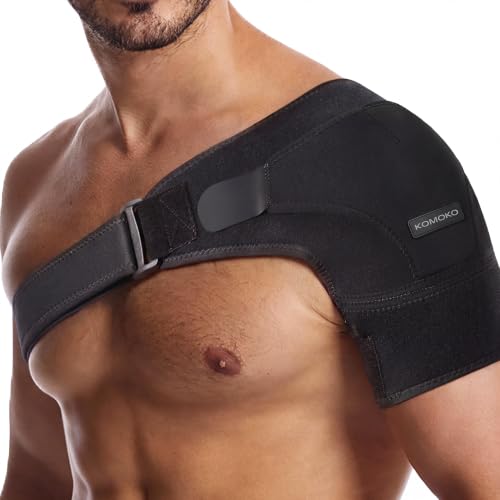
Neoprene rubber construction and precision stitching distinguish this adjustable brace. Komoko says it is designed to support the shoulder while helping prevent overextension, and its features describe use for sports while preserving flexibility. The brace fits either arm and is presented as both shoulder support and an arm sling. Its dimensions are 9.8 inches long, 6.7 inches high, and 1.9 inches wide. This option may suit someone seeking a flexible brace for activity. The limitation is that the dimensions do not explain how to select a fit based on shoulder or chest measurements.
Bottom line: Choose this if neoprene construction and an adjustable, activity-oriented design suit your needs.
AIRE Adjustable Shoulder Brace
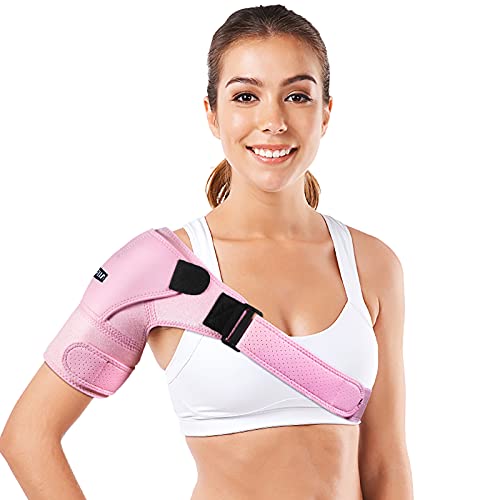
Its one-size design and stated compatibility with a separate ice or heat pack distinguish this brace. AIRE says the support provides compression and stability, and the product features describe a pocket for a pack; the pack is not included. It is offered as a shoulder compression sleeve for women and men and is intended to fit either shoulder. The dimensions are 9.8 inches high, 6.5 inches wide, and 2.3 inches long. This may suit someone who prefers a one-size option. The limitation is that the size label does not provide a measurement-based fit range.
Bottom line: Consider this if a one-size brace and separate pack compatibility meet your priorities.
How to choose rotator cuff shoulder support
Choose a brace by the kind of support you need: flexible compression supports movement, while a sling or immobilizer limits arm movement more. These are different functions, so a flexible wrap is not a substitute when a clinician has told you to immobilize the shoulder. Check whether straps adjust around both the arm and torso, whether it fits the left or right side, and whether its size is selected by body measurements or labeled one size. If a brace causes numbness, tingling, increased pain, or a change in skin color, loosen or remove it; those are signs to stop and reassess the fit. Ask a clinician about persistent symptoms, weakness, or pain after an injury rather than relying on a brace alone.
Compression sleeves, wraps, and slings compared
Compression sleeves and wraps allow more shoulder movement than an immobilizing sling, so match the brace type to the task. A sleeve or wrap can provide contact and adjustable compression around the joint, while a sling supports the forearm and can reduce arm movement. The word “support” alone does not tell you how much motion a brace restricts; look for whether the product claims moderate stabilization or describes sling use. Use this guide to narrow the type, then check the individual fit and features.
| Brace type | Typical function | Consider when |
|---|---|---|
| Compression sleeve or wrap | Contact and adjustable compression | You want support with continued movement |
| Sling or immobilizer | Supports the arm and limits movement | A clinician recommends restricting arm motion |
A brace that allows movement should not be treated as an immobilizer, and a sling should not be chosen solely because a product name mentions rotator cuff support.
Fit a shoulder brace without overtightening
A shoulder brace should feel secure without causing numbness, tingling, or increased pain. Adjust the arm and torso straps gradually, then move the arm gently within the range that feels comfortable; a brace that slides or pinches needs refitting. Universal and one-size labels are not the same as a measured fit range, so confirm the actual fit before relying on those labels. If a product calls for a separate hot or cold pack, use only a pack that fits its pocket and follow the pack’s safety directions. Do not put extreme heat or cold directly against skin, and stop using the pack if the skin becomes painful or unusually numb.
When to use a shoulder brace and when to get care
A brace can provide external support, but it cannot identify whether pain comes from the rotator cuff, the AC joint, or another cause. New injury, marked weakness, inability to raise the arm, visible deformity, or worsening pain deserves prompt medical assessment rather than more strap tension. After a clinician recommends a brace, clarify whether the goal is gentle compression, activity support, or limiting motion, because those goals call for different designs. Avoid wearing a brace so tightly that circulation or sensation changes. If symptoms persist or interfere with daily activities, ask a clinician about diagnosis and an appropriate rehabilitation plan.
Frequently Asked Questions
Can a shoulder brace heal a rotator cuff tear?
A shoulder brace supports the joint externally but does not repair a torn tendon. A clinician can assess the cause of pain and recommend appropriate treatment or rehabilitation.
Should a rotator cuff brace restrict arm movement?
Not every brace is designed to restrict movement; compression wraps generally allow more motion than slings or immobilizers. Use an immobilizing design only when a clinician recommends limiting arm movement.
How tight should a shoulder support brace feel?
A brace should feel secure without causing numbness, tingling, increased pain, or skin-color changes. Loosen or remove it if any of those symptoms occur.
Can I wear a shoulder brace while sleeping?
Whether overnight wear is appropriate depends on the injury and the brace’s intended use. Ask a clinician before sleeping in a brace, especially if it restricts movement or causes pressure.
Can I put an ice pack inside a shoulder brace?
Only use a pack if the brace has a pocket designed to hold one, and check that the pack fits securely. Keep a barrier between cold or heat and skin, and stop if the skin becomes painful or numb.