
Best Subfloor Construction Adhesive for Joists and Panels

Loctite PL 400 is the best fit for most subfloor projects here because it is made for subfloor bonding and can be applied to frozen lumber in cold weather. Choose another formula if you need a longer working window, a polyurethane adhesive, or a broader gap-filling product.
Subfloor adhesive is applied between panels and joists to help bond the assembly; panel fastening remains part of the installation.
We earn a commission if you buy through links on this page. As an Amazon Associate I earn from qualifying purchases. Products are compared on manufacturer specifications, not hands-on testing.
- Best overall: Loctite PL 400 Subfloor Adhesive – Purpose-made for subfloors and gunnable from 1.4°F to 120°F.
- Best for longer working time: Liquid Nails LN902 Subfloors – Offers a 20-minute open time and bridges gaps up to 3/8 inch.
- Best for broad material compatibility: Loctite PL Premium Polyurethane – Polyurethane formula bonds wood, concrete, stone, metal, and other common materials.
| Product | Best for | Formula | Working window | Subfloor-specific feature | Shop |
|---|---|---|---|---|---|
| Loctite PL 400 Subfloor Adhesive | Cold-weather subfloors | — | 1.4°F–120°F gunnable range | Frozen-lumber use | Check Price on Amazon |
| Liquid Nails LN902 Subfloors | Longer work window | Latex-based | 20-minute open time | Bridges gaps up to 3/8 in. | Check Price on Amazon |
| Loctite PL Premium Polyurethane | Multi-material projects | Polyurethane | Sets in 30 minutes | Interior and exterior use | Check Price on Amazon |
Subfloor Construction Adhesives Compared
Compare these formulas by job conditions, work time, and the surfaces they are designed to bond.
Loctite PL 400 Subfloor Adhesive

Loctite PL 400 stands apart for cold-weather application: the manufacturer says it remains gunnable from 1.4°F to 120°F and will not roll up on frozen lumber. The 10-ounce cartridge is designed for subfloor and plywood decking bonds to joists, and the formula can bridge minor gaps. It also bonds to materials including wood, concrete, masonry, and ceramic tile. Choose it when cold or variable site conditions matter; its subfloor focus is less useful if your main need is an extended open time.
Bottom line: Choose this for subfloor work when application temperature and frozen lumber are key concerns.
Liquid Nails LN902 Subfloors

Liquid Nails LN902 is the clearest choice here when the panel layout needs more time before surfaces are pressed together: its open time is 20 minutes. The 10-ounce latex-based formula is intended for subfloors and bonds OSB, plywood, particleboard, and waferboard, including wet or frozen lumber. It also meets the APA AFG-01 specification, according to the manufacturer. Gap bridging up to 3/8 inch can help where minor unevenness is present; choose another product if you specifically want a polyurethane formula.
Bottom line: Pick this when a 20-minute open time and engineered-panel compatibility suit the installation.
Loctite PL Premium Polyurethane
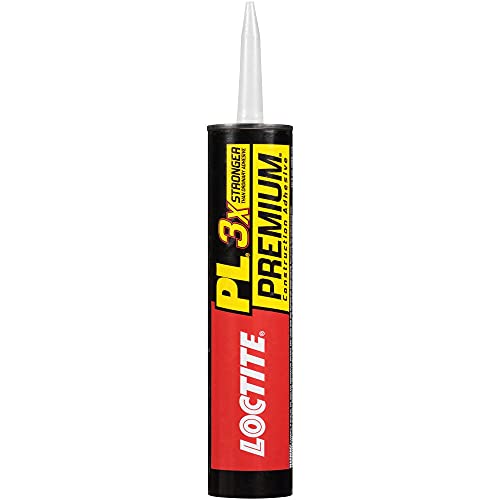
Loctite PL Premium differs from the two subfloor-focused formulas as a general-purpose polyurethane adhesive that is also identified for subfloor installations. Its 10-ounce cartridge bonds common materials such as wood, OSB, concrete, stone, metal, and PVC, making it useful when a project joins more than wood panels and joists. The manufacturer says it sets in 30 minutes and fully cures in 24 hours.
Bottom line: Choose this when one polyurethane formula needs to bond several different building materials.
How to Choose Subfloor Adhesive
Match the adhesive to the panel materials, joists, and job conditions rather than choosing by grab speed alone. Subfloor formulas commonly bond plywood or OSB to wood joists; panel edges and joints still need the fastening pattern required by the floor system. For a cold site, prioritize a formula whose application temperature range covers the actual surface temperature. For uneven contact, use a product with a gap-bridging limit, and do not use that limit as a substitute for correcting a badly crowned or damaged joist. Adhesive working time also matters: a longer open time gives more opportunity to position a panel, while fast grab requires prompt alignment. Follow the panel and adhesive maker’s application directions.
Subfloor Adhesive Types and Work Time
Subfloor-specific adhesive is the more direct match for bonding panels to joists, while general construction adhesive may serve when the project also joins other materials. Panel products are usually plywood or oriented strand board (OSB), and the adhesive must be compatible with both the panel and the framing. Work windows are product-specific: the options here range from a 10-minute working time to a 20-minute open time. Those terms describe different application stages, so do not assume they are interchangeable. Apply a continuous bead where the installation instructions call for it, seat the panel while the adhesive remains workable, then mechanically fasten it. Adhesive alone is not a replacement for structural fasteners.
Subfloor Adhesive Gap Bridging and Fit
Use a published gap limit as a boundary, not as a target. One formula here bridges gaps up to 3/8 inch, while another only says it can bridge minor gaps. A gap larger than the chosen adhesive’s capacity calls for correcting the framing or panel fit before bonding. Panel thickness, joist spacing, and fastening requirements depend on the floor design and must be matched as a system; adhesive cannot compensate for undersized panels or excessive span. Keep the bead size consistent with the adhesive directions, since an oversized bead can keep a panel from seating correctly. If the actual joist-to-panel gap approaches 3/8 inch, choose a formula with that explicit capacity only when the structure and manufacturer instructions also allow it.
Applying Subfloor Adhesive Safely
Construction adhesives can irritate skin and eyes, and some formulas have temperature or ventilation limits. Wear eye protection and gloves, keep the work area ventilated, and avoid contact with uncured material; product-specific safety guidance governs handling and cleanup. Cold-weather capability is not universal: a range that applies to one adhesive cannot be assumed for another, and frozen substrates may affect bond formation. Keep panels aligned and fasten them as directed while the adhesive remains workable. A common mistake is spreading adhesive across too much area before setting panels; work in manageable sections so the bead has not skinned over before contact. Remove squeeze-out as the manufacturer’s directions permit.
Frequently Asked Questions
Does subfloor adhesive replace screws or nails?
No, adhesive does not replace the specified mechanical fasteners. Panels need the fastening schedule required by the panel and floor system, because adhesive alone does not secure the assembly against every load.
How long should subfloor adhesive stay workable?
Work time depends on the formula; the products here specify 10 minutes or 20 minutes for working or open time. Temperature and substrate conditions can change how quickly an adhesive skins, so install panels in manageable sections.
Can subfloor adhesive bond frozen lumber?
Some formulas are made for frozen-lumber use, but that capability is not universal. Use a product whose instructions cover the job temperature; one option here gives a gunnable range beginning at 1.4°F.
How large a gap can subfloor adhesive bridge?
The capacity differs by formula: one product gives a limit of 3/8 inch, while another only describes minor gaps. Correct larger framing or panel-fit problems instead of relying on adhesive to fill them.
Should adhesive go on joists or panels?
Subfloor adhesive is placed at the panel-to-joist bond line, with bead placement governed by the product directions. A dry fit before dispensing helps confirm panel alignment before the adhesive begins to set.