
Best Swimming Goggles for Laps: 4 Models Compared

For most lap swimmers, Speedo Biofuse 2.0 is the strongest fit because its grooved seals, cushioned frame and quick-adjust strap are built around repeated swims. Choose a different pair if you prioritize polarized lenses for bright outdoor water or need a fit intended to cover both adults and youth.
We earn a commission if you buy through links on this page. As an Amazon Associate I earn from qualifying purchases. Products are compared on manufacturer specifications, not hands-on testing.
- Best overall: Speedo Biofuse 2.0 – Its soft grooved seals and push-button strap adjustment suit repeated pool sessions.
- Best for outdoor glare: ZIONOR G1 Polarized Gold – Polarized, mirrored lenses are intended to reduce reflected light outdoors.
- Best for adult-youth sharing: Aegend Adult & Youth Goggles – The product is described for adult and youth use.
| Product | Best for | Lens options | Seal or frame | Strap adjustment | Shop |
|---|---|---|---|---|---|
| Speedo Biofuse 2.0 | Frequent lap swimming | Mirrored, clear, or polarized | Soft grooved seals | Push-button | Check Price on Amazon |
| ZIONOR G1 Polarized Gold | Bright outdoor swims | Polarized, mirrored | Silicone gasket | Adjustable split strap | Check Price on Amazon |
| Aegend Adult & Youth Goggles | Adult-youth use | Multiple color options | — | — | Check Price on Amazon |
| WIN.MAX Polarized Swim Goggles | Polarized silicone fit | Polarized | Full silicone frame | Dual straps | Check Price on Amazon |
Swimming Goggles for Laps
Compare the fit, lens, and adjustment features that matter during repeated pool swims.
Speedo Biofuse 2.0
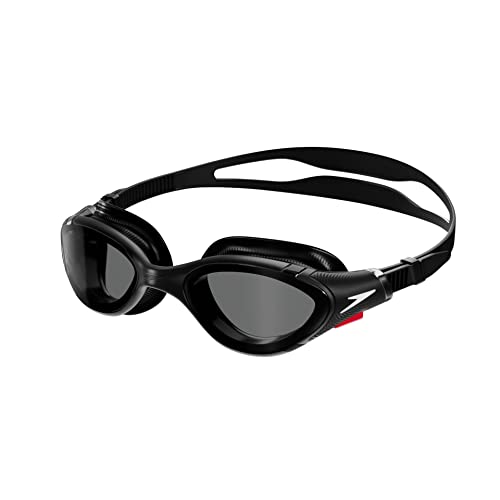
Repeated pool swims are the clearest match for this pair: the Biofuse 2.0 combines soft grooved seals with a push-button strap mechanism for quick adjustment. Its latex-free unibody frame is designed to conform to the face, while the wide optic profile lens supports peripheral vision. It suits swimmers who want a cushioned seal and easy strap changes between swims. The specifications do not identify a lens tint for a specific pool environment, so swimmers who need a particular tint should confirm that option before choosing.
Bottom line: Pick this pair if a cushioned seal and quick strap adjustment are your priorities.
ZIONOR G1 Polarized Gold

Outdoor glare is the differentiator here: the G1 has polarized mirrored lenses and a flexible silicone gasket, with an adjustable split strap. The maker says the lens filters reflected and scattered light and provides UV protection. Its one-size design is intended for a range of face shapes, so it may suit pool laps that move outside as well as open-water sessions. The polarized gold-mirror lens is the trade-off for swimmers who mostly train indoors and prefer a clear or untinted view.
Bottom line: Choose this pair when bright outdoor conditions matter more than an indoor-oriented lens.
Aegend Adult & Youth Goggles

Adult-and-youth use is the standout distinction: Aegend describes these goggles for adults, women, men, and teenagers, and offers more than 43 color options. The product features mention an anti-fog coating and protection from harsh sunlight, making the pair relevant to casual pool workouts as well as family swim sessions. The maker does not establish a particular seal construction or strap mechanism, so swimmers who need a specific adjustment style should confirm the fit and strap before choosing. Its broad use case makes it less specialized than a pair with a named cushioned seal.
Bottom line: Pick these for a shared adult-and-youth fit rather than a specified seal style.
WIN.MAX Polarized Swim Goggles

A full silicone frame separates these goggles from the gasket-style options, and the product also specifies polarized lenses, a self-adjusting TPR nose bridge, and dual straps. The maker says the lenses filter irregular light and provide UV protection; the frame is described as PVC-free. That combination may suit swimmers who want an all-silicone contact surface and outdoor glare reduction.
Bottom line: Choose this pair if a full silicone frame and polarized lenses are the key features.
How to choose swimming goggles for laps
Seal comfort and repeatable strap adjustment matter most for lap swimming, because pressure points can become distracting over a long set. A swim goggle should seal through gentle suction around the eye sockets; overtightening the strap can distort the gasket and cause leaks rather than fix them. Start with a relaxed strap and press the cups lightly to check the seal before tightening. Pool lighting also guides lens choice: clear or lightly tinted lenses suit indoor pools, while mirrored or polarized lenses are useful in bright outdoor conditions. Choose the lens that matches where most of your laps happen, then prioritize a seal that feels even around both eyes.
| Need | Feature to prioritize |
|---|---|
| Long pool sets | Soft, even seal and stable strap |
| Bright outdoor laps | Mirrored or polarized lens |
| Quick strap changes | Accessible adjustment mechanism |
Goggle fit and seal for lap swimming
A goggle seal should sit on the bony area around each eye, not press hard against the eyelids. A brief suction check with the strap loosened can reveal whether the gasket shape matches your face; if one cup releases immediately, try a different nose bridge or frame shape rather than cinching the strap tighter. Split straps commonly distribute tension across the back of the head, while one-piece or quick-release mechanisms can make adjustments easier. Nose bridges affect the distance between cups, so a comfortable fit should keep both eye sockets centered without pinching the nose. Recheck the fit after changing the strap, since tension can shift the cups.
Lens choices for indoor and outdoor pool laps
Clear lenses generally make sense in indoor pools, where glare is limited and seeing lane markings matters. Mirrored and polarized lenses are more useful outdoors: mirror coatings reflect some incoming light, and polarization reduces reflected glare from the water surface. UV protection matters for outdoor swimming, but it does not replace sun protection for exposed skin. Lens color is not a reliable substitute for a UV feature, so choose based on the goggle’s specified protection rather than tint alone. For swimmers moving between indoor and outdoor pools, a second lens option can be more practical than using a dark lens in every setting.
Preventing leaks and fog during lap sets
Leaks usually point to alignment or fit, not a need to pull the strap as tight as possible. Keep hair and cap edges out from under the gasket, place the cups evenly, and use the nose bridge spacing that centers each lens. Anti-fog coatings can be damaged by rubbing the inside lens, so rinse gently and air-dry the goggles after swimming; avoid touching the inner surface. Chlorinated pool water and sunscreen residue can build up on seals, so a clean-water rinse after each session helps preserve the contact surface. If fog persists, use a goggle-safe anti-fog product rather than saliva or abrasive cleaners.
Frequently Asked Questions
How tight should goggles feel for lap swimming?
Swimming goggles should hold a light seal without painful pressure around the eye sockets. A gentle suction check with the strap loose helps distinguish a good gasket fit from strap tension that is too high.
Are polarized goggles useful for indoor pool laps?
Polarized lenses are most useful outdoors, where reflected light from water can create glare. For indoor pools, clear or lightly tinted lenses usually preserve visibility without extra glare reduction.
How can I stop swim goggles from fogging?
Rinse goggles gently with clean water after swimming and let them air-dry without rubbing the inner lens. Rubbing can wear down anti-fog coatings; use only goggle-safe anti-fog treatments if needed.
Do swim goggles need UV protection for outdoor laps?
UV protection is a useful feature for outdoor swimming because the eyes are exposed to sunlight and reflected light. Lens tint alone does not establish UV protection, so check for an explicit UV feature.
Why do my swim goggles leak during laps?
A poor match between the gasket and face shape is a common cause of leaks, as is hair or a cap edge trapped under the seal. Reposition the cups and test nose-bridge spacing before tightening the strap.