
Cat Ear Motorcycle Helmets: 3 Full-Face Options Compared

For a cat ear motorcycle helmet with detachable ears and a specified EPS liner, start with UCHOOSE Cat Ear Full-Face Helmet; those features distinguish it from the other options. Choose Personalized Cat Ear Full-Face Helmet if a quick-release chin strap is the priority, or Cat Ear Knight Flip-Up Helmet if you want a flip-up design.
A full-face helmet covers the chin and face as well as the head. Before choosing, measure your head and confirm the fit and certification label on the specific helmet.
We earn a commission if you buy through links on this page. As an Amazon Associate I earn from qualifying purchases. Products are compared on manufacturer specifications, not hands-on testing.
- Best overall: UCHOOSE Cat Ear Full-Face Helmet – Its ABS shell, EPS liner, and detachable cat ears are specified.
- Best for quick-release strap: Personalized Cat Ear Full-Face Helmet – It specifies a quick-release chin strap and an ABS outer shell.
- Best for flip-up design: Cat Ear Knight Flip-Up Helmet – Its name identifies a flip-up full-face helmet with removable cat ears.
| Product | Best for | Ear design | Shop |
|---|---|---|---|
| Personalized Cat Ear Full-Face Helmet | Quick-release strap | — | Check Price on Amazon |
| UCHOOSE Cat Ear Full-Face Helmet | Detachable cat ears | Detachable | Check Price on Amazon |
| Cat Ear Knight Flip-Up Helmet | Flip-up design | Removable | Check Price on Amazon |
Cat Ear Motorcycle Helmets
Compare the shell, size, and ear design before narrowing your choice by fit and intended use.
Personalized Cat Ear Full-Face Helmet
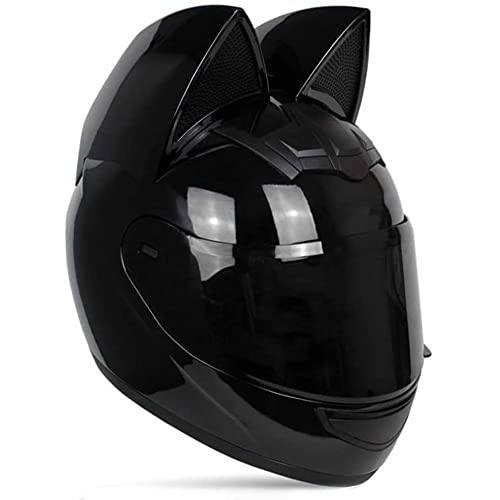
Personalized Cat Ear Full-Face Helmet is the option here that specifies a quick-release chin strap and removable earplugs. Its outer shell is ABS, its inner shell is foam, and the size is medium. The maker says it meets the DOT safety standard and describes it for motorcycle, bicycle, scooter, and other activities.
Choose it if those strap and shell details match your needs. The specifications do not identify whether the cat ears detach, so confirm that feature before ordering if interchangeable ears are important.
Bottom line: Pick this if a quick-release chin strap and ABS shell are your priorities.
UCHOOSE Cat Ear Full-Face Helmet

UCHOOSE Cat Ear Full-Face Helmet stands apart for cat ears that the maker says are detachable, letting the helmet return to a plain style. It pairs an ABS shell with a shock-absorbing EPS liner, and the size is medium. The maker says the helmet meets DOT and FMVSS 218 standards.
This option suits riders who want the ear detail to be removable and value the specified liner material.
Bottom line: Choose this if detachable ears and an EPS liner are the key requirements.
Cat Ear Knight Flip-Up Helmet

Cat Ear Knight Flip-Up Helmet is the only option here whose name specifies a flip-up design. Its features identify a lightweight ABS shell, multi-density EPS, removable cat ears, and removable lining; the size is medium. The maker says it meets DOT and FMVSS 218 standards and describes an upper-mouth air outlet.
Choose it if the flip-up format and removable lining suit your priorities.
Bottom line: Pick this if you want the named flip-up format and removable lining.
How to choose a cat ear motorcycle helmet
Start with head fit, then compare shell and liner materials, closure, and ear attachment. Measure around the widest part of the head, usually just above the eyebrows and ears; use the maker’s size chart because a medium is not a universal circumference. A correctly fitted helmet sits level, feels snug around the cheeks, and does not roll freely when you move your head. Full-face helmets cover the chin, but designs differ in ventilation, visor, and whether the chin area moves. For riding, choose a helmet whose certification label and fit you can verify; decorative attachments should not interfere with the shell, visor, or straps.
How to check fit and sizing
Measure head circumference with a flexible tape, keeping it level just above the eyebrows and around the largest part of the back of the head. Repeat the measurement to avoid choosing by a size word alone, then compare it with the maker’s chart. A snug fit should apply even pressure without painful hotspots; cheek pads should hold the cheeks without making the jaw uncomfortable. If the helmet shifts substantially when you turn your head or lift the rear edge, try another size or shape. A thin balaclava can change fit, so try the helmet with the riding layer you expect to wear. Replace any helmet involved in an impact, even when visible damage is absent.
DOT certification and cat ear attachments
In the United States, FMVSS 218 is the federal motorcycle helmet safety standard, and DOT is the manufacturer certification marking associated with compliance. Check the DOT marking and required helmet labeling on the actual helmet rather than relying only on a product name or description. A cat ear attachment is decorative; it does not add impact protection. Removable ears and magnetic accessories are different attachment designs, so confirm how they attach and whether the maker permits use on the helmet you plan to ride. Avoid drilling holes or modifying the shell: an altered shell can compromise protection. Keep straps secure and make sure accessories do not block vision or helmet operation.
Full-face and flip-up helmet differences
A fixed full-face helmet keeps the chin section in place, while a flip-up design allows the front section to lift when open. Flip-up mechanisms add moving parts, so check that the chin section locks fully before riding and that the controls are easy to operate with gloves. Both styles need a stable, level fit and an unobstructed visor. Ventilation differs by helmet design; an upper-mouth outlet or other vent can help move air, but it does not guarantee a comfortable temperature in every condition. Use a visor suited to the light and weather, and do not ride with a raised chin section unless the helmet maker specifically allows that configuration.
Frequently Asked Questions
How do I measure my head for a motorcycle helmet?
Wrap a flexible tape around the largest part of your head, usually just above the eyebrows and ears, and compare the circumference with the helmet maker’s size chart. Repeat the measurement and assess fit by trying the helmet on; size labels vary across brands.
How snug should a full-face helmet feel?
A full-face helmet should feel evenly snug, with cheek pads holding the cheeks and no painful pressure points. If it rolls easily or shifts when you turn your head, try a different size or shell shape.
What does DOT mean on a motorcycle helmet?
DOT is the certification marking associated with the U.S. FMVSS 218 motorcycle helmet standard. Check the marking and required labeling on the helmet itself, not only its product name.
Can cat ears be attached to any motorcycle helmet?
No; attachment methods differ, and compatibility depends on the accessory and helmet design. Avoid drilling or altering the shell, and make sure an attachment cannot obstruct the visor, straps, or field of view.
When should I replace a motorcycle helmet?
Replace a helmet after it has been involved in an impact, even if damage is not visible. Also inspect the shell, liner, strap, and closure before rides, and replace a helmet with damage that could affect secure fit or function.