
Best TV Antenna Preamplifier: 4 Models Compared

The Winegard Boost XT LNA-200 suits most people because its 1.0 dB low-noise design and separate VHF/UHF processing target long coax runs. Choose another model if you need built-in cellular filtering, automatic gain control, or a specified weatherproof housing.
A TV antenna preamplifier boosts an antenna’s received signal near the antenna; it can help compensate for coax loss but cannot create channels the antenna does not receive.
We earn a commission if you buy through links on this page. As an Amazon Associate I earn from qualifying purchases. Products are compared on manufacturer specifications, not hands-on testing.
- Best overall: Winegard Boost XT LNA-200 – Its 1.0 dB low-noise design and separate VHF/UHF processing suit an outdoor antenna and long coax run.
- Best for cell filtering: GE 42178 Antenna Amplifier – A built-in 4G/5G LTE filter helps reduce cellular interference, and the unit includes an AC adapter.
- Best for weather exposure: ClearStream Juice Plus – Its housing is specified as weatherproof and includes a tilt-up cable connection feature.
- Best for automatic gain: Televes 560383 TForce – TForce technology automatically adjusts amplification across VHF and UHF bands independently.
| Product | Best for | Signal bands | Filtering | Installation feature | Shop |
|---|---|---|---|---|---|
| Winegard Boost XT LNA-200 | Outdoor coax runs | VHF/UHF | — | Outdoor antenna compatible | Check Price on Amazon |
| GE 42178 Antenna Amplifier | LTE interference | VHF/UHF | 4G/5G LTE | Between antenna and TV | Check Price on Amazon |
| ClearStream Juice Plus | Weatherproof mounting | UHF/VHF/FM | — | Tilt-up coax access | Check Price on Amazon |
| Televes 560383 TForce | Automatic gain control | VHF/UHF | FM, LTE, 5G above 608 MHz | Single antenna input | Check Price on Amazon |
TV Antenna Preamplifiers
Compare the signal handling and installation features that distinguish these four antenna amplifiers.
Winegard Boost XT LNA-200
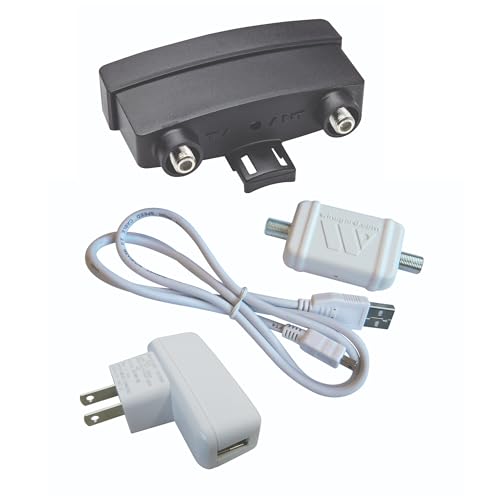
The Winegard Boost XT LNA-200 stands out for separately processing VHF and UHF signals with TwinAmp technology. Winegard says its Clear Circuit design provides 1.0 dB low-noise performance and helps maintain reception on long coax runs. It is compatible with non-amplified outdoor HDTV antennas and standard coax-connected TVs or digital tuners. This is a fit for an existing passive outdoor antenna setup where cable loss is a concern. Its features do not specify a cellular filter or automatic gain control, so buyers addressing those needs should compare alternatives.
Bottom line: Choose this for a non-amplified outdoor antenna and a long coax run.
GE 42178 Antenna Amplifier
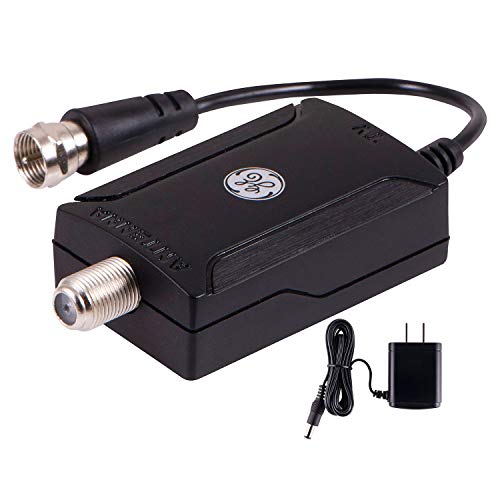
The GE 42178 is the only option here whose feature set explicitly includes a built-in 4G/5G LTE filter. GE says its PureAmp amplifier helps strengthen signals already received by a compatible antenna and offset cable loss; the included AC adapter powers this inline unit. Standard coax connections make it suitable for a basic antenna-to-TV setup, and the feature set mentions HDTV, VHF, UHF, and ATSC 3.0 support. This is the indoor-style choice for someone concerned about cellular interference.
Bottom line: Choose this for an inline setup where cellular interference is a concern.
ClearStream Juice Plus
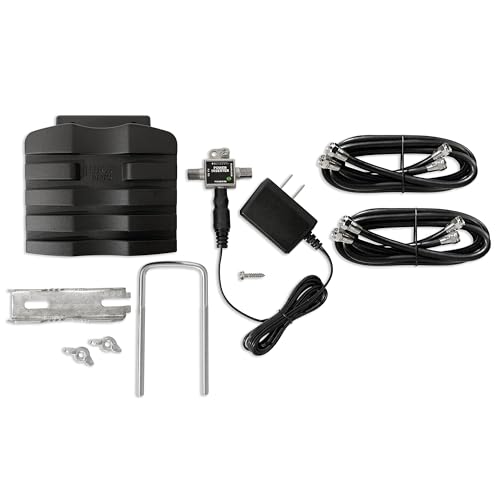
The ClearStream Juice Plus is differentiated by its weatherproof housing and tilt-up amplifier access for coax connections. Its housing measures 4.25 by 4.25 by 1.75 inches, and the amplifier supports UHF, VHF, and FM bands. Antennas Direct says it supports ATSC 3.0, 4K, and 8K UHD formats; those formats do not guarantee reception where a broadcast signal is unavailable. The compact enclosure suits an installation exposed to outdoor conditions.
Bottom line: Choose this when a weatherproof enclosure and accessible coax connection matter.
Televes 560383 TForce

The Televes 560383 TForce is the only model here described with automatic gain adjustment: Televes says TForce independently monitors and adjusts amplification across VHF and UHF. Its single input is designed for one antenna, while built-in FM, LTE, and 5G filtering above 608 MHz addresses common interference sources. That combination suits a single-antenna system where signal levels or nearby transmissions may vary. The single-input design is a limitation for setups combining multiple antenna feeds; this model is not the choice for those installations.
Bottom line: Choose this for one antenna when automatic gain control and filtering are priorities.
How to choose a TV antenna preamplifier
Choose a preamplifier to address a specific signal problem, not simply to maximize gain. A preamp near the antenna can help offset loss through coax and splitters, but cannot recover a channel the antenna does not receive. A distribution amplifier is usually placed indoors after the coax enters the home and splits a signal among televisions; it does not replace a mast preamp when a long cable run is the concern. If a system has less than 50 feet of coax and no splitter, first check antenna aim and connections rather than adding amplification. Strong local signals can overload an amplifier, producing worse reception instead of better reception.
Use the amplifier’s noise figure, filtering, and input configuration to match the problem. A lower noise figure matters most when the incoming signal is weak; filters matter when nearby FM or cellular transmissions interfere. Avoid stacking amplifiers unless a system design calls for it, because cascading gain can overload a tuner.
Where to install an antenna preamplifier
Install a mast preamplifier as close to the antenna as practical so the signal is amplified before the downlead adds more loss. Typical RG-6 coax loses roughly 5 to 6 dB per 100 feet around UHF frequencies, with exact loss depending on cable type and channel frequency. The indoor power inserter sends DC power up the coax; it belongs on the receiver side of the cable and must match the amplifier’s power requirements. A splitter may block DC on some ports, so confirm the power path before connecting the system.
Keep outdoor connections weather-sealed and use a drip loop so water does not follow the cable into the enclosure. Do not attach power to an amplifier that is already powered through another system component. For a single TV, avoid adding a splitter without need; each split reduces signal level, often by about 3.5 dB for a two-way splitter.
Preamplifier types and useful features
Mast preamplifiers boost a signal near the antenna, while indoor antenna amplifiers commonly sit between the antenna and television. Gain is measured in decibels, but more gain is not automatically better: excess gain can overload a tuner, especially in strong-signal areas. A low-noise figure helps preserve weak signals, while FM and LTE filters can reduce interference in the bands they target. Automatic gain control adjusts amplification as input levels change; a single-input unit is intended for one antenna feed.
Use this feature guide to match the design to the installation.
| Need | Feature to prioritize |
|---|---|
| Long coax downlead | Low noise figure and mast placement |
| Nearby cellular interference | LTE or 5G filtering |
| Changing signal levels | Automatic gain control |
| Outdoor exposure | Weatherproof housing |
Common antenna amplifier setup mistakes
The most common mistake is amplifying a poor antenna signal and expecting the amplifier to create missing broadcasts. Check antenna direction, coax continuity, and connector condition first; corrosion or a loose F connector can cause intermittent reception. Another mistake is putting an amplifier after a long cable run, where it cannot undo the loss already suffered by the signal. Mount a mast preamp before the long downlead when that is the problem.
Over-amplification is also a risk: if nearby transmitters are strong, gain can overload the amplifier or television tuner and create dropouts. Try reception with the amplifier bypassed if signal quality becomes worse after installation. Keep the power inserter aligned with the preamp model, and check that any splitter passes power on the intended coax leg.
Frequently Asked Questions
Does an antenna preamplifier add channels?
No, a preamplifier boosts signals the antenna already receives rather than adding broadcasts outside its reception. Antenna direction, terrain, and distance from transmitters still determine which channels are available.
How much coax cable loss should I expect?
RG-6 coax typically loses about 5 to 6 dB per 100 feet near UHF frequencies. Higher frequencies and lower-grade cable can increase loss, so use the cable’s specification when planning a long run.
Can too much antenna amplifier gain hurt reception?
Yes, excessive gain can overload the amplifier or TV tuner and lead to dropouts or distorted reception. If reception worsens after adding a preamp, test the system with the amplifier bypassed.
Where does the antenna preamplifier power inserter go?
The power inserter goes indoors on the coax path between the antenna preamp and the television or distribution equipment. Confirm the coax leg can pass DC power, because some splitter ports block it.
Should I use a preamplifier with multiple televisions?
A mast preamplifier may help offset downlead and splitter losses when the antenna signal is weak, but it does not replace a properly sized distribution amplifier. A two-way splitter commonly loses about 3.5 dB, so account for each split in the signal budget.