
Best Undermount Sink Adhesive: 5 Options Compared

Black Mamba FHG MS Polymer Sealant is the best fit for most undermount sink adhesive needs because its MS polymer formula is made for high-tack bonding across several sink and countertop materials. Choose Black Mamba FHG Gray Polymer Sealant for gray sealant, or support hardware if the sink needs mechanical bracing.
Undermount sinks attach beneath the countertop; adhesive bonds or seals the rim, while hardware helps carry the load. For a heavy sink, pair adhesive with suitable mechanical support.
We earn a commission if you buy through links on this page. As an Amazon Associate I earn from qualifying purchases. Products are compared on manufacturer specifications, not hands-on testing.
- Best overall: Black Mamba FHG MS Polymer Sealant – MS polymer sealant intended for sink bonding and compatible with stone, stainless steel, cast iron, porcelain, and ceramic.
- Best for gray sealant: Black Mamba FHG Gray Polymer Sealant – Gray, two-pack polymer sealant with a product-specific recommendation to apply a 3/4-inch bead.
- Best for sink repair: Undermount Sink Repair Bracket – Adjustable threaded-rod bracket design intended to support a fallen undermount sink.
| Product | Best for | Type | Color | Pack or fit | Shop |
|---|---|---|---|---|---|
| Black Mamba FHG MS Polymer Sealant | Multi-material bonding | MS polymer sealant | White | 2-pack | Check Price on Amazon |
| Black Mamba FHG Gray Polymer Sealant | Gray sealant bead | Polymer sealant | Gray | 2-pack | Check Price on Amazon |
| Undermount Sink Repair Bracket | Fallen sink support | Repair bracket | Silver gray | 13.98 in long | Check Price on Amazon |
| QruiLanTu Adjustable Sink Support Poles | Adjustable pole support | Support poles | Silver | 18.9–26.7 in adjustment | Check Price on Amazon |
| Arcora Undermount Sink Clips, 10-Pack | Clip-based support | Mounting clips | — | 10 clips | Check Price on Amazon |
Undermount Sink Adhesive and Support Options
Compare adhesive choices with separate support hardware, since these products serve different roles in a sink installation.
Black Mamba FHG MS Polymer Sealant

For buyers seeking an adhesive rather than a support bracket, this white MS polymer sealant is the broadest match here. The product is intended for bonding stone, stainless steel, cast iron, porcelain, and ceramic; the two-pack format provides two cartridges. Black Mamba says the adhesive reaches over 360 PSI and holds after 10 seconds, but those are maker claims, not a reason to omit support. The product also names outdoor construction and temperature resistance among its uses. A limitation is that the maker gives no cure schedule, so confirm the required cure time and compatibility for your exact sink and countertop before loading the joint.
Bottom line: Choose this if you need a white polymer adhesive for one of the named sink or countertop materials.
Black Mamba FHG Gray Polymer Sealant
The gray color and explicit bead guidance distinguish this cartridge from the white option. Its instructions call for a 3/4-inch bead and say to spread excess around the rim; the two-pack is intended for commercial and industrial applications. The product is described as a superfast, one-component polymer sealant, which may suit an installer who wants a single material for the application. The maker does not give a cure duration or identify sink and countertop material compatibility, so check both before applying it. As with any adhesive-only approach, this product should not replace appropriate load-bearing support for a heavy sink.
Bottom line: Choose this if gray sealant and a 3/4-inch application bead fit your installation.
Undermount Sink Repair Bracket

Unlike the adhesive options, this is a mechanical repair bracket for a sink that has begun to fall. Its method uses an electric wrench and screws to secure the base, then a hexagonal threaded rod to brace the sink; the product says installation does not require removing the sink. At 13.98 inches long and 2.56 inches high, it has a different fit profile from the adjustable upright poles and clip set. This is support hardware, not a bonding adhesive.
Bottom line: Choose this for a repair where a threaded-rod bracket suits the cabinet and mounting surface.
QruiLanTu Adjustable Sink Support Poles

These two upright support poles offer an adjustable span of 18.9 to 26.7 inches, making them a different kind of solution from adhesive or screw-mounted clips. Stainless steel outer tubes and padded upper and lower plates are intended to brace the sink while reducing slipping and noise. The product describes the support as space-saving, a useful distinction when cabinet space matters. Its fit depends on the available vertical clearance and the distance between the cabinet floor and sink, so measure that space before choosing it. The poles provide mechanical support; they do not bond or seal the sink rim.
Bottom line: Choose these poles when the cabinet height falls within their adjustment range.
Arcora Undermount Sink Clips, 10-Pack
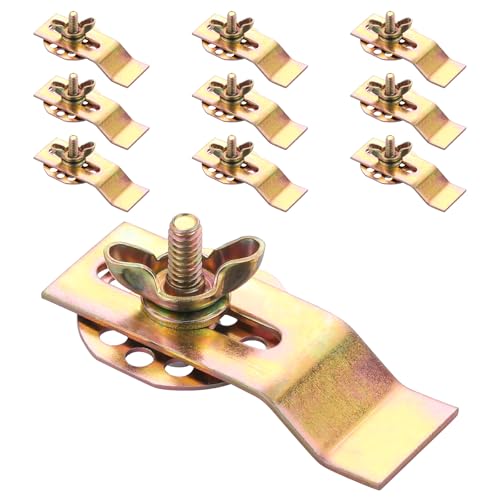
For installations that use discrete mounting points, this ten-clip set differs from the continuous support of upright poles. The clips are steel with a multi-layer anti-corrosion coating, and their rectangular design is intended for undermount sinks in kitchens or bathroom vanities. The package count is the useful planning detail: the required number and spacing depend on the sink and installation layout, so do not assume ten clips are suitable for every sink. Clips hold the sink mechanically but are not adhesive.
Bottom line: Choose the clip set when its fasteners and mounting layout match your sink installation.
How to Choose an Undermount Sink Adhesive
Choose an adhesive by matching its chemistry to both surfaces and treating it as part of a supported mounting system. The white product here names stone, stainless steel, cast iron, porcelain, and ceramic; the gray product gives a 3/4-inch bead recommendation but no material list. Adhesives and sealants can bond or seal the rim, while clips or brackets provide mechanical support. For a heavy sink, use suitable support rather than relying on a bead alone. Before applying any product, clean and dry the bonding surfaces, follow its label for application and cure time, and confirm compatibility with the countertop finish. A product’s fast-tack claim is not equivalent to full cure.
Adhesive Versus Sink Support Hardware
Adhesive, clips, and support brackets do different jobs, so choose based on whether you are bonding a new sink or correcting a load-support problem. A polymer sealant bonds surfaces at the rim; clips secure mounting points, and poles or threaded-rod brackets brace the sink. Many installations combine an adhesive or sealant with mechanical support rather than choosing only one. A fallen sink needs its cause and support arrangement addressed, not simply a fresh bead applied over a failing joint. This table separates the roles; compatibility and load capacity still need to match your sink and cabinet.
| Need | Product type | Role |
|---|---|---|
| Bond or seal the rim | Polymer sealant | Adhesion at mating surfaces |
| Hold mounting points | Clips | Mechanical attachment |
| Brace from below | Poles or repair bracket | Mechanical support |
Measure Sink Support Before Installation
Measure the cabinet and sink before selecting support hardware; the adjustable poles fit a vertical range of 18.9 to 26.7 inches, while the repair bracket is 13.98 inches long. These dimensions do not establish load capacity or guarantee fit. Check where fasteners can safely attach, how much vertical clearance remains, and whether plumbing or cabinet shelves obstruct the support. For clips, count the intended mounting points and verify the fastener type and countertop material. Do not drill into stone or alter a countertop unless the mounting method is suitable for that material and the work can be done safely.
Apply and Cure Sink Adhesive Safely
Apply adhesive only to prepared, compatible surfaces and keep the sink supported throughout the product’s required cure period. A fast-tack claim describes initial hold, not necessarily the time before the joint can carry a sink’s full load; temperature, bead thickness, surface condition, and the adhesive formula can affect curing. Use the specific product label for surface preparation, ventilation, bead placement, and cure time. Keep the sink from shifting while the bond sets, and do not remove support early just because the sink appears stationary. If an existing sink is loose, avoid putting weight or water-filled cookware into it until its support is secure.
Frequently Asked Questions
Can adhesive alone hold an undermount kitchen sink?
Adhesive alone is not a safe default for a heavy sink; use suitable mechanical support as well. The sink’s weight, contents, countertop material, and mounting design all affect the support needed.
How wide should an undermount sink adhesive bead be?
The gray polymer product recommends a 3/4-inch bead. Bead size is product-specific, so do not apply that measurement to a different adhesive without checking its instructions.
How long should sink adhesive cure before use?
Use the adhesive’s full-cure time, not its initial tack time, before loading the sink. Temperature, bead thickness, and surface conditions can change cure time, so keep the sink supported until the product allows use.
Can I replace clips with undermount sink adhesive?
Adhesive and clips have different roles: adhesive bonds at the rim, while clips provide mechanical attachment. For a heavy sink, use a suitable support method rather than treating adhesive as a universal replacement for clips.
What should I measure for adjustable sink support poles?
Measure the vertical distance from the cabinet floor to the supported sink area and compare it with the poles’ 18.9-to-26.7-inch adjustment range. Also check for plumbing, shelves, and a stable contact point at both ends.
Can I use sink adhesive to repair a fallen sink?
A fallen sink needs its mechanical support and mounting surfaces checked before rebonding. Brackets, support poles, or clips may address support needs, while adhesive alone will not correct a weak or unsuitable attachment point.