
I’m Broken OK Shirt: 4 Designs Compared

I’m OK Broken Invisible Illness T-Shirt is the closest match for an I’m Broken OK shirt, with an invisible illness awareness design and wording on the back. Choose another tee if you want the message or graphic presented differently.
These are graphic T-shirts, so compare the artwork placement and wording as well as the cut. Check the garment’s chest and length measurements against a shirt that fits you before ordering.
We earn a commission if you buy through links on this page. As an Amazon Associate I earn from qualifying purchases. Products are compared on manufacturer specifications, not hands-on testing.
- Best overall: I’m OK Broken Invisible Illness T-Shirt – Its invisible illness awareness design places the message on the back.
- Best for a face graphic: Confused Smile Broken Face T-Shirt – Its wording is paired with a broken face and skull design.
- Best for a front message: I’m OK I’m Broken Awareness T-Shirt – Its design makes the OK wording stand out against the greyed-out broken wording.
| Product | Best for | Graphic / message | Shop |
|---|---|---|---|
| I’m OK Broken Invisible Illness T-Shirt | Back-print message | Awareness message on back | Check Price on Amazon |
| Confused Smile Broken Face T-Shirt | Face graphic | Confused smile, broken face and skull | Check Price on Amazon |
| I’m OK I’m Broken Awareness T-Shirt | Contrasting text | “I’m OK” with greyed-out “I’m Broken” | Check Price on Amazon |
| Mental Health I’m Broken OK T-Shirt | Mental health wording | Mental-health framing with contrasting | Check Price on Amazon |
I’m Broken OK Shirts
Compare these tees by their message, artwork, and stated fit before choosing a size.
I’m OK Broken Invisible Illness T-Shirt

I’m OK Broken Invisible Illness T-Shirt is the only option whose name specifies that the message is on the back. Its invisible illness awareness design suits someone who wants that placement rather than a front-facing statement. The maker describes the garment as lightweight with a classic fit, and it has double-needle sleeve and bottom hems. The size is Small; compare the chest and body-length measurements with a shirt you already wear, since a size label alone does not establish how the garment will fit.
Bottom line: Choose this tee if you want the awareness message on the back.
Confused Smile Broken Face T-Shirt

Confused Smile Broken Face T-Shirt stands apart with a confused smile, broken face, and skull motif alongside its invisible illness wording. That gives it a more illustrative look than the text-focused choices, suiting someone who wants the design to communicate visually as well as through words. The maker describes a lightweight, classic fit with double-needle sleeve and bottom hems. This option is black, size Small, so compare its garment measurements with a preferred tee before choosing; a familiar size label is not a substitute for chest width and length.
Bottom line: Pick this one if a face-and-skull graphic is central to your choice.
I’m OK I’m Broken Awareness T-Shirt

I’m OK I’m Broken Awareness T-Shirt makes the contrast between “I’m OK” and greyed-out “I’m Broken” wording its central design feature. Its description connects that contrast to invisible illness and the outward appearance of being okay. The maker describes a lightweight, classic fit and double-needle sleeve and bottom hems. The black Small option is the relevant size and color here.
Bottom line: Choose this tee for its contrasting OK and greyed-out broken wording.
Mental Health I’m Broken OK T-Shirt
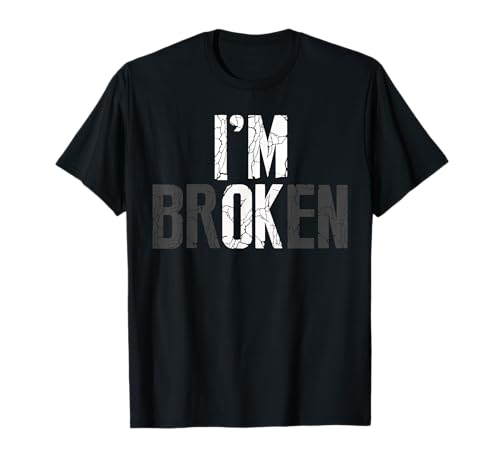
Mental Health I’m Broken OK T-Shirt foregrounds mental health in its design description while retaining the “I’m OK” and greyed-out “I’m Broken” contrast. That makes it the clearest choice for someone who specifically wants mental health framing rather than a back-print emphasis or face graphic. The maker describes a lightweight, classic fit with double-needle sleeve and bottom hems. It comes in black, size Small. Buyers who need a particular fiber should verify the garment’s composition before choosing; for fit, compare its measurements with a tee that already works for you.
Bottom line: Pick this tee if the explicit mental health framing matters most.
How to choose an I’m Broken OK shirt
Choose by artwork placement and message first, then use garment measurements to settle fit. The options here distinguish themselves through back placement, a face-and-skull graphic, or contrasting OK and broken wording; a familiar slogan alone may not tell you which design you prefer. T-shirt size labels are not standardized across brands, so measure a tee that fits and compare its chest width and body length with the garment measurements for your chosen size. Chest width is usually measured flat from underarm to underarm; double that number to estimate circumference. If measurements are unavailable, verify them before ordering rather than assuming Small fits the same way across different makers.
What classic fit means for a graphic tee
A classic-fit label generally signals a traditional, neither deliberately slim nor oversized cut, but brands use fit terms differently. The maker calls these tees lightweight and classic fit; they do not give a fabric composition or numeric measurements. Use a shirt you already like as a reference: measure it flat across the chest and from the shoulder area to the hem, then compare those two numbers. A difference of about 2 inches in circumference can noticeably change how a tee feels through the torso. If you want a loose drape, allow more room than your body measurement; if you prefer a closer fit, compare garment dimensions rather than choosing by label alone.
How to care for a printed T-shirt
Turn a graphic tee inside out before washing to reduce direct rubbing on the print, and use cold water with a gentle cycle as a cautious default for printed garments. High dryer heat can stress some prints and garment fibers, so air-drying or low heat is the safer general approach when the care label permits it. Check the sewn-in care instructions before washing because fabric and print methods vary. Do not iron directly over a graphic; if ironing is needed, use the care label’s guidance and keep heat off the printed area. These steps are general garment-care practices, not claims about the specific print process used on these shirts.
How to read invisible-illness shirt designs
Graphic wording is personal, so compare the design’s exact emphasis instead of treating similar slogans as interchangeable. Some designs put the message on the back, while others center text or use a face illustration; that placement affects when other people can read it. A back print is most visible from behind, whereas a front-facing design is easier to see in a face-to-face conversation. Choose the wording and placement you are comfortable wearing in the settings where you expect to use the shirt. These are awareness garments, not medical products, and a graphic should not be treated as a substitute for communicating needs or seeking appropriate care.
Frequently Asked Questions
How do I choose the right size T-shirt?
Compare the garment’s chest width and body length with a T-shirt that fits you well. Measure the reference shirt flat across the chest, and double that width if you want an approximate circumference.
What does classic fit mean on a T-shirt?
Classic fit usually refers to a traditional cut rather than a deliberately slim or oversized shape. Because brands apply the label differently, use garment measurements and allow extra room if you prefer a loose fit.
How can I protect a T-shirt graphic in the wash?
Turn the shirt inside out and wash it in cold water on a gentle cycle as a cautious default. Follow the sewn-in care label, and avoid ironing directly over the graphic.
Is a back-print shirt visible from the front?
A back print is easiest to see from behind, not during a face-to-face conversation. Choose a front-facing design if showing the message during direct interaction is important.
Are invisible illness awareness shirts medical clothing?
No, a slogan T-shirt is an awareness garment, not medical clothing or treatment. Use direct communication and appropriate medical support for health needs.