
Big Mouth Toothbrush: 3 Models Compared by Type

Big Mouth 2.0 Sonic Electric, Black is the Big Mouth toothbrush to consider first if you want an electric model with five modes, a 2-minute timer and a 30-second pacer. Choose Big Mouth Manual Soft-Bristle, Pink instead if you prefer a manual brush with no charging, or compare Big Mouth Electric Toothbrush, Green if its green color is the deciding difference.
These are wide-head toothbrushes: their broader heads are intended to cover more tooth surface per pass, but a larger head may be harder to maneuver around back teeth.
We earn a commission if you buy through links on this page. As an Amazon Associate I earn from qualifying purchases. Products are compared on manufacturer specifications, not hands-on testing.
- Best overall: Big Mouth 2.0 Sonic Electric, Black – Its five modes and 2-minute timer with 30-second pacing provide the most brushing controls of the three.
- Best for manual brushing: Big Mouth Manual Soft-Bristle, Pink – The soft-bristle manual brush requires no batteries or charging.
- Best for green color: Big Mouth Electric Toothbrush, Green – This electric option comes in green and has five modes plus a 2-minute timer.
| Product | Best for | Type | Modes | Vibration rate | Shop |
|---|---|---|---|---|---|
| Big Mouth 2.0 Sonic Electric, Black | Electric controls | Electric | 5 | 50,000 VPM | Check Price on Amazon |
| Big Mouth Manual Soft-Bristle, Pink | Manual brushing | Manual | — | — | Check Price on Amazon |
| Big Mouth Electric Toothbrush, Green | Green electric option | Electric | 5 | 50,000 VPM | Check Price on Amazon |
Big Mouth Toothbrush Options
Compare the manual and electric wide-head designs by controls and brushing style.
Big Mouth 2.0 Sonic Electric, Black
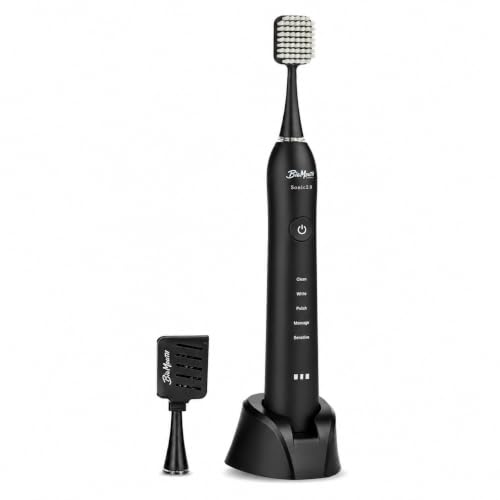
The black Big Mouth 2.0 is the electric option with five selectable modes and a 2-minute timer that pauses every 30 seconds. The maker says its wide head pairs with 50,000 vibrations per minute for broader coverage. It also has an IPX7 waterproof rating and a rechargeable battery. This model suits someone who wants timed brushing and mode choices in one handle. Its wider head may take more deliberate positioning around the back teeth than a smaller brush head, so buyers who prioritize maneuverability may prefer a different head shape.
Bottom line: Choose this if you want timed electric brushing with several mode choices.
Big Mouth Manual Soft-Bristle, Pink

Unlike the electric choices, this pink Big Mouth brush is a manual model with soft, densely packed bristles and no batteries or charging. The maker says its rectangular wide head is designed to cover more surface with each stroke. The handle has a textured grip and a flared base for standing upright, and the brush is intended for ages 12 and up. It suits teens and adults who want a simple manual brush. A large head can be less nimble around molars, so buyers who find broad heads awkward should prioritize easy access over coverage per stroke.
Bottom line: Choose this if you prefer a no-charge manual brush and are 12 or older.
Big Mouth Electric Toothbrush, Green

The green Big Mouth electric toothbrush gives you the same five named modes and 2-minute timer with 30-second pacing as the black electric option, but in a different color. The maker says its wide head and soft bristles pair with 50,000 vibrations per minute. The rechargeable design suits someone seeking the electric controls in a green handle. Its wide head still calls for careful placement around the gumline and back teeth; anyone who prefers a compact brushing surface may find a smaller head easier to guide.
Bottom line: Choose this if you want the electric features in a green handle.
How to Choose a Wide-Head Toothbrush
Choose by brushing style first: manual brushes rely on your hand motion, while electric models add powered movement and may include timers or modes. The two electric options here have five modes, 50,000 vibrations per minute and a 2-minute timer with 30-second pacing; the manual option has no powered features. The American Dental Association recommends brushing twice daily for 2 minutes with a soft-bristled toothbrush. A timer can help you divide those 2 minutes across four areas of the mouth, but it does not replace careful coverage at the gumline. If you struggle to reach the back teeth with a broad head, consider a smaller head shape rather than assuming more width means better access.
Wide Heads and Back-Tooth Access
A wider head can cover more surface at once, but head size also affects how easily you can angle the bristles around the last molars. Hold bristles toward the gumline at about a 45-degree angle and use gentle, short strokes; avoid pressing hard to compensate for a broad head. A useful decision rule is to choose a smaller head if the wide head cannot comfortably reach the back surfaces of your last molars without stretching or gagging. Brush all tooth surfaces, including the inner faces and chewing surfaces, rather than making fewer passes just because the head is broad. The same access check applies to manual and electric designs.
Soft Bristles, Brushing Time and Replacement
Soft bristles are the usual recommendation because harder bristles and forceful scrubbing can irritate gums. The ADA advises replacing a toothbrush or electric head every 3 to 4 months, or sooner when bristles are frayed. A worn brush loses its intended shape, so inspect the bristle tips regularly instead of waiting for a set date if they spread early. For any electric handle, choose a replacement head made for that exact handle; head attachment systems are not universally interchangeable. Keep the head clean and let it air-dry between uses, and do not share toothbrushes because sharing can exchange bodily fluids and microorganisms.
Manual and Electric Brush Differences
Manual brushes offer direct control over pressure and movement, while electric brushes supply powered motion and may provide timing cues. Use this comparison to match the brush type to the routine you can maintain consistently.
| Brush type | What it provides | Good fit when |
|---|---|---|
| Manual wide-head | Hand-guided brushing, no charging | You prefer simple manual control |
| Electric wide-head | Powered brushing; some models add modes and pacing | You value a timer or mode choices |
| Compact-head brush | Smaller brushing surface | A wide head is hard to maneuver at back teeth |
Whichever type you choose, spend the full 2 minutes on every surface and use gentle pressure. A timer can cue the duration, but steady, complete coverage matters more than the number of vibrations or the width of the head.
Frequently Asked Questions
How often should I replace a toothbrush head?
Replace a toothbrush or electric brush head every 3 to 4 months, or sooner if the bristles become frayed. Worn bristles are a reason to replace it early rather than waiting for the calendar.
How long should I brush my teeth each time?
Brush for 2 minutes twice a day, as recommended by the American Dental Association. A 30-second cue for each of four mouth sections can help divide the total time.
Are soft bristles better for sensitive gums?
Soft bristles are the general recommendation, and gentle pressure matters as much as bristle softness. Avoid scrubbing harder to make up for a wide brush head.
How do I clean around back teeth with a wide brush?
Angle bristles toward the gumline at about 45 degrees and use short, gentle strokes on each surface. If the head cannot reach the last molars comfortably, choose a smaller head.
Can electric toothbrush heads fit different handles?
Electric brush heads are not universally interchangeable, so match a replacement head to the exact handle model. Attachment designs differ even among brushes that look similar.