
Best Waterproof Fishing Gloves for Wet-Weather Grip

KastKing HydroFlex Fishing Gloves is the best fit for most anglers because its waterproof breathable membrane, extended cuff, and conductive thumb and index combine wet-weather coverage with phone access.
Choose KastKing IceRiver Gloves instead if you prioritize fleece warmth for ice fishing; anglers who need exposed fingertips for delicate tasks should consider KastKing Mountain Mist Gloves, which is not fully waterproof.
We earn a commission if you buy through links on this page. As an Amazon Associate I earn from qualifying purchases. Products are compared on manufacturer specifications, not hands-on testing.
- Best overall: KastKing HydroFlex Fishing Gloves – A waterproof breathable membrane, extended cuff, and touchscreen-compatible thumb and index suit wet-weather fishing.
- Best for cold-weather insulation: KastKing IceRiver Gloves – A fleece lining and 2.2 mm neoprene construction target cold, wet conditions.
- Best for fingertip dexterity: KastKing Mountain Mist Gloves – Open finger slots and fold-back tips expose fingers for hook and bait changes.
| Product | Best for | Waterproof construction | Lining | Dexterity feature | Shop |
|---|---|---|---|---|---|
| KastKing HydroFlex Fishing Gloves | Wet-weather fishing | Waterproof breathable membrane | — | Touchscreen thumb and index | Check Price on Amazon |
| KastKing IceRiver Gloves | Cold, wet fishing | 2.2 mm neoprene; bound, stitched, glued seams | 1 mm polar fleece | — | Check Price on Amazon |
| KastKing Mountain Mist Gloves | Fingertip dexterity | Waterproof back; not full waterproof coverage | Fleece-lined back | Open finger slots | Check Price on Amazon |
| AFTCO Breakwater Waterproof Glove | Simple waterproof option | 100% waterproof membrane | — | — | Check Price on Amazon |
Waterproof Fishing Gloves Compared
Compare coverage, insulation, and finger access to match gloves to your fishing conditions.
KastKing HydroFlex Fishing Gloves

The HydroFlex stands out for pairing a waterproof breathable membrane with touchscreen-compatible thumb and index fingertips. Its extended cuff helps cover the wrist, while a polymer/silicone palm print is intended to improve grip on wet gear. KastKing says the membrane blocks rain, snow, and boat spray while venting sweat. The design suits anglers who need coverage without removing gloves to use a phone or fish finder. It is a less direct choice for buyers whose main priority is fleece insulation, since no lining is identified in its features.
Bottom line: Pick these for wet-weather coverage and touchscreen access.
KastKing IceRiver Gloves

The IceRiver is the warmest specified option here, with a 1 mm polar fleece lining over 2.2 mm neoprene. Bound, stitched, and glued seams complement the water-resistant construction for cold, wet outings. KastKing says the gloves are 100% waterproof and remain pliable in extremely cold conditions; the embossed palm is designed for grip. This construction suits ice fishing better than tasks requiring precise bare-finger control.
Bottom line: Choose these when fleece-backed warmth matters more than fingertip access.
KastKing Mountain Mist Gloves
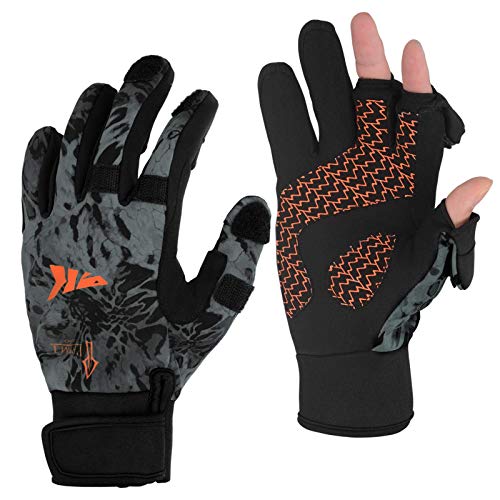
The Mountain Mist prioritizes fingertip access rather than full waterproof coverage: four finger slots and a thumb slot let you fold tips back and secure them with hook-and-loop catches. The back is fleece-lined, while the palm combines neoprene and microfiber with anti-slip material. KastKing also identifies smartphone-friendly fingertips and a hook-and-loop wrist closure. This design suits anglers frequently changing hooks or bait in cold weather. Because the gloves are described as waterproof at the back rather than fully waterproof, they are a weaker match for sustained immersion or heavy wet exposure.
Bottom line: Pick these for quick finger access, not all-over waterproof protection.
AFTCO Breakwater Waterproof Glove

The Breakwater is a straightforward waterproof option, with a 100% waterproof membrane as its defining feature. The maker identifies an olive color and a large size, but do not establish insulation, finger access, or grip features. That makes it a fit for anglers seeking a waterproof glove without a cold-weather or touchscreen feature. Buyers fishing in freezing conditions or needing exposed fingertips should compare those requirements carefully before choosing this simpler specification profile.
Bottom line: Choose this when a basic waterproof membrane is the priority.
How to choose waterproof fishing gloves
Start with exposure and dexterity: a sealed waterproof glove suits rain and spray, while open finger slots trade coverage for quick access. Neoprene is commonly used in wet-weather fishing gloves because it remains insulating when damp; thickness adds warmth but can reduce fine feel. For cold, wet trips, favor a lined construction such as fleece-backed neoprene. For frequent phone use, look for conductive fingertips rather than assuming any glove will operate a touchscreen. A measurable rule: if you expect prolonged cold-water contact, choose a fully waterproof design rather than a glove waterproof only across the back of the hand.
| Fishing need | Feature to prioritize |
|---|---|
| Cold, wet conditions | Waterproof construction with fleece lining |
| Hook and bait changes | Fold-back finger slots |
| Phone or fish-finder use | Conductive fingertips |
Waterproof coverage and glove types
Full waterproof gloves and partial-coverage gloves solve different problems. A waterproof membrane or sealed neoprene shell blocks water across the hand; open-finger designs leave tips available for delicate work and therefore give up complete coverage. A waterproof back alone should not be treated as protection for the palm or finger openings. Seam construction matters in prolonged exposure: stitched and glued seams reduce potential entry paths compared with an unspecified seam design. Match the glove to the wettest task, not just the forecast; handling wet lines and repeatedly dipping hands can expose openings that rain alone does not.
Material flexibility also affects control. Thick insulation may help retain warmth but can make small tackle harder to manipulate, while exposed fingertips improve dexterity at the cost of warmth. Use finger slots for brief tasks and return tips to their covered position between tasks when the design allows it.
Fit, cuffs, and fishing grip
A close fit helps keep the glove from shifting when you grip a rod, reel, or net, but fingers should still bend without pulling the cuff away from the wrist. Extended cuffs can overlap a jacket sleeve and reduce gaps where spray or drafts enter; check that the cuff and sleeve can sit together without restricting wrist movement. For gloves with hook-and-loop closures, keep the closure secure without pinching. Grip patterns such as embossed palms or polymer/silicone prints are intended to help with wet equipment, but they cannot replace a firm hold on slippery gear.
Before choosing a size, use the maker’s sizing chart and measure both hands if one is larger. A glove that is too tight can limit movement and make cold-weather use less comfortable; excess room can reduce control of small tackle.
Care after wet or cold-weather fishing
Rinse saltwater residue from fishing gloves with fresh water after a saltwater trip, then let them air-dry fully before storage. Salt crystals can stiffen materials and stress seams over repeated use. Keep gloves away from direct high heat, which can damage rubber, coatings, or waterproof membranes; do not assume a heater or hot dryer is safe. Inspect seams, palm coatings, and cuffs for peeling or splits before the next trip, since damage can compromise water resistance. Store dry gloves loosely rather than compressed in a wet tackle bag.
Frequently Asked Questions
Are waterproof fishing gloves fully submersible?
Waterproof wording does not guarantee suitability for prolonged immersion; construction and openings matter. Choose a sealed full-coverage design for repeated water contact, not a glove described as waterproof only across its back.
Do neoprene fishing gloves keep hands warm?
Neoprene can provide insulation in wet conditions, and fleece lining adds another insulating layer. A 1 mm fleece lining is specified on the IceRiver, while fit and exposure duration still affect comfort.
How should fishing gloves fit for rod control?
Fishing gloves should fit snugly enough to avoid shifting while leaving fingers able to bend freely. Consult the maker’s size chart and check both hands, especially if one is larger.
How do I dry fishing gloves after saltwater?
Rinse salt residue with fresh water and air-dry the gloves completely before storage. Avoid direct high heat, which can damage rubber and waterproof coatings.