
Best Wax for Plastic: 4 Options Compared by Use

For plastic vehicle trim, Griot’s Garage Ceramic 3-in-1 Wax is the best fit because its ceramic spray wax is made for plastic and rubber trim as well as paint. Choose Howard Wax-It-All Beeswax Polish for household surfaces where food-contact use matters; McKee’s 37 Wax Remover for Plastic and Chemical Guys Trim Clean Wax & Oil Remover remove residue rather than protect plastic.
We earn a commission if you buy through links on this page. As an Amazon Associate I earn from qualifying purchases. Products are compared on manufacturer specifications, not hands-on testing.
- Best overall: Griot’s Garage Ceramic 3-in-1 Wax – Its spray wax is intended for vehicle plastic and rubber trim, plus paint and other surfaces.
- Best for household surfaces: Howard Wax-It-All Beeswax Polish – Its food-grade beeswax polish is intended for plastics as well as wood, stone, metal, cement and paint.
- Best for polish residue: McKee’s 37 Wax Remover for Plastic – It is formulated to dissolve wax and polish residue on exterior plastic, rubber and vinyl trim.
| Product | Best for | Format | Size | Intended role | Shop |
|---|---|---|---|---|---|
| Griot’s Garage Ceramic 3-in-1 Wax | Vehicle trim protection | SiO₂ spray wax | 22 fl oz | Protective coating | Check Price on Amazon |
| Howard Wax-It-All Beeswax Polish | Household surface polish | Beeswax polish | 9 fl oz | Protective polish | Check Price on Amazon |
| McKee’s 37 Wax Remover for Plastic | Exterior residue removal | Liquid remover | 22 fl oz | Residue remover | Check Price on Amazon |
| Chemical Guys Trim Clean Wax & Oil Remover | Trim preparation | Trigger spray | 16 fl oz | Residue remover | Check Price on Amazon |
Wax for Plastic Compared by Use
Match the product to whether the plastic needs a protective finish or residue removal.
Griot’s Garage Ceramic 3-in-1 Wax

For vehicle plastic trim that needs a protective finish, this is the only wax in the group explicitly formulated as a spray-on coating for plastic and rubber trim. The 22 fl oz spray also covers paint, wheels and chrome, and the maker says its SiO₂ layer provides water beading and lasts for months. Application is spray on, then wipe off. The tradeoff is its automotive focus: choose a household polish instead when the plastic is a kitchen or furniture surface, particularly if food-contact suitability is important.
Bottom line: Pick this for vehicle trim when the goal is a protective, water-beading finish.
Howard Wax-It-All Beeswax Polish

For household plastic and mixed-material surfaces, this beeswax polish stands apart with food-grade positioning and a use across wood, stone, metal, cement, paint and plastics. It comes in a 9 fl oz container, rather than an automotive spray format. The maker says to apply a thin layer, let it dry and buff; it also claims a water-resistant barrier. This is a household polish, not a vehicle-specific trim coating, so choose another option when the main need is automotive plastic protection or removing wax buildup.
Bottom line: Choose this for household plastic when food-contact use is a priority.
McKee’s 37 Wax Remover for Plastic

For exterior trim covered by old polish or wax, this is a cleaner rather than a finishing wax. Its 22 fl oz formula is intended to dissolve residue on rubber, vinyl and plastic exterior trim; the maker also says accidental overspray on paint or glass wipes away without damage. That makes it relevant when the task is clearing residue before choosing a finish, but it does not provide the protective wax layer sought by buyers looking to wax bare plastic. Use it for cleanup, not as the final treatment.
Bottom line: Pick this when wax or polish residue needs to come off exterior trim.
Chemical Guys Trim Clean Wax & Oil Remover
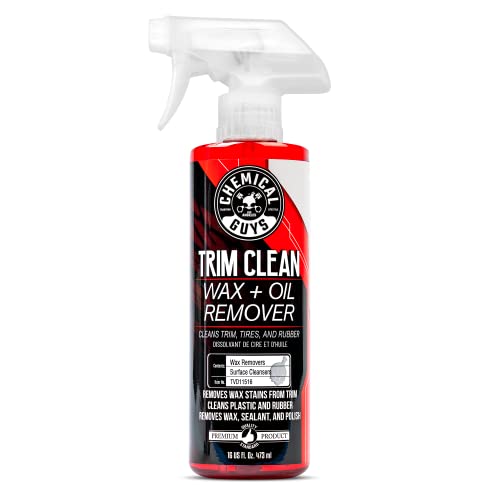
For preparing trim after polishing, this trigger spray targets wax, compound and oily dressing buildup on plastic trim, rubber and body cladding. The 16 fl oz bottle is smaller than the 22 fl oz residue remover here, and the product is positioned for cleaning before fresh dressing or coating. The maker says it can lift the haze left by residue. It is not a wax or a protective finish itself, so it suits buyers correcting buildup rather than those seeking a product to leave a wax layer on plastic.
Bottom line: Choose this for residue cleanup before applying a separate trim finish.
How to choose wax for plastic
Choose by surface and purpose first: a protective wax leaves a finish, while a wax remover clears old residue. For exterior vehicle trim, select a product explicitly intended for plastic or rubber trim; for household plastic, prioritize the product’s surface range and whether food-contact use matters. A spray-on coating is suited to broad automotive surfaces, while a beeswax polish is applied thinly and buffed. Do not confuse cleaners with protectants: residue removers prepare the surface but are not finishing waxes. If the plastic is part of a kitchen item, use only a product whose maker identifies it for that context, and follow its application directions.
Vehicle trim wax versus residue remover
Vehicle trim wax and residue removers do different jobs: the wax forms a finish, while the cleaners lift buildup. Plastic exterior trim can show pale residue after polishing, so removing the residue before dressing or coating avoids sealing over it. A dedicated remover is the better fit when wax, polish or oily dressing is already present; choose a protective spray wax when the surface is clean and the goal is water beading or a refreshed finish. Use a soft applicator or cloth and work a small, inconspicuous area first, since textured and smooth plastics can respond differently to products and buffing.
| Need | Choose | Why |
|---|---|---|
| Protect vehicle trim | Plastic/rubber trim wax | Leaves a protective finish |
| Remove wax buildup | Trim wax remover | Clears residue before finishing |
| Polish household surfaces | Multi-surface beeswax polish | Intended for several material types |
How to apply wax safely to plastic
Apply a thin layer to clean, dry plastic and buff only as directed by the product; excess polish can collect in grain and seams. Spray waxes typically use a spray-and-wipe process, while paste or beeswax polishes are spread thinly, allowed to dry and then buffed. Keep products off hot surfaces and avoid applying them where slipperiness creates a hazard, such as pedals, steering wheels or walking surfaces. For vehicle trim, do not let a protectant contaminate glass or paint if its directions do not permit that use. A test spot helps reveal streaking or color change before treating a larger area.
Plastic wax mistakes to avoid
The most common mistake is using residue remover as if it were a protective wax; a cleaner removes buildup but does not leave the intended finish. Another is choosing a product only because it says “wax” when its intended material is wood or household surfaces rather than automotive trim. Plastic types vary, and textured trim can trap product where a smooth panel does not, so apply sparingly and buff away excess. Avoid abrasive pads and strong solvents unless the plastic maker permits them, because some plastics can scratch, haze or soften. For kitchen items, confirm food-contact suitability before use.
Frequently Asked Questions
Can car wax be used on plastic trim?
Some car waxes are made for plastic trim, but not every automotive wax is. Choose one that expressly includes plastic or rubber trim, and use a trim residue remover instead if the surface has old polish buildup.
Should plastic trim be clean before waxing?
Yes, clean and dry trim gives a finishing product a better-prepared surface. If old wax or oily dressing remains, clear it first with a remover intended for plastic or rubber trim.
How much wax should I apply to plastic?
Use a thin layer rather than a heavy coat; excess can lodge in textured grain and seams. Spray products may instead call for a spray-and-wipe process, so use the method specified for that product.
Is beeswax polish suitable for car plastic trim?
A multi-surface beeswax polish may include plastics in its intended uses, but that does not make it a vehicle-specific trim coating. For automotive trim protection, choose a product expressly made for vehicle plastic or rubber trim.