
Best Wire Mesh for Squirrels: 4 Options Compared

304 Stainless Steel Hardware Cloth, 1/2-Inch suits most squirrel-exclusion projects because its 1/2-inch welded mesh is made from 304 stainless steel. Choose a narrower 1/4-inch mesh when smaller openings matter, or the plant protector kit for wrapping individual plants rather than building a broad barrier.
Hardware cloth is welded wire mesh used to cover openings, enclose plants or reinforce barriers. Measure the area and plan how to anchor the mesh before choosing a roll.
We earn a commission if you buy through links on this page. As an Amazon Associate I earn from qualifying purchases. Products are compared on manufacturer specifications, not hands-on testing.
- Best overall: 304 Stainless Steel Hardware Cloth, 1/2-Inch – The 48-inch-wide roll combines 1/2-inch welded openings with 304 stainless steel.
- Best for small openings: HIHADUUM Hardware Cloth, 1/4-Inch – Its 1/4-inch mesh and 16-inch width suit narrow areas where tighter openings are useful.
- Best for narrow strips: Galvanized Welded Mesh, 1/4-Inch – The 8-inch-wide, 35-foot roll offers 1/4-inch mesh for smaller barrier runs.
- Best for individual plants: Metal Plant Protectors, 16-Inch – The kit includes stakes and ties for securing mesh around garden plants.
| Product | Best for | Mesh opening | Material | Roll size | Shop |
|---|---|---|---|---|---|
| 304 Stainless Steel Hardware Cloth, 1/2-Inch | Broad barrier runs | 1/2 inch | 304 stainless steel | 48 in × 50 ft | Check Price on Amazon |
| HIHADUUM Hardware Cloth, 1/4-Inch | Narrow openings | 1/4 inch | Hot-dip galvanized steel | 16 in × 20 ft | Check Price on Amazon |
| Galvanized Welded Mesh, 1/4-Inch | Short barrier runs | 1/4 inch | Hot-dip galvanized steel | 8 in × 35 ft | Check Price on Amazon |
| Metal Plant Protectors, 16-Inch | Plant enclosures | — | Metal with PVC coating | 16 in × 32.8 ft | Check Price on Amazon |
Wire Mesh for Squirrels
Match the mesh opening and roll dimensions to the barrier you need to build.
304 Stainless Steel Hardware Cloth, 1/2-Inch

304 Stainless Steel Hardware Cloth, 1/2-Inch offers the widest roll among these options, making it useful for covering broad openings or building a longer barrier with fewer seams. Its 1/2-inch welded mesh is made from 304 stainless steel, and the roll measures 48 inches by 50 feet. The maker says the material resists corrosion and recommends regular cleaning in coastal or high-salt environments. This option suits projects where stainless steel and substantial coverage matter. Its openings are larger than the 1/4-inch mesh options, so choose a tighter mesh if minimizing opening size is the priority.
Bottom line: Choose this for broad coverage with stainless steel mesh.
HIHADUUM Hardware Cloth, 1/4-Inch

HIHADUUM Hardware Cloth, 1/4-Inch has 1/4-inch mesh in a 16-inch-wide roll, a useful format for narrow barriers and smaller gaps where the opening size matters more than broad coverage. The wire is 23 gauge, and its steel is hot-dip galvanized after welding. The maker says the zinc coating is intended to help resist rust outdoors. This roll suits projects that need a tighter mesh and manageable width. Its 20-foot length and 16-inch width cover less area than the 48-inch-wide roll, so larger barriers may need more sections and joins.
Bottom line: Choose this for narrow runs where 1/4-inch openings are the priority.
Galvanized Welded Mesh, 1/4-Inch
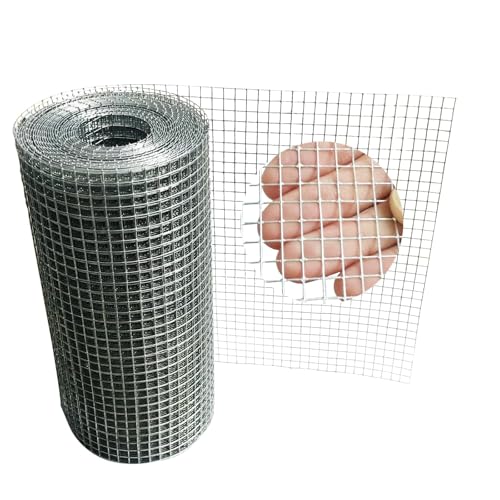
Galvanized Welded Mesh, 1/4-Inch is the narrowest roll in this group at 8 inches wide, while its 35-foot length provides a longer run than the other 1/4-inch option. The mesh is 23-gauge low-carbon steel with post-welding hot-dip galvanization, according to the product name and features. That narrow format can suit edging or a small barrier that does not need a wide sheet. The tradeoff is coverage: an 8-inch strip is poorly suited to enclosing a large opening on its own, and its width should be checked against the area to cover.
Bottom line: Choose this for a long, narrow barrier or edging run.
Metal Plant Protectors, 16-Inch

Metal Plant Protectors, 16-Inch is packaged for protecting plants rather than covering a wall or large opening: the set includes a 32.8-foot roll, 100 zip ties, 30 U-shaped stakes, gloves and pliers. The metal mesh has a PVC coating, and the roll is 16 inches wide. The maker says the mesh allows air and sunlight through while helping keep animals out. This kit suits gardeners who want to make short plant enclosures with included fastening supplies.
Bottom line: Choose this for securing mesh around individual outdoor plants.
How to Choose Squirrel-Proof Wire Mesh
For a general squirrel barrier, choose welded hardware cloth with openings no larger than 1/2 inch; use 1/4-inch mesh when smaller openings are a concern. Mesh size is the clear opening, while wire gauge describes wire thickness, so compare both rather than treating gauge as the hole size. Stainless steel resists corrosion, while galvanized steel has a zinc coating; cut edges can expose steel, so inspect them and protect or fold them where practical. Measure the area first: with a barrier wider than 16 inches, an 8- or 16-inch roll needs overlapping sections. For a broad surface, favor a roll wide enough to reduce seams.
A decision rule makes sizing simpler: use a 1/4-inch opening when the barrier must block smaller animals as well as squirrels; use 1/2-inch mesh for standard squirrel exclusion when the surrounding gaps are also closed.
Mesh Opening and Barrier Fit
Mesh only works when its openings and perimeter gaps are small enough for the animal you are excluding. Squirrels can squeeze through surprisingly small gaps; a 1/2-inch opening is a practical upper limit for squirrel barriers, while a 1/4-inch opening is the more conservative choice. A mesh sheet does not seal the space around pipes, rooflines or corners by itself. Measure the largest gap, then overlap joined sheets by several inches and fasten the overlap so it cannot pull apart. Use a continuous barrier at edges and corners; one unprotected gap can defeat a much finer mesh panel. For plant protection, leave enough room for growth without leaving an opening at the base.
Wire Mesh Materials Compared
Stainless steel and galvanized steel are the relevant material choices in these options. Stainless steel avoids reliance on a zinc coating for corrosion protection, while galvanized steel uses zinc over steel; the actual service life depends on exposure, coating condition and maintenance. Coastal air and road salt can accelerate corrosion, so inspect mesh more often in salty conditions and clean it regularly. Welded mesh holds a fixed grid shape, unlike loose woven netting that can stretch or sag. This table matches material and format to common projects; roll width matters because narrow strips require more seams for broad coverage.
Use the mesh format that fits the job rather than picking only by material.
| Project need | Useful format | Tradeoff |
|---|---|---|
| Wide opening or long barrier | Wide welded roll | Heavier sheet can be harder to handle |
| Narrow gap or tighter exclusion | 1/4-inch hardware cloth | Smaller openings restrict airflow more |
| Individual garden plants | Plant protector roll with stakes | Mesh opening needs confirmation |
Cutting and Installing Hardware Cloth Safely
Cut hardware cloth with metal snips and wear gloves and eye protection because cut wire ends can be sharp and may spring free. Leave enough overlap at seams to attach both layers securely, then bend or cover exposed cut edges where people or pets could contact them. Anchor the bottom edge so squirrels cannot push underneath; soil, masonry or a firmly fastened frame can close that route depending on the site. Avoid stretching mesh so tightly that staples or ties pull through the wire. Check the barrier after installation and after storms, especially at corners, fasteners and the ground line, where loosened edges create entry gaps.
Frequently Asked Questions
What mesh opening keeps squirrels out?
A 1/2-inch opening is a practical upper limit for squirrel barriers, and 1/4-inch mesh is the tighter option. Close perimeter gaps too, since a small opening around an edge can bypass the mesh.
Is galvanized mesh suitable for outdoor use?
Galvanized mesh has a zinc coating that helps protect steel from corrosion. Salt air and road salt can wear that protection faster, so inspect the coating and clean the mesh regularly in those settings.
How should I fasten mesh to a garden fence?
Overlap adjoining sheets by several inches and fasten both layers so the seam cannot pull open. Secure the bottom edge as well; an unanchored ground gap can become the route squirrels use.
Can squirrels chew through plastic garden netting?
Plastic netting can stretch, tear or be chewed, so it is less dependable as a rigid squirrel barrier than welded metal mesh. Choose hardware cloth with openings no larger than 1/2 inch for a sturdier enclosure.
What safety gear do I need to cut wire mesh?
Wear work gloves and eye protection when cutting metal mesh because wire ends can be sharp and may spring away from the cut. Fold or cover exposed edges after installation, especially near people and pets.