
Best Wood Stain Markers for Furniture Touch-Ups

Furniture Markers 18-Color Kit suits most people because its 18 marker colors span a wider range of wood tones than the single-shade pens and smaller kits. Choose a single-color marker instead when you already know the finish shade you need; use a wax-stick kit if the scratch also needs shallow filling.
Wood stain markers apply color to small surface marks and touch-ups, rather than replacing a full refinishing job.
We earn a commission if you buy through links on this page. As an Amazon Associate I earn from qualifying purchases. Products are compared on manufacturer specifications, not hands-on testing.
- Best overall: Furniture Markers 18-Color Kit – Its 18 marker colors cover more named wood tones than the other marker options.
- Best for Golden Oak: Minwax Wood Finish Marker, Golden Oak – The single marker is specifically identified as Golden Oak.
- Best for wax-stick repairs: Furniture Repair Kit, 6 Colors – The kit pairs six markers with six wax sticks and a sharpener.
| Product | Best for | Marker colors | Marker count | Extras | Shop |
|---|---|---|---|---|---|
| Furniture Markers 18-Color Kit | Color range | 18 colors | 18 | 50 ml beeswax | Check Price on Amazon |
| Furniture Repair Kit, 6 Colors | Wax-stick repairs | 6 colors | 6 | 6 wax sticks; sharpener | Check Price on Amazon |
| DAIXISM 21-Piece Furniture Repair Kit | Ten-color repairs | 10 colors | 10 | 10 wax sticks; sharpener | Check Price on Amazon |
| Minwax Wood Finish Marker, Golden Oak | Golden Oak touch-ups | Golden Oak | 1 | — | Check Price on Amazon |
| Minwax Wood Finish Marker, Early American | Early American touch-ups | Early American | 1 | — | Check Price on Amazon |
Wood Stain Markers Compared
Match the marker format and color range to the size of the repair and the wood tone.
Furniture Markers 18-Color Kit

The 18-color range is the main distinction here, with shades including walnut, cherry, maple, oak, ebony, white, and gray. The kit includes 18 wood markers and 50 ml of beeswax polish, so it pairs color touch-ups with a polishing step. The maker says it is intended for scratches, stains, and fading on wood floors and furniture. It suits a household with several wood tones to match. Because this is a multi-color kit rather than one precisely named stain shade, buyers seeking a known finish such as Golden Oak may prefer a single-color marker.
Bottom line: Choose this when matching several different wood tones matters more than getting one exact named shade.
Furniture Repair Kit, 6 Colors

The six wax sticks distinguish this kit from marker-only options: it includes six repair markers, six paper-wrapped wax sticks, and a sharpener. Its six colors are Maple, Oak, Cherry, Walnut, Mahogany, and Black. The maker says the markers and wax sticks cover scratches, nicks, scuffs, and discoloration on furniture and other wood surfaces. It suits repairs where a color touch-up may need to be paired with wax. The smaller color selection is a limitation if your furniture has a less common tone or several different finishes.
Bottom line: Pick this when you want both color markers and wax sticks for furniture touch-ups.
DAIXISM 21-Piece Furniture Repair Kit

The 10-color palette includes shades such as White, Grey, Oak, Maple, Cherry, Walnut, Mahogany, Chestnut, Burnt Sienna, and Black. The 21-piece set contains 10 markers, 10 wax sticks, and one sharpener, giving it a broader palette than the six-color wax-stick kit. The maker says the set is for wood furniture and floor scratch repair. It is a fit for buyers who want wax sticks as well as markers and need more than six color options. It does not include a named stain shade like the individual Minwax pens, so exact finish matching takes care.
Bottom line: Choose this for a wax-and-marker kit with ten color options.
Minwax Wood Finish Marker, Golden Oak
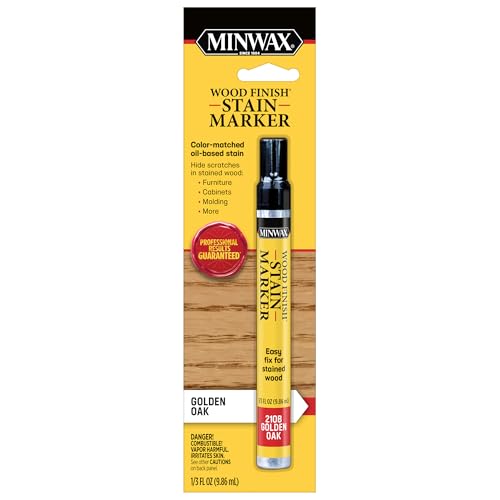
The named Golden Oak shade makes this single marker a focused choice for small repairs on wood already finished in a matching tone. The maker says it is suitable for common nicks and scratches, as well as small hobby and craft projects; it can be used on furniture, molding, cabinets, doors, and floors. Its application method is to apply the stain and wipe away excess with a cloth. The pen contains 1/3 oz. A single shade is the limitation: it is less useful when you need to match several finishes or are unsure whether Golden Oak fits the surface.
Bottom line: Pick this when Golden Oak is the shade you need for a small touch-up.
Minwax Wood Finish Marker, Early American

Early American is the defining feature of this single-color marker, setting it apart from the Golden Oak pen and the multi-color kits. The maker says it handles common nicks and scratches and can also be used for small hobby or craft projects and decorative touches. The marker is intended for furniture, molding, cabinets, doors, floors, and other wood surfaces; the application guidance is to apply the stain and wipe off excess with a cloth. The package contains 1/3 oz. Because it offers only one named shade, it suits a known Early American finish rather than varied wood tones.
Bottom line: Choose this when the existing finish is Early American and the repair is small.
How to Choose a Wood Stain Marker
For a few marks on one known finish, start with a marker in that shade; choose a multi-color kit when you have several wood tones to match. Stain pens add color but do not replace missing wood, while wax sticks can fill shallow surface nicks. Work in a small, hidden spot first, because the same stain can look different on bare wood, an old finish, and wood with a clear topcoat. Apply color sparingly and build it in light passes rather than drawing a heavy line at once. If the damage has a deep groove or loose finish, a marker alone will not restore the surface level.
This guide helps distinguish a single shade from a broader touch-up set:
| Repair need | Useful format |
|---|---|
| One known shade | Single-color marker |
| Several wood tones | Multi-color marker kit |
| Color plus shallow filling | Marker and wax-stick kit |
How to Match the Wood Color
Match the repair to the finished surface, not just the wood species: light, grain, age, and existing clear coat all change how a color reads. A practical rule is to test a marker on an inconspicuous area before touching a visible scratch, then wait until the color dries before judging it. Follow the grain with short strokes on a linear scratch, and wipe excess when the product’s directions call for it. A single shade is the more direct choice when the finish is already identified, such as Golden Oak or Early American. When the finish name is unknown or several pieces differ, a kit with multiple colors gives more choices but still needs a test spot.
Markers, Wax Sticks, and Repair Limits
Markers deposit color, while wax sticks are used to add material to shallow surface damage; the two formats address different parts of a repair. A color pen can disguise a light scratch but cannot rebuild a chip or deep gouge. Wax sticks are more appropriate when a nick needs a small amount of filler, though a large or structural defect needs a different repair approach. Keep both the marker and wax away from heat and flames while working, and ventilate the area when applying stain products. Use a clean cloth for excess stain where the marker’s directions call for wiping; leaving a heavy application can produce a darker mark than intended.
Frequently Asked Questions
Do wood stain markers fill deep scratches?
No, a stain marker adds color rather than replacing missing wood. For a shallow nick, a wax stick can add material; a deep gouge needs a separate filling or repair method.
How can I make a stain marker match furniture?
Test it first on a hidden spot of the same finished surface. Color can look different over bare wood and an existing clear finish, so judge the dried test before treating the visible mark.
Should I wipe wood stain marker after applying it?
Follow the marker’s application directions; the Minwax pens in this comparison call for wiping excess with a cloth. Apply a small amount first, since excess stain can make a touch-up darker.
Can a wood stain marker be used on floors?
The marker options here are described for wood floors as well as furniture or other wood surfaces. For floor scratches, test a hidden area first and avoid treating a deep gouge as a color-only repair.