
Best Wrap-Around Headphones: 4 Styles Compared

RTUSIA Small Wrap-Around Bluetooth Headphones is the best wrap-around headphone choice for most people here because its over-ear design rests outside the ear canal and is described as lightweight and compact. Choose a neckband or open-ear clip style instead if you prefer earbuds or want a different fit around your ears.
We earn a commission if you buy through links on this page. As an Amazon Associate I earn from qualifying purchases. Products are compared on manufacturer specifications, not hands-on testing.
- Best overall: RTUSIA Small Wrap-Around Bluetooth Headphones – The over-ear fit stays outside the ear canal and the headphones fold for carrying.
- Best for jobsite use: DEWALT Magnetic Bluetooth Neckband Headphones – A flexible neckband, magnetic earbuds, and an IPX6 rating suit active wear.
- Best for open-ear fit: Baseus Bowie MC2 Open-Ear Clip-On Earbuds – Clip-on earbuds use detachable M, L, and XL cushions for different ear shapes.
| Product | Best for | Wearing style | Battery claim | Water resistance | Shop |
|---|---|---|---|---|---|
| RTUSIA Small Wrap-Around Bluetooth Headphones | Outside-ear comfort | Over-ear, behind-head | 12 hours | — | Check Price on Amazon |
| DEWALT Magnetic Bluetooth Neckband Headphones | Worksite listening | Neckband, in-ear buds | 30+ hours | IPX6 | Check Price on Amazon |
| TERUBIN 200-Hour Neckband Bluetooth Headphones | Long-play claim | Neckband, in-ear buds | 200 hours claimed | — | Check Price on Amazon |
| Baseus Bowie MC2 Open-Ear Clip-On Earbuds | Open-ear clip fit | Open-ear clip-on | 55 hours claimed | IP67 | Check Price on Amazon |
Best wrap-around headphones
Compare each style by how it sits on or around your ears, then match its features to your routine.
RTUSIA Small Wrap-Around Bluetooth Headphones
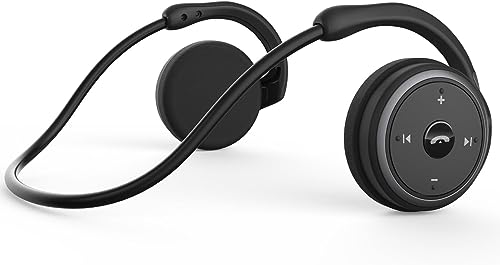
RTUSIA Small Wrap-Around Bluetooth Headphones differs from the neckband earbuds here because its speakers rest outside the ear canal. Its foldable, lightweight design is intended for running, gym sessions, and packing into a pocket or purse, and the maker says battery life is 12 hours. Choose it if you dislike earbuds inside your ears; the limitation is that its behind-head band may not suit someone who wants a flexible neckband or clip-on fit.
Bottom line: Pick it if you want a compact over-ear fit that avoids the ear canal.
DEWALT Magnetic Bluetooth Neckband Headphones
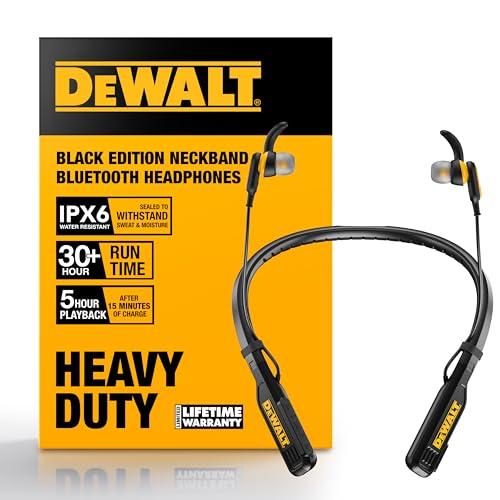
DEWALT Magnetic Bluetooth Neckband Headphones stands apart with magnetic in-ear earbuds attached to a flexible neckband, rather than an outside-ear speaker or open-ear clip. It includes interchangeable ear cushions, a microphone, and a Type-C charging cable; the maker claims more than 30 hours of runtime. Its IPX6 rating is for sweat and water resistance, a practical distinction for active work. This style suits listeners who want earbuds they can let hang at the neck between uses. Skip it if you do not want an in-ear fit, since the cushions still sit in the ears.
Bottom line: Choose it for a flexible neckband, interchangeable ear cushions, and IPX6 rating.
TERUBIN 200-Hour Neckband Bluetooth Headphones

TERUBIN 200-Hour Neckband Bluetooth Headphones is the neckband option with the largest claimed runtime: the maker says up to 200 hours of continuous playback and says a 10-minute charge can provide up to 10 hours. Its built-in 1,000 mAh battery is said to take 3 hours to charge through USB-C. The neckband includes in-ear earbuds and a microphone, so it suits someone who wants a band around the neck rather than open-ear speakers. The limitation is that the fit remains in-ear, and no water-resistance rating is provided among its features.
Bottom line: Pick it if the maker’s long playback claim is your deciding factor.
Baseus Bowie MC2 Open-Ear Clip-On Earbuds

Baseus Bowie MC2 Open-Ear Clip-On Earbuds uses a wrap-around clip-on design with air cushions instead of a neckband or behind-head band. Detachable M, L, and XL cushion sizes let buyers tailor contact around the ear; the product also names LDAC audio, four microphones, and an IP67 rating. The maker claims up to 55 hours of playtime. This option suits listeners looking for an open-ear form for running or gym workouts. Its limitation is that clip-on cushions contact the outer ear, so buyers who prefer a conventional over-ear speaker or an in-ear seal should choose another style.
Bottom line: Choose it for a clip-on open-ear design with multiple cushion sizes.
How to choose wrap-around headphones
Start with where you want sound to sit: outside the ear canal, inside it, or clipped around the outer ear. Over-ear and behind-head styles keep the speaker outside the canal; neckband earbuds use an in-ear seal, while clip-ons rest on the ear. For a simple decision rule, choose an outside-ear or clip-on design if you do not want an earbud inserted into the canal, and choose a neckband only if in-ear cushions are acceptable. Battery figures are maker claims and different wearing designs do not guarantee the same comfort. Match the fit first, then weigh runtime, charging and resistance features.
Neckband, behind-head, and clip-on styles
Neckbands connect in-ear buds with a flexible band, keeping the buds close when removed; behind-head headphones place their speakers over the ears while the band runs behind the head. Clip-on open-ear models use a small support around the outer ear rather than an earbud tip. These configurations serve different comfort preferences, so a long battery claim alone is not a fit recommendation. Use this comparison to narrow the style before choosing a particular model.
| Style | Where it sits | Choose when |
|---|---|---|
| Behind-head over-ear | Speakers outside ear canal | You avoid in-ear earbuds |
| Neckband earbuds | In-ear tips, connected at neck | You want a flexible band |
| Open-ear clip-on | Clip cushions at outer ear | You want no in-ear seal |
Fit and comfort for exercise
Ear shape and movement affect whether a wrap-around design stays comfortable, so try the fit at home before a long workout. Clip-on cushions offered in M, L, and XL sizes can help tailor contact, but size labels are not standardized across brands. Glasses arms, hats, and headbands can also compete for space around the ear; test those combinations before relying on a secure fit during running. A behind-head band may suit someone who wants speakers resting outside the canal, while earbuds may feel more secure to listeners comfortable with an in-ear fit. Do not assume “wrap-around” means one universal design.
Water resistance and workout safety
IP ratings indicate protection against dust or water under defined test conditions, not a promise of safe use in every environment. IPX6 means resistance to powerful water jets, while IP67 includes dust protection and temporary immersion under controlled conditions. Neither rating makes headphones appropriate for swimming unless the manufacturer specifically allows that use. Sweat resistance also does not make a device safe to charge while wet; dry the charging port before connecting power. For outdoor runs, keep volume low enough to hear traffic and other hazards, especially with designs that cover or occupy the ears.
Frequently Asked Questions
Are wrap-around headphones the same as neckband earbuds?
No. Neckband earbuds use in-ear tips connected by a band around the neck, while some wrap-around headphones place speakers outside the ear canal or clip around the outer ear. Check where the sound unit rests if you are avoiding in-ear styles.
Can wrap-around headphones work with glasses?
They can, but the fit depends on how the band or clip shares space with the glasses arms. Try both together for at least 15 minutes before using them for a long workout.
What does an IPX6 headphone rating mean?
IPX6 means the device is rated against powerful water jets, not designed for submersion. Do not swim with an IPX6 headset unless its manufacturer separately approves swimming use.
How should I compare headphone battery claims?
Compare the playback hours as a manufacturer claim, not a guaranteed result. Volume, call use, Bluetooth connection and battery age can change runtime, so leave reserve time for long trips or shifts.
Are open-ear clip-on headphones good for running?
Open-ear clips can suit runners who do not want an in-ear seal, but fit depends on ear shape and movement. Test them on a short run first and keep volume low enough to hear nearby traffic.