
Bike Brake Pad Upgrade: 5 Options Compared by Fit

For a general bike brake pad upgrade, AGPTEK Semi-Metallic Disc Pads is the closest match for riders with a compatible two-piston disc brake, because it combines semi-metallic pads with broad named compatibility. Choose a different option if your bike uses V-brakes, side-pull calipers or the specific e-bike fit called out by another pad.
Brake pads are the replaceable friction material that presses against a rotor or wheel rim to slow a bicycle; the brake type and pad shape determine fit.
We earn a commission if you buy through links on this page. As an Amazon Associate I earn from qualifying purchases. Products are compared on manufacturer specifications, not hands-on testing.
- Best overall: AGPTEK Semi-Metallic Disc Pads – Semi-metallic disc pads with compatibility named for select Shimano, Tektro and TRP systems.
- Best for installation extras: Yasiby Semi-Metallic Disc Pads – The set name includes installation tools alongside four pairs of semi-metallic disc pads.
- Best for V-brakes: Hapleby V-Brake Blocks – Four rubber-and-fiber brake blocks are made for mountain-bike V-brake systems.
- Best for select e-bikes: Ridstar Q20 / OUXI V8 Disc Pads – Eight pairs are specified for Ridstar Q20 variants and the OUXI V8.
| Product | Best for | Brake type | Compound or material | Quantity | Shop |
|---|---|---|---|---|---|
| AGPTEK Semi-Metallic Disc Pads | Two-piston disc brakes | Disc | Semi-metallic | 4 pairs | Check Price on Amazon |
| Yasiby Semi-Metallic Disc Pads | Tool-included replacement | Disc | Semi-metallic blend | 4 pairs | Check Price on Amazon |
| Ridstar Q20 / OUXI V8 Disc Pads | Named e-bike models | Disc | Semi-metallic | 8 pairs | Check Price on Amazon |
| Hapleby V-Brake Blocks | V-brake bicycles | V-brake rim | Synthetic fiber and nitrile rubber | 4 pads | Check Price on Amazon |
| 40 mm Caliper Brake Pads | Side-pull calipers | Side-pull caliper rim | Rubber and steel | 2 pairs | Check Price on Amazon |
Bike Brake Pad Upgrade Options
Match brake style and pad shape first, then compare material and set size.
AGPTEK Semi-Metallic Disc Pads

For riders upgrading compatible two-piston disc brakes, this set pairs a semi-metallic compound with compatibility named for select Shimano MT200, Tektro E10.11 and TRP systems. The maker says the compound balances braking response, heat dissipation, wear resistance and noise suppression, and describes it for mountain trails, commuting and recreational riding. Four pairs suit buyers who want several replacements on hand. The key limitation is fit: the compatibility is selective, not universal across every brake from those brands. Confirm the caliper and pad shape match before installation.
Bottom line: Choose it for a compatible two-piston disc brake when semi-metallic compound is the priority.
Yasiby Semi-Metallic Disc Pads
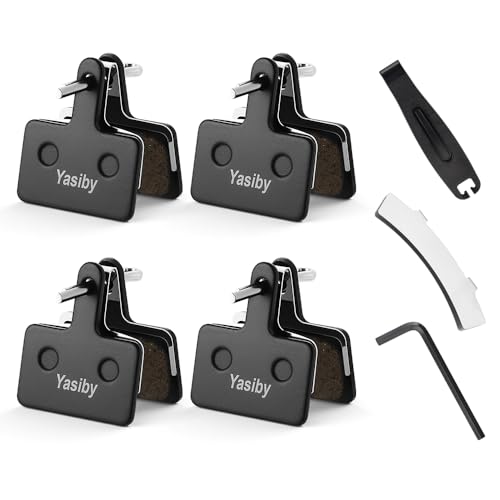
Compared with the other general disc-pad set, Yasiby includes installation tools in its product name and describes a compound blended from copper fiber, organic resin and ceramic additives. The maker claims thermal dissipation, wear resistance, braking power and noise reduction; stainless-steel spring clips and a pin are also part of the described assembly. The four-pair quantity makes it a multi-replacement set. Compatibility is the deciding limitation: the product name cites TRP, Tektro, Shimano and Deore, but buyers still need to match the pad outline to their specific caliper rather than relying on brand alone.
Bottom line: Pick this set if you want included tools and have confirmed the pad shape.
Ridstar Q20 / OUXI V8 Disc Pads

This is the largest set here and the only one specifically tied to named electric-bike models: Ridstar Q20 variants and OUXI V8. The product calls out front and rear replacement and uses a semi-metallic compound reinforced with copper fibers. The maker says the pads are intended for strong braking and heat dissipation, with a dampening layer meant to reduce vibration and noise. Eight pairs may be more than a rider needs for one replacement, and the fit claim does not make these universal e-bike pads. Verify the exact model and caliper before choosing them.
Bottom line: Choose it only for a Ridstar or OUXI model after confirming caliper fit.
Hapleby V-Brake Blocks
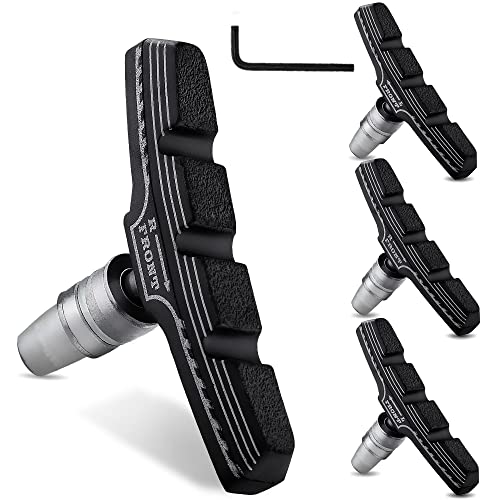
Unlike the disc-pad sets, these are rim-brake blocks for a V-brake bicycle, so they press against the wheel rim rather than a rotor. The product describes a synthetic-fiber and nitrile-rubber construction, three wear indicator lines and an included hex wrench. Its replacement mileage changes substantially between smooth riding and steep hills, so treat those figures as maker claims rather than a universal service interval. V-brake pads are the right category only when the bike has V-brake arms and compatible pad holders; they cannot substitute for disc pads.
Bottom line: Pick these for a V-brake setup that takes this style of block.
40 mm Caliper Brake Pads

These pads serve standard side-pull caliper brakes, a different rim-brake format from the V-brake blocks and disc pads above. The set contains two pairs, with 40 mm pads made from rubber and steel; the product says it fits most BMX, mountain and road bikes with side-pull calipers. That broad fit wording still depends on the brake taking this pad style, so it is not a universal upgrade for all bikes. Riders with disc brakes or V-brake arms need a different pad type, even if their bicycle category appears in the product name.
Bottom line: Choose these for a compatible side-pull caliper brake, not a disc or V-brake.
How to Choose a Bike Brake Pad Upgrade
Start by identifying whether the bike uses disc brakes or rim brakes; those pad types do not interchange. Disc systems also need the correct pad outline for the caliper, while rim systems distinguish V-brake blocks from side-pull caliper pads. A reliable decision rule is to match the shape of the removed pad and the brake model before comparing compounds. Resin pads are commonly quieter and gentler on rotors, while metallic compounds tend to tolerate heat better and can be noisier; actual behavior depends on the rotor, weather and pad formulation. For wet or muddy riding, inspect pads more often because grit and contamination can reduce braking performance. Never ride with a pad that is loose, contaminated or worn to its maker’s limit.
Disc, V-Brake and Caliper Pad Fit
Brake style decides which options can fit: disc pads contact a rotor, while V-brake and side-pull pads contact the rim. Within disc brakes, matching by brand alone is not enough because one manufacturer can use multiple pad shapes across calipers. Rim pads also need correct orientation: the braking surface should meet the rim track, not the tire. Use this quick fit guide before choosing a compound.
| Brake setup | Pad type to match | Options here |
|---|---|---|
| Disc brake | Caliper-specific pad shape | AGPTEK Semi-Metallic Disc Pads, Yasiby Semi-Metallic Disc Pads, Ridstar Q20 / OUXI V8 Disc Pads |
| V-brake | V-brake block and holder | Hapleby V-Brake Blocks |
| Side-pull caliper | Caliper rim pad | 40 mm Caliper Brake Pads |
When to Replace and Bed In New Pads
Replace brake pads when friction material reaches the manufacturer’s wear limit, becomes contaminated, or braking changes noticeably; do not wait for metal backing to contact the rotor. Many disc-brake makers recommend bedding new pads with roughly 20 to 30 controlled stops, following the procedure for the specific brake, so pad material transfers evenly to the rotor. Keep the rotor and pad surfaces free of oil, chain lubricant and greasy fingerprints; contamination can cause persistent noise and weak braking. After installation, check that the wheel spins freely, the rotor or rim is not rubbing continuously, and the lever feels firm before riding. Test braking at walking speed in a clear area first.
Frequently Asked Questions
Can I use disc brake pads on a V-brake bike?
No. Disc pads clamp a rotor, while V-brake blocks press against the wheel rim, so their shapes and mounting systems differ. Match the replacement to the brake type already on the bike.
How do I identify the right disc pad shape?
Compare the old pad’s outline and retention method with the replacement and identify the caliper model. Brand names alone are insufficient because a brand can use multiple pad shapes.
How often should bicycle brake pads be replaced?
There is no single mileage interval that suits every ride; inspect pads regularly and replace them at the maker’s wear limit or sooner if contaminated. Mud, grit, steep descents and frequent stops can accelerate wear.
Do new disc brake pads need bedding in?
Usually, yes: many brake makers call for about 20 to 30 controlled stops to bed pads and rotor together. Use the procedure for the specific brake and perform it in a clear, safe area.
Can I mix different pad compounds on one bike?
A bike can use different compounds at the front and rear if each pad fits its brake, but braking feel and wear may differ. Keep the same suitable compound on both sides of a rotor caliper.