
Boat Touch Up Paint: 3 Marine Pens Compared

For most small boat scratches, FURRELOR White Marine Touch-Up Paint is the practical pick because its 50 mL white marine paint comes with a mini spatula and sandpaper for prep. Choose SENVEN White Marine Touch-Up Pen for a smaller white pen, or Quicksilver Phantom Black Paint Pen when you need Phantom Black paint matched to specified Mercury and MerCruiser equipment.
Boat touch-up paint is intended for localized chips and scratches, not broad hull coverage. Match the repair color and surface first; these options include white generic marine paint and a black equipment-specific pen.
We earn a commission if you buy through links on this page. As an Amazon Associate I earn from qualifying purchases. Products are compared on manufacturer specifications, not hands-on testing.
- Best overall: FURRELOR White Marine Touch-Up Paint – The 50 mL white paint includes a mini spatula and sandpaper for surface preparation.
- Best for a smaller white pen: SENVEN White Marine Touch-Up Pen – Its 30 mL size suits buyers who want a smaller amount of white marine paint.
- Best for Mercury Phantom Black: Quicksilver Phantom Black Paint Pen – The paint is specified to match Phantom Black on Mercury and MerCruiser equipment.
| Product | Best for | Color | Volume | Paint type | Shop |
|---|---|---|---|---|---|
| FURRELOR White Marine Touch-Up Paint | White surface repairs | White | 50 mL | Water-based marine paint | Check Price on Amazon |
| SENVEN White Marine Touch-Up Pen | Smaller white repairs | White | 30 mL | Water-based marine paint | Check Price on Amazon |
| Quicksilver Phantom Black Paint Pen | Phantom Black equipment | Phantom Black | 0.3 fl oz | Marine equipment touch-up paint | Check Price on Amazon |
Boat touch up paint pens
Compare each pen by paint color, amount and the repair it is intended to cover.
FURRELOR White Marine Touch-Up Paint

At 50 mL, this white marine paint provides more paint than the other white pen here and includes a mini spatula and sandpaper for preparation. The maker says its water-based formula resists water and UV exposure and is suitable for aluminum, wood, fiberglass and metal. That range makes it a fit for owners repairing small marks on different boat materials. The white color is the limitation: it will not match a dark hull or a specific equipment finish, so choose it only when white is appropriate.
Bottom line: Choose this for small white repairs when the included prep tools and larger volume are useful.
SENVEN White Marine Touch-Up Pen
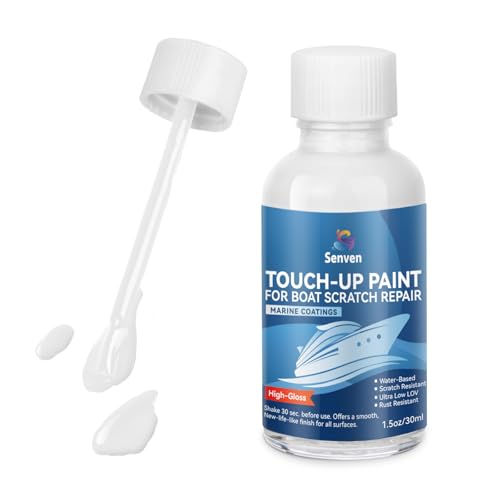
The 30 mL size makes this the smaller of the two white marine paint options, for buyers who need less paint for localized repairs. The maker says the water-based, high-gloss paint can repair chips, scratches, cracks and gouges on boats and other watercraft, and lists wood, fiberglass, aluminum and metals among its uses. It may suit a small white repair across those surfaces. Unlike the 50 mL option, this pen does not include listed sanding or spatula tools, so have suitable surface-preparation supplies ready.
Bottom line: Choose this when a smaller amount of white marine paint suits the repair.
Quicksilver Phantom Black Paint Pen

Unlike the white marine paints, this 0.3 fl oz pen is for Phantom Black touch-ups on Mercury outboards, MerCruiser sterndrives and inboards. The maker says the color matches original Phantom Black and that the paint is produced to meet Mercury Marine OEM specifications. That specific match makes it the relevant choice for small scratches or chips on the named equipment. Its color and equipment fit are narrow, however; it is not a general white hull paint or a match for unrelated black finishes.
Bottom line: Choose this for small Phantom Black touch-ups on the named Mercury or MerCruiser equipment.
How to choose boat touch up paint
Choose boat touch-up paint by matching color, substrate and repair scale before comparing volume. A pen or small container is suited to localized chips and scratches; broad coating work needs a marine paint intended for that area. Hull coatings are divided by waterline: topside paint is for above-waterline surfaces, while below-waterline use requires a product specifically rated for immersion. Do not infer that rating from a marine label alone.
For white surfaces, compare the 30 mL and 50 mL options; for Phantom Black Mercury or MerCruiser equipment, use the equipment-specific color. If the damaged area is larger than a small chip or scratch, move to a coating product designed for the full surface rather than trying to stretch touch-up paint. Color match and waterline suitability are the deciding checks.
Preparing a boat surface for touch-up paint
Preparation determines whether a small repair adheres cleanly: remove salt, dirt, wax and loose paint, then let the area dry before applying new coating. Salt residue can interfere with adhesion, so rinse with fresh water and dry the surface thoroughly. Use fine abrasive paper only to feather damaged paint and smooth edges; avoid sanding through sound coating or into the substrate.
On metal, remove loose corrosion without enlarging the repair, and use a compatible primer when the paint system calls for one. Follow the paint maker’s cure and recoat timing, and apply thin coats rather than filling a deep gouge in one pass. Work with ventilation and keep paint away from ignition sources; solvent-based coatings can release flammable vapors.
Touch-up pens versus marine coating paint
Touch-up pens address small, localized defects, while quart-size marine coatings are intended to cover larger areas. A topside coating is generally applied above the waterline and is not interchangeable with bottom paint designed for underwater service. The best format follows the area needing repair, not simply the boat’s material.
For a mark the size of a chip or narrow scratch, a matching touch-up paint can limit the repair area. For widespread fading, peeling or exposed substrate, a larger coating system may be more appropriate and can require primer and broader surface preparation. Check the product label for waterline placement and compatible substrates before using any paint on a hull.
Color and waterline checks before repairing
Confirm the color against the surface that will be repaired, because white and Phantom Black are not universal matches. White hulls can vary in tone, and an equipment-specific paint match applies only to the named finish rather than every black boat surface. Test the color in a discreet spot when appearance is critical.
Waterline placement is equally important: topside paint belongs above the waterline unless its maker specifically rates it for immersion. Do not use an above-waterline formula on a submerged hull area. If a scratch reaches bare metal or fiberglass, verify whether a compatible primer is needed before applying touch-up paint; color alone does not establish a complete repair system.
Frequently Asked Questions
Can boat touch-up paint go below the waterline?
Only use paint that is specifically rated for below-waterline immersion. Above-waterline topside paints are not a substitute for coatings designed for continual submersion.
How should I prepare a boat scratch for paint?
Rinse away salt and dirt, remove wax and loose coating, then dry the surface fully. Feather rough paint edges with fine abrasive paper without sanding into sound material.
Should I use primer under boat touch-up paint?
Primer may be needed when a scratch exposes bare metal or fiberglass, depending on the paint system and substrate. Check compatibility before painting over exposed material.
How many coats should boat touch-up paint need?
Apply thin coats and let each coat reach the maker’s recoat interval before adding another. Deep chips may need more than one pass, but a thick single coat can sag or cure unevenly.
Can I use marine touch-up paint on aluminum?
Some marine touch-up paints are suitable for aluminum, but the specific product must name that substrate. Remove loose corrosion and confirm whether the paint system requires a compatible primer.