
Brace for Cubital Tunnel: 5 Options Compared

Multi-Angle Cubital Tunnel Brace, M is the named cubital tunnel brace, and its lever offers three fixed elbow angles plus a range-limiting mode. Choose another option if you want removable splints, a size-specific sleeve, or adjustable sizing instead of angle settings.
We earn a commission if you buy through links on this page. As an Amazon Associate I earn from qualifying purchases. Products are compared on manufacturer specifications, not hands-on testing.
- Best overall: Multi-Angle Cubital Tunnel Brace, M – Three fixed angles and a 120°–180° range-limiting mode provide specific position controls.
- Best for adjustable fit: 3-in-1 Cubital Tunnel Brace, 12–17 in. – The brace is described as adjustable for elbows measuring 12 to 17 inches.
- Best for removable splints: Hurmoya Night Elbow Splint, M – Two removable metal splints let you change the support configuration.
| Product | Best for | Adjustment | Splints | Size | Shop |
|---|---|---|---|---|---|
| Multi-Angle Cubital Tunnel Brace, M | Angle control | 3 fixed angles; range limit | — | M | Check Price on Amazon |
| 3-in-1 Cubital Tunnel Brace, 12–17 in. | Adjustable sizing | 3 configurations | 2 removable metal | 12–17 in. | Check Price on Amazon |
| Hurmoya Night Elbow Splint, M | Removable splints | 3 straps | 2 removable metal | M | Check Price on Amazon |
| TISMOD Cubital Tunnel Elbow Brace | One-size support | Adjustable straps | — | One size | Check Price on Amazon |
| OXYSAIKO Cubital Tunnel Night Splint | Flexible support | Removable-splint support | 2 removable metal | One size | Check Price on Amazon |
Braces for Cubital Tunnel Compared
Compare the adjustment style, splint configuration, and sizing to match a brace to your preferred elbow position.
Multi-Angle Cubital Tunnel Brace, M

Unlike the removable-splint options, Multi-Angle Cubital Tunnel Brace, M uses a lever to select 120°, 150°, or 180° fixed angles, or limit movement across 120°–180°. That makes it the clearest fit for someone who wants a defined elbow position or controlled movement rather than swapping splints. The maker says the brace is intended for night sleeping and day working, and the product name specifies right and left arm fit. The limitation is the M size; buyers who need a different size should verify fit before ordering.
Bottom line: Choose this if a set elbow angle or limited range matters most.
3-in-1 Cubital Tunnel Brace, 12–17 in.

3-in-1 Cubital Tunnel Brace, 12–17 in. is the only option with a 12–17-inch adjustable fit range and three configurations based on its two removable metal splints. The maker describes both splints in place for 180° fixation, one removed for 150°, and both removed for 90° mobility. Its two wide hook-and-loop straps and interior anti-slip strips are intended to help keep the sleeve in place. The tradeoff is that its angle choices depend on inserting or removing splints, rather than using a lever for movement limits.
Bottom line: Pick this when the 12–17-inch fit range and removable-splint setup suit you.
Hurmoya Night Elbow Splint, M
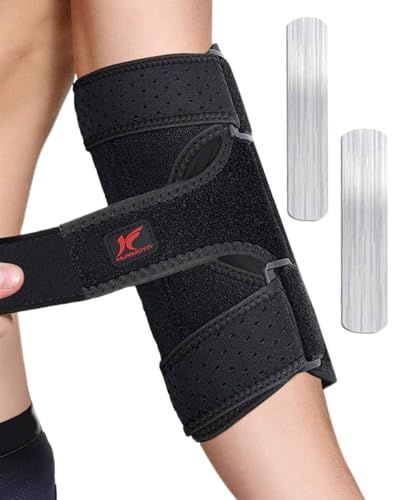
Hurmoya Night Elbow Splint, M pairs a medium-size compression sleeve with two removable metal splints and three straps. The maker says the splints help align and straighten the elbow; with them removed, the brace can serve as a less restrictive support for everyday activity and sports. That switchable setup suits buyers who want one sleeve for sleep and daytime use. The tradeoff is the M-only size in the product name, so buyers outside that fit should confirm their sizing before ordering.
Bottom line: Choose this if you want removable splints and a medium sleeve.
TISMOD Cubital Tunnel Elbow Brace
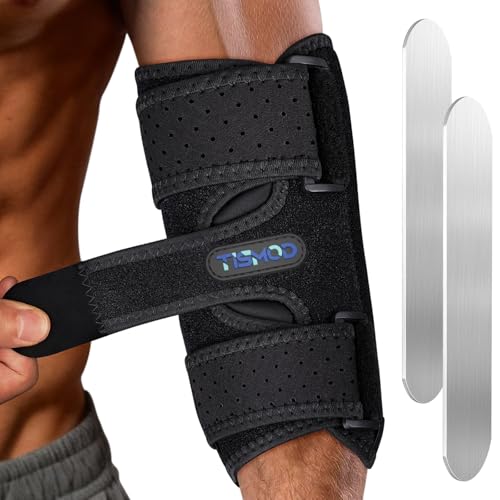
TISMOD Cubital Tunnel Elbow Brace uses adjustable straps and a one-size design, distinguishing it from the medium-size sleeve options and the angle-control model. The maker says its lightweight, breathable material is intended for extended wear while allowing a full range of motion, and describes use for sports and varied activities. That may suit someone seeking adjustable compression rather than a specified night-position setting. Its features do not identify removable splints or a defined angle range, so it is not the choice for shoppers who need those controls.
Bottom line: Pick this for one-size adjustable support without stated angle controls.
OXYSAIKO Cubital Tunnel Night Splint
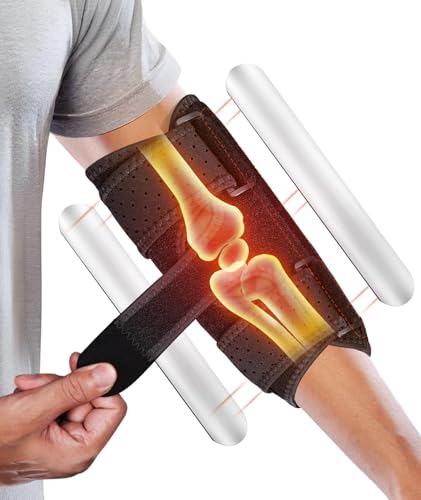
OXYSAIKO Cubital Tunnel Night Splint offers a one-size design with two removable metal splints, combining a flexible fit label with a changeable support setup. The maker describes the brace as lightweight and breathable and says splints can be removed for greater flexibility, making it relevant to buyers who want support options for day and night. Shoppers who need a precise fit or elbow position should prioritize those measurements and controls.
Bottom line: Choose this if one-size fit and removable-splint flexibility appeal to you.
How to choose a cubital tunnel brace
Choose by the elbow position you want to maintain and how much movement you need. A night splint commonly limits deep elbow flexion; a more flexible support can allow daytime tasks but may not hold a set angle. For a measured position, select an option with defined angle settings or range control; for more than one support mode, consider removable splints. Cubital tunnel syndrome involves the ulnar nerve as it passes behind the inner elbow, where prolonged bending can increase pressure. A brace is a positioning aid, not a diagnosis or substitute for clinical care. If numbness, weakness, or symptoms are worsening, consult a clinician rather than tightening a brace to force a position.
Fit and elbow position
Fit a sleeve by measuring around the elbow as its maker directs; a range of 12–17 inches is useful only if your measurement falls within it. A brace that slips can lose its intended position, while straps tightened too firmly can cause discomfort or skin irritation. Elbow angle choices are not interchangeable: a 180° setting is straight, while 120° is more bent. Use the smallest amount of restraint that matches the intended use, and make sure the hand remains warm and normally colored. Stop wearing the brace and seek advice if you notice new tingling, swelling, skin changes, or increased numbness.
Removable splints versus angle controls
Removable splints change support by adding or taking away rigid pieces, while a lever-style brace selects or limits the elbow angle directly. A three-configuration design may suit someone who wants distinct positions for sleep, desk work, and activity; a range limiter suits someone who wants movement kept within set bounds. Do not assume that the same angle works for every person or condition. This table compares mechanisms, not a treatment ranking.
| Mechanism | How adjustment works | Useful when |
|---|---|---|
| Lever control | Select set angles or limit range | You want specified movement boundaries |
| Removable splints | Add or remove rigid supports | You want distinct support configurations |
| Straps only | Adjust compression and hold | You want flexible support without stated angle control |
Safe wear and common mistakes
A cubital tunnel brace should not make the hand numb, cold, pale, or blue; loosen or remove it if those signs occur. Avoid pulling straps as tight as possible, since compression is not the same as positioning and can irritate skin or affect circulation. Check the skin after the first short wear period, especially around strap edges and rigid splints, and keep the brace dry and clean according to its care label. Do not force an elbow straight if that causes pain or tingling. Persistent or worsening hand weakness, numbness, or pain warrants medical evaluation, because a brace cannot establish the cause.
Frequently Asked Questions
What elbow angle should a cubital tunnel brace hold?
There is no single angle that suits everyone; the options here include positions from 120° to 180°. Choose only a position that is comfortable and does not increase tingling or pain.
Should I wear a cubital tunnel brace during the day?
A flexible support may be more practical for daytime tasks than a rigid night position. Stop or loosen it if hand sensation, color, or temperature changes.
How tight should an elbow brace feel?
The brace should stay in position without causing hand numbness, coldness, color change, or increased tingling. Loosen or remove it promptly if any of those signs appear.
Can removable splints be taken out for activity?
Some braces are designed to work with splints inserted or removed for different levels of support. Use only the configurations intended for that brace, and avoid activity that worsens symptoms.
How do I measure for an elbow brace?
Measure the elbow circumference at the location specified by the brace maker and compare it with the range; one option gives a 12–17-inch range. Do not assume a one-size label guarantees a secure fit.