
Brackets for 2×4 Framing: 4 Types Compared by Fit

For general 2×4 framing connections, Tall U-Shaped 2×4/2×6 Brackets is the clearest fit because its U-shaped channel is made for dimensional lumber and framing uses. Choose Concealed 2×4 Joist Hangers instead when you need a concealed joist hanger; rail brackets and right-angle braces suit more specific connections.
A 2×4 is nominally sized: its actual cross-section is 1.5 by 3.5 inches, so check that a bracket matches the face and orientation where it will attach.
We earn a commission if you buy through links on this page. As an Amazon Associate I earn from qualifying purchases. Products are compared on manufacturer specifications, not hands-on testing.
- Best overall: Tall U-Shaped 2×4/2×6 Brackets – Its U-shaped channel fits 2x lumber and is intended for joists, blocking, studs, and related framing connections.
- Best for concealed support: Concealed 2×4 Joist Hangers – The concealed hanger is sized for 2×4 beams and includes screws.
- Best for fence rails: GBGS 2×4 Fence Rail Brackets – Its rail bracket is made for 2×4 wood railings and has holes for #10 or 1/4-inch screws.
| Product | Best for | Connection type | Material / thickness (mm) | Pack size | Shop |
|---|---|---|---|---|---|
| Tall U-Shaped 2×4/2×6 Brackets | Joists and blocking | U-shaped clip | Galvanized steel, 2 mm | 20 brackets | Check Price on Amazon |
| Concealed 2×4 Joist Hangers | Concealed beam support | Concealed joist hanger | Q235B steel, powder-coated | 12 hangers | Check Price on Amazon |
| GBGS 2×4 Fence Rail Brackets | Fence rail joints | Fence rail bracket | Galvanized low-carbon steel, 1 mm | 20 brackets | Check Price on Amazon |
| ZENFUN 2×4 L Corner Brackets | Right-angle joints | 90-degree L brace | Steel, 2 mm, black powder-coated | 15 brackets | Check Price on Amazon |
Brackets for 2×4 Framing
Choose by the shape of the wood connection and whether the bracket’s dimensions suit the lumber face you need to fasten.
Tall U-Shaped 2×4/2×6 Brackets

For framing members that need a wraparound connection, this tall U-shaped bracket is the most directly suited option here. Its channel fits standard 2x lumber with a 1.5-inch actual thickness, and the taller side plates are intended to grip 2×4 and 2×6 joists, studs, or blocking. The 14-gauge, 2 mm galvanized steel bracket is sold in a 20-pack. The maker also identifies beams, plates, ledgers, and wind-tie uses. Because the channel dimension is described by lumber thickness rather than the full face width, confirm the bracket orientation matches your connection before fastening.
Bottom line: Choose this for wraparound framing connections to joists, studs, or blocking.
Concealed 2×4 Joist Hangers

For a connection where the hanger should be concealed, these brackets differ from the open U-clips by enclosing a 2×4 beam in a black, powder-coated Q235B steel hanger. The set contains 12 brackets and screws, and the maker describes indoor and outdoor uses such as beams, swings, handrails, and fences. That makes this option relevant when appearance or an enclosed beam connection matters more than a visible wraparound clip. The screws are a convenience, but the specifications give no load rating; do not assume the connection is suitable for a particular structural load without verifying the required capacity and fastener installation.
Bottom line: Pick these when a concealed 2×4 beam connection is the priority.
GBGS 2×4 Fence Rail Brackets

Unlike the framing clips and hangers, this bracket is specifically shaped for joining 2×4 wood railings in fencing and deck-rail applications. It is made from 20-gauge (1 mm) low-carbon steel with a hot-dip galvanized finish, and its pre-drilled holes accommodate #10 or 1/4-inch screws; screws are not included. A 20-pack may suit repeated rail connections, but the fence rail focus makes it less adaptable to general joist, stud, or blocking connections than a U-shaped framing bracket. Match the bracket to the rail layout and select fasteners appropriate for the wood and connection.
Bottom line: Choose this for 2×4 fence or deck rail connections, not general joist framing.
ZENFUN 2×4 L Corner Brackets
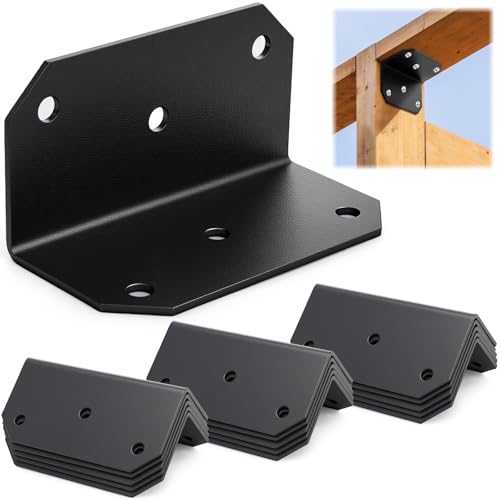
For a visible 90-degree corner joint, this black L brace offers a different connection from the wraparound framing brackets. Each steel bracket measures 4 by 2 by 2 inches and is 2 mm thick; the 15-piece set has pre-drilled mounting holes. The maker claims a 600-pound load capacity, but that figure should not be treated as a rating for every wood species, screw choice, or installation. These braces may suit furniture frames, fences, and other right-angle joints, yet their L shape does not enclose a joist or provide the same connection geometry as a joist hanger. Use them when a corner brace is what the joint needs.
Bottom line: Pick these for right-angle wood joints where an L brace fits the connection.
How to choose brackets for 2×4 framing
Choose a bracket by the direction of the load and the surfaces the connector must join. U-shaped clips wrap a framing member; joist hangers support a beam end at a ledger or beam; L braces reinforce a corner; rail brackets join fence rails. A nominal 2×4 measures 1.5 by 3.5 inches in actual cross-section, so orient the 1.5-inch thickness and 3.5-inch face to match the bracket. For a connection around joist or blocking sides, start with a U-clip; for a concealed beam end, use a hanger designed for that joint. Check the required load capacity for structural work and use fasteners suited to the connector holes and wood. A connector’s steel thickness alone does not establish a safe load rating.
How 2×4 bracket fit works
A standard 2×4 is 1.5 inches thick and 3.5 inches wide, although a bracket may be described by the nominal lumber size rather than its inside dimensions. Confirm whether the connector accepts the 1.5-inch thickness, and check its width and height against the wood face and the way the members meet. A U-clip’s channel wraps around lumber, while a joist hanger sits at a beam end; the two shapes are not interchangeable. If the connection uses a 2×6 instead of a 2×4, use a bracket explicitly designed for that lumber size. For an unusual or built-up member, measure the wood rather than relying on the nominal label.
Framing bracket types and their uses
Bracket shape determines the connection more than appearance does. A U-shaped clip grips a member from multiple sides, a concealed hanger supports a beam end, an L brace joins two faces at a right angle, and a rail bracket is intended for a railing connection. Use this quick match to narrow the shape before comparing steel finish or pack quantity.
| Connection need | Bracket type | Fit consideration |
|---|---|---|
| Joist, stud, or blocking wraparound | U-shaped clip | Check channel against lumber thickness and orientation |
| Beam end support | Joist hanger | Match hanger size to the beam and supporting member |
| Two faces meeting at a corner | L brace | Confirm the brace geometry suits the joint |
| Fence or deck rail connection | Rail bracket | Confirm rail dimensions and fastener holes |
For structural framing, choose a connector specified for the intended joint and load rather than substituting a decorative or general-purpose corner brace.
Fasteners and safety for framing brackets
Fastener size and placement are part of the connection, not an afterthought. Match screw diameter to the bracket holes; for example, the fence rail bracket here has separate holes for #10 and 1/4-inch screws. Use every required hole and the fastener type specified for the connector and application, especially for load-bearing work. A bracket’s thickness, coating, or claimed load figure does not by itself prove that an installed joint is safe. Outdoor exposure also matters: galvanized and powder-coated finishes help protect steel surfaces, but cut edges, damaged coatings, and incompatible metals can still affect corrosion. For decks, elevated structures, or other structural connections, verify the connector’s capacity and approved fasteners for the specific use before installation.
Frequently Asked Questions
What size is a standard 2×4 in actual dimensions?
A standard 2×4 measures 1.5 inches thick by 3.5 inches wide. Check bracket fit against those actual dimensions and the orientation of the board.
Can a 2×4 bracket also fit 2×6 lumber?
Only if the bracket is made for both sizes and its channel accommodates the member. A bracket intended for a 2×4 alone should not be assumed to fit a 2×6.
Are galvanized brackets suitable for outdoor framing?
Galvanized steel provides a protective finish commonly used outdoors, but exposure and coating damage affect corrosion resistance. Choose a connector and fasteners intended for the specific environment and structural use.
How many screws should go in a framing bracket?
Use the fasteners and hole pattern specified for that connector; do not leave required holes empty in a load-bearing joint. Hole diameter matters too, since some brackets distinguish between #10 and 1/4-inch screws.
Can an L bracket replace a joist hanger?
An L brace and a joist hanger have different connection shapes and purposes. Use a hanger designed for a beam-end connection rather than substituting a corner brace without a verified structural specification.