
Briggs and Stratton Fuel Pump 808492: Fit Compared

For a Briggs & Stratton 808492 replacement, Crivon 808492 Pulse Fuel Pump is the clearest match because it names 808492 and describes a pulse-vacuum pump. Choose another option if your engine requires a different pump type or its model-specific fitment does not match.
A pulse fuel pump uses pressure pulses from the engine to move fuel, unlike an electric pump that uses a motor. Confirm the engine model and part number before fitting a replacement.
We earn a commission if you buy through links on this page. As an Amazon Associate I earn from qualifying purchases. Products are compared on manufacturer specifications, not hands-on testing.
- Best overall: Crivon 808492 Pulse Fuel Pump – Names 808492 and identifies the pump as a pulse-vacuum type.
- Best for 1/4-inch fuel line: Rosotion 808492 / 808656 Pump – Specifies a 1/4-inch inner-diameter fuel line and names 808492.
| Product | Best for | Part numbers | Pump type | Fuel-line fit | Shop |
|---|---|---|---|---|---|
| Crivon 808492 Pulse Fuel Pump | Broad engine compatibility | 808492, 808656; others | Pulse vacuum | — | Check Price on Amazon |
| Rosotion 808492 / 808656 Pump | Specified line diameter | 808492, 808656, 491922 | — | 1/4 in. inner diameter | Check Price on Amazon |
| 808492 Electric Pump with Kit | Electric pump setup | 808492, 808656; others | Electric | 0.25 in. hose | Check Price on Amazon |
| Tozersis Pump with Filter and Oil Hose | Included hose and filter | 808492, 808656; others | — | — | Check Price on Amazon |
Briggs and Stratton 808492 Fuel Pumps
Compare part-number references and pump-type clues, then verify the replacement against your engine before installation.
Crivon 808492 Pulse Fuel Pump
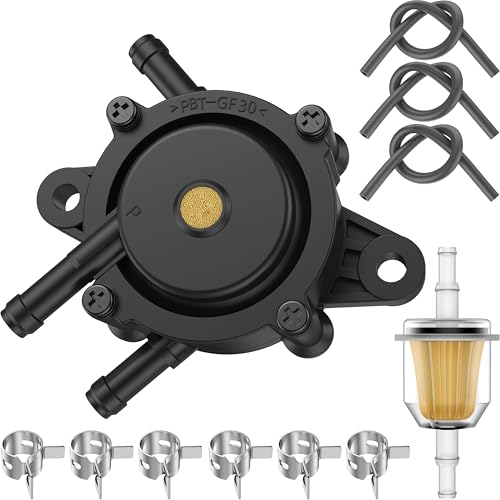
Crivon 808492 Pulse Fuel Pump combines the 808492 part-number match with a pulse-vacuum design, making it a straightforward option to consider when replacing that style of small-engine pump. The maker lists compatibility across several engine and equipment brands, including Briggs & Stratton, Kohler, and John Deere, and mentions mowers, golf carts, generators, and mini bikes. Its dimensions are 3.35 × 3.35 × 1.1 inches. The compatibility range is broad, but the maker does not identify specific engine model codes; verify the exact engine and pump connections before ordering.
Bottom line: Choose it if your engine uses a pulse-vacuum pump and its part number and connections match.
Rosotion 808492 / 808656 Pump

Rosotion 808492 / 808656 Pump is distinguished by a fuel-line size: it fits line with a 1/4-inch inner diameter. The maker identifies 808492, 808656, and 491922 as the corresponding pump numbers and says the package contains one pump. It also warns that the pump is not compatible with fuel containing more than 10% ethanol. That fuel restriction can rule it out even when the part number and line diameter appear to match. Check the engine model and serial details as well as the fuel type before choosing it.
Bottom line: Pick it when the engine uses 1/4-inch line and fuel stays within the ethanol limit.
808492 Electric Pump with Kit

808492 Electric Pump with Kit differs from the pulse-vacuum options by describing an electric fuel pump, and it gives a flow rate of 12 gallons per hour. The maker lists 808492 among its replacement numbers and says the kit includes an oil filter and oil pipe with a 0.25-inch size. The metal, plastic, and rubber construction and compact 2.75 × 1.98 × 1.2-inch dimensions are also specified. The electric design is a key limitation: a matching part number alone does not establish that an engine designed for a pulse pump can use it.
Bottom line: Choose it only when the engine is designed for an electric pump and the fitment matches.
Tozersis Pump with Filter and Oil Hose

Tozersis Pump with Filter and Oil Hose is the option in this group that mentions an included filter and oil hose alongside a broad set of replacement part numbers, including 808492 and 808656. The maker describes polymer construction and claims resistance to oil, gasoline, heat, and vibration. It names compatibility with several engine brands, including Briggs & Stratton, Kohler, Kawasaki, Honda, and John Deere.
Bottom line: Choose it if the included filter and oil hose suit your replacement needs.
How to choose a Briggs and Stratton 808492 fuel pump
Start with the engine’s required part number and pump mechanism, not a broad compatibility claim. Small-engine fuel pumps commonly use engine pressure pulses to operate a diaphragm; electric pumps instead use a motor, so the two styles are not automatically interchangeable. Match the replacement number and pump type to the engine’s existing setup, then compare fuel-line diameter and mounting connections. If a listing names 808492 but describes an electric pump, verify that the engine calls for an electric unit before buying. A part-number match is a useful filter, not proof that every fitting or engine model is compatible.
Fuel-system work has a fire risk: work outdoors or in a well-ventilated area, let hot engine parts cool, and keep sparks, flames, and smoking materials away from gasoline. Shut off the engine and prevent fuel spills before disconnecting a line.
Pulse and electric fuel pumps compared
Pulse pumps use pressure changes from the engine to flex a diaphragm, while electric pumps use a powered motor to move fuel. That operating difference is the first fit decision for a replacement; a matching part number does not make an electric pump a direct substitute for a pulse pump. Pulse units also rely on a sound pulse connection and correctly routed fuel lines. Electric units require a compatible electrical supply and control arrangement. Match the pump mechanism to the one specified for the engine, then check the fittings and line size.
The table separates the two pump types by how they operate and what to verify.
| Type | How it moves fuel | Fit check |
|---|---|---|
| Pulse / vacuum | Engine pressure pulses flex a diaphragm | Pulse connection, part number, hose fittings |
| Electric | Powered motor moves fuel | Electrical compatibility, pressure and fittings |
Fuel-line size and engine fit
Fuel-line inner diameter must match the pump nipples and the engine’s fuel system; a 1/4-inch line fit applies only when the engine uses that diameter. Measure the old hose’s inside diameter rather than relying on its outside width, since hose-wall thickness changes the outside measurement. Check the engine model and the full part number, including suffixes or superseding numbers, before choosing a replacement. For an uncertain cross-reference, confirm the required number and connections before ordering. A mismatch can cause leaks or prevent the pump from supplying fuel properly.
Route replacement hose away from hot exhaust surfaces and moving parts, and use fuel-rated hose and clamps intended for small-engine service. Inspect the connections for leakage after installation, with the engine off before starting it.
Fuel compatibility and safe installation
Fuel compatibility can be a deciding limit: one pump here carries a maker warning against fuel above 10% ethanol, so check that restriction against the fuel you use. Gasoline can ignite readily, and spilled fuel can create a fire hazard near a hot engine. Work with the engine cool in an open, ventilated area; avoid flames, sparks, and smoking, and collect drained fuel in an approved container. Replace damaged or hardened fuel hose rather than reusing it. After reconnecting the lines, check for seepage before operating the equipment and stop if a leak appears.
Frequently Asked Questions
How can I tell whether my engine uses a pulse fuel pump?
A pulse pump has a pressure connection from the engine or crankcase that operates its diaphragm. Check the engine’s specified pump type and the existing connections; an electric pump also needs a compatible electrical supply.
Does Briggs and Stratton 808492 mean the same as 808656?
The maker names both numbers for some replacement pumps, but that does not establish interchangeability for every engine. Confirm the engine model and its part-number cross-reference before substituting 808656 for 808492.
What fuel line size should I use for a replacement pump?
Use the inside diameter required by the engine and pump fittings; one option here specifies a 1/4-inch inner-diameter line. Measure the hose bore rather than its outside diameter, which includes the hose wall.
Can a pulse pump be replaced with an electric fuel pump?
Not automatically: pulse pumps use engine pressure changes, while electric pumps need a suitable electrical supply and system arrangement. Replace the pump type only when the engine specifications support that design.
Can I use a fuel pump with gasoline above 10% ethanol?
Not with the pump whose maker warns against fuel above 10% ethanol. Check the selected pump’s fuel restriction and use fuel within its limit.