
Bug Bomb for Fruit Flies: Foggers and Alternatives Compared

Hot Shot Odor Neutralizer Fogger, 2 oz is the closest match for a bug bomb because it is a room fogger, and each can treats 2,000 cubic feet of unobstructed space. It is not specifically identified for fruit flies, so choose a drain treatment, direct spray or trap if you need a product that names fruit flies.
Foggers disperse insecticide into a room, while sprays target visible insects and drain foam or traps focus on likely breeding areas.
We earn a commission if you buy through links on this page. As an Amazon Associate I earn from qualifying purchases. Products are compared on manufacturer specifications, not hands-on testing.
- Best overall: Hot Shot Odor Neutralizer Fogger, 2 oz – A fogger format, with each can covering 2,000 cubic feet of unobstructed space.
- Best for drains: TERRO Drain Insect Killer Foam – Its foam and extension tube target drains and pipes, and fruit flies are named.
- Best for direct spraying: Raid Flying Insect Killer, 18 oz – A flying-insect spray that names fruit flies and gives a 3-foot distance from walls, fabrics and furniture.
- Best for passive trapping: Wondercide Fruit Fly Trap, 5.4 oz – The fruit fly trap starts when opened and lasts up to 21 days.
| Product | Best for | Format | Fruit flies named | Coverage or duration | Shop |
|---|---|---|---|---|---|
| Hot Shot Odor Neutralizer Fogger, 2 oz | Room fogging | Fogger | No | 2,000 cu. ft. per can | Check Price on Amazon |
| TERRO Drain Insect Killer Foam | Drain infestations | Drain foam | Yes | — | Check Price on Amazon |
| Raid Flying Insect Killer, 18 oz | Visible flying insects | Direct spray | Yes | — | Check Price on Amazon |
| Zevo Flying Insect Spray, 20 fl oz | Indoor spot spraying | Direct spray | Yes | — | Check Price on Amazon |
| Wondercide Fruit Fly Trap, 5.4 oz | Set-and-leave trapping | Trap | Yes | Up to 21 days | Check Price on Amazon |
Bug Bombs and Fruit Fly Control Products
Match the application method to where flies gather: room, drain, exposed insect or trap location.
Hot Shot Odor Neutralizer Fogger, 2 oz
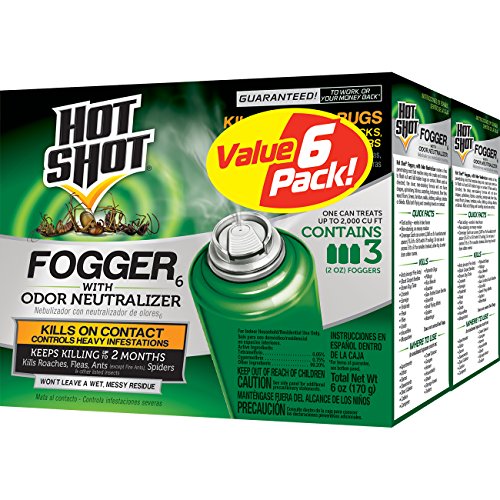
Hot Shot Odor Neutralizer Fogger, 2 oz is the only fogger in this group, making it the closest match when you mean a room-wide bug bomb rather than a direct spray or trap. Each 2-ounce can treats 2,000 cubic feet of unobstructed space, and the product is intended for enclosed spaces such as homes, garages and cabins. The maker says its mist reaches cracks and crevices and keeps killing for up to 2 months. The product is not specifically identified for fruit flies, so buyers seeking a fruit-fly-targeted option should consider a different application method. Foggers require everyone, including pets, to leave during use and until the labeled reentry time.
Bottom line: Choose this when a fogger format matters more than fruit-fly-specific targeting.
TERRO Drain Insect Killer Foam

TERRO Drain Insect Killer Foam is a drain-pipe foam, not a room fogger, and it names fruit flies among the insects it targets. Its extension tube is designed to deliver foam into drains and catch basins, where the product says three insect growth regulators disrupt insect life cycles. This makes it a more targeted option when flies appear around a sink or floor drain rather than throughout a room. It works on all pipe types, according to the maker. The limitation is its application area: drain foam is not intended as a substitute for treating flying insects elsewhere in the home.
Bottom line: Pick this when activity clusters around drains or pipes.
Raid Flying Insect Killer, 18 oz

Raid Flying Insect Killer, 18 oz is a direct-contact flying insect spray, offering a different approach from a fogger: the product says to spray directly at insects and keep 3 feet from walls, fabrics and furniture. Its features identify it as a fruit fly killer spray and also name mosquitoes, wasps and other flying insects. The maker says to ventilate the treated room after allowing the spray to work for 2 hours before reentry. Because this method depends on direct application, it suits visible insects better than an attempt to reach hidden insects across a whole enclosed room.
Bottom line: Choose this for visible flying insects and targeted application.
Zevo Flying Insect Spray, 20 fl oz

Zevo Flying Insect Spray, 20 fl oz is a spot-use aerosol for common flying insects, including fruit flies, gnats, house flies, drain flies and mosquitoes. Its formula is powered by rosemary and cornmint oils, and it is intended for indoor and outdoor use in places such as kitchens, bathrooms and patios. Unlike a fogger, the spray is meant for targeted use when flying bugs appear; that makes location and direct application central to choosing it. The product facts do not give a room-treatment volume or a duration, so it is not comparable to a fogger by cubic-foot coverage.
Bottom line: Pick this for targeted spraying in rooms or outdoor living areas.
Wondercide Fruit Fly Trap, 5.4 oz

Wondercide Fruit Fly Trap, 5.4 oz is a passive fruit fly trap rather than a pesticide fogger or spray. The product says it begins working when its cap is untwisted and lasts up to 21 days; suggested placement includes sinks, garbage cans, dishwashers, dining tables and counters near produce. A trap can be useful where flies repeatedly gather, without dispersing a mist through the room.
Bottom line: Choose this for a localized, passive trap near a fly hotspot.
How to Choose Fruit Fly Control by Location
Choose the treatment by where fruit flies congregate: drains call for a drain-directed method, visible insects can be targeted with spray, and a recurring hotspot can take a trap. Fruit flies often breed in fermenting residue in drains, trash containers and produce; removing that source matters because an adult-killing spray alone does not remove the breeding material. A drain product is designed to reach pipe surfaces, while a room fogger spreads mist through an enclosed space and may miss sheltered areas. Use a simple rule: if activity is centered at a drain, start with a drain treatment; if flies are visible away from a drain, favor targeted spray or a trap at the hotspot. Keep food and food-contact surfaces protected during pesticide use, and follow label directions for reentry and ventilation.
What a Bug Bomb Can and Cannot Do
A total-release fogger releases insecticide mist into an enclosed area, but it is not the same as a fruit-fly-specific treatment. Room foggers are generally less effective against pests in cracks, wall voids and other concealed sites than directed treatment, and a room fogger cannot replace removing wet organic residue where fruit flies breed. Use the labeled treatment volume rather than room floor area: cubic feet are calculated as length × width × height, and separate rooms are not automatically one treatment space. Do not use more cans than the label allows. Fogger safety is critical: people and pets must leave, ignition sources must be shut off as directed, and occupants must wait for the label’s reentry interval before returning.
Foggers, Drain Foam, Sprays and Traps Compared
Application method is the clearest difference among these fruit fly products. A fogger treats an enclosed volume, drain foam targets pipe interiors, spray is directed at visible insects, and a trap stays near a chosen hotspot. The table links each method to its most suitable setting.
| Method | Best location | Key limitation |
|---|---|---|
| Fogger | Enclosed room | Not fruit-fly-specific here |
| Drain foam | Drain or pipe | Localized to plumbing |
| Direct spray | Visible flying insects | Requires targeted application |
| Trap | Recurring hotspot | Localized capture |
Fruit fly control usually works best when the application matches the breeding site instead of treating every room the same way. A whole-room fogger is not automatically the right choice simply because adult flies are flying around.
Fruit Fly Prevention and Safe Pesticide Use
Sanitation is a key part of fruit fly control because adults can develop from moist fermenting residue. Empty and rinse recycling containers, clean food spills, and scrub drain openings and strainers where residue collects; removing only visible adults can leave a new generation to emerge. Keep produce sealed or refrigerated while an infestation is being addressed, and empty indoor trash frequently. For any pesticide, read the full label before use and keep children, pets, food, dishes and utensils away from the treatment area as directed. Foggers present a fire and inhalation hazard: use only the labeled number, leave during treatment, and ventilate before reentry when the label requires it. Never fog a small enclosed space such as a cabinet or under a counter.
Frequently Asked Questions
Will a bug bomb get rid of fruit flies?
A fogger can disperse insecticide through an enclosed room, but it does not remove the damp, fermenting residue where fruit flies breed. Use the label’s room-volume limit, and pair any adult control with cleaning the breeding source.
Are drain flies and fruit flies the same insect?
No; drain flies are small, fuzzy, moth-like flies, while fruit flies are typically tan or brown with prominent eyes. If flies cluster around a sink, inspect and clean the drain before assuming the pest is a fruit fly.
How do I calculate a room’s fogger volume?
Multiply room length by width by ceiling height in feet to get cubic feet; a 10-by-12-foot room with an 8-foot ceiling is 960 cubic feet. Compare that number with the fogger’s labeled treatment capacity and follow its directions for connected rooms.
How long should I stay out after fogging?
Use the exact reentry time on the product label, because foggers differ. One spray product here calls for ventilation after allowing the spray to work for 2 hours, but that timing should not be transferred to a fogger.
What should I clean to stop fruit flies returning?
Clean moist organic residue from drains, sink strainers, trash containers and produce areas, since fruit fly larvae develop in fermenting material. Rinse recyclables and empty indoor trash regularly while keeping fruit sealed or refrigerated.