
Bug Spray for Trees: Options Compared by Application

Ortho BugClear Ready-to-Spray is the closest fit for most people seeking bug spray for trees because it is a hose-end spray labeled for trees and fruit trees, with coverage for up to 2,700 square feet of foliage. Choose a different format if you want a tree-and-shrub concentrate or a product aimed at specific fruit-tree pests rather than a broad outdoor spray.
We earn a commission if you buy through links on this page. As an Amazon Associate I earn from qualifying purchases. Products are compared on manufacturer specifications, not hands-on testing.
- Best overall: Ortho BugClear Ready-to-Spray – A hose-end spray labeled for trees and fruit trees covers up to 2,700 square feet of foliage.
- Best for long protection: BioAdvanced Tree & Shrub Protect and Feed – A mix-and-pour tree and shrub concentrate offers up to 12 months of protection, but is not a spray.
- Best for listed fruit pests: Bonide Captain Jack’s Deadbug Brew – Ready-to-use spray targets pests including borers, beetles and caterpillars on listed fruit crops.
| Product | Best for | Application | Package size | Claimed coverage or duration | Shop |
|---|---|---|---|---|---|
| Ortho BugClear Ready-to-Spray | Hose-end coverage | Hose-end ready-to-spray | 32 oz | 2,700 sq. ft. of foliage | Check Price on Amazon |
| BioAdvanced Tree & Shrub Protect and Feed | Extended protection | Mix-and-pour concentrate | 64 fl oz | Up to 12 months | Check Price on Amazon |
| Bonide Captain Jack’s Deadbug Brew | Fruit crop pests | Ready-to-use spray | 32 fl oz | — | Check Price on Amazon |
| Sevin Insect Killer Ready-to-Use 2 | Contact plant spray | Ready-to-use spray | 1 gal | — | Check Price on Amazon |
Bug Spray for Trees Compared
Match the application method and target pest to the tree and treatment area before choosing.
Ortho BugClear Ready-to-Spray
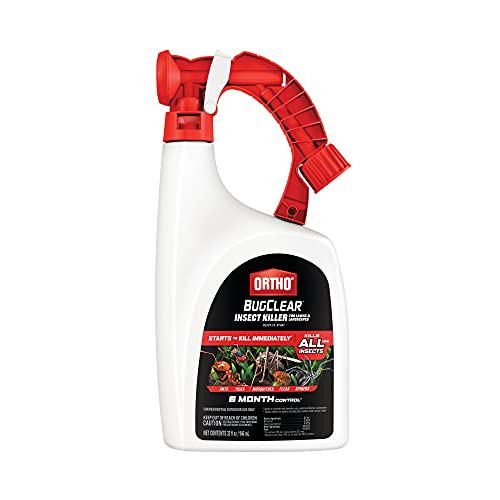
Unlike the concentrate and ready-to-use options here, this product attaches to a garden hose for outdoor treatment. Ortho says it kills 235 listed bugs and can be used on lawns, ornamentals, trees, shrubs, listed vegetables and fruit trees. The package specifies coverage for up to 2,700 square feet of foliage, as well as separate lawn and perimeter areas. That makes it a practical fit when treating a broad foliage area is the priority. Its limitation is that it is a broad landscape insecticide, not a tree-only formula; identify the pest and confirm the label covers the tree and intended use.
Bottom line: Choose this if you want hose-end application across tree or fruit-tree foliage.
BioAdvanced Tree & Shrub Protect and Feed
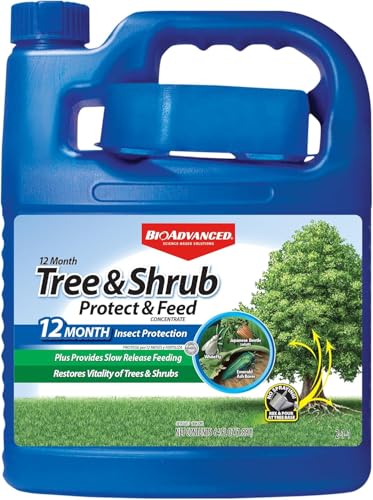
This is the tree-focused alternative for buyers who prefer a mix-and-pour treatment over spraying foliage. BioAdvanced says one application kills listed insects, including Japanese beetles, emerald ash borers, adelgids, leafminers and aphids, and provides protection for up to 12 months. The concentrate also includes slow-release plant food for trees, shrubs and container plants. Its main limitation for someone searching for bug spray is the application method: this is a concentrate to mix and apply, not a ready-to-use spray. Confirm that the target pest and tree are covered on the product label before use.
Bottom line: Choose this for tree-and-shrub treatment when a mix-and-pour concentrate suits your plan.
Bonide Captain Jack’s Deadbug Brew
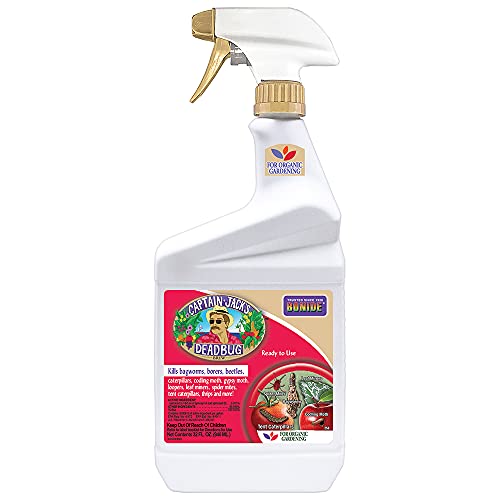
This ready-to-use spray is a more targeted alternative for buyers dealing with pests on fruit crops. Its targets include bagworms, borers, beetles, caterpillars, codling moths, spider mites, leaf miners and thrips; the product also covers stone fruits, bushberries and pome fruits. Bonide describes its active ingredient as a naturally occurring bacterium and says the product has limited impact on predatory beneficial insects, predatory mites and spiders while controlling target pests. The limitation is its crop-specific scope: the use information is centered on listed crops, so verify the exact tree and pest combination on the label.
Bottom line: Choose this for a fruit crop and target pest when a ready-to-use formula is preferred.
Sevin Insect Killer Ready-to-Use 2

This option comes in a 1-gallon ready-to-use container and is described as a contact spray for roses and edible plants, rather than a tree-specific treatment. Sevin says it kills more than 700 listed insects and names Japanese beetles, whiteflies and aphids among them. The key limitation for tree buyers is that the use description does not establish a tree application; check that the product label permits use on the specific tree and intended crop before applying it.
Bottom line: Choose this only if the tree and pest are explicitly covered by its label.
How to Choose Bug Spray for Trees
Start with the pest and tree, not the broad phrase “bug spray”: products vary in both target insects and permitted crops. A hose-end foliar spray coats exposed leaves and branches, while a systemic concentrate is mixed and applied as directed for uptake by the plant; those methods are not interchangeable. Check the label for the tree species, pest, application site and harvest interval if the tree bears edible fruit. A broad insect-kill claim does not mean every insect or tree is covered. If you need to reach a large area of foliage, use the coverage figure as a planning ceiling, not a promise that dense or tall canopies will receive even coverage.
Spray Coverage and Tree Fit
Tree height, canopy density and access determine whether a ready-to-spray bottle can reach the intended foliage. The Ortho product’s 2,700-square-foot foliage coverage is distinct from its 5,300-square-foot lawn and 1,400-square-foot perimeter coverage; do not substitute those area figures. A hose-end sprayer is easiest to apply from reachable ground-level positions, but tall crowns may require a different label-approved method or professional application. Coverage area is not a measure of the number of trees treated, since canopy size varies. Confirm that the target tree and pest appear on the label, and do not use a lawn or perimeter rate as a tree rate.
Spray Versus Tree and Shrub Concentrate
Foliar sprays and tree-and-shrub concentrates solve different application problems. A foliar spray is applied to exposed plant surfaces, whereas the BioAdvanced concentrate is mixed and applied as directed and claims up to 12 months of protection. Select based on the label-authorized site and pest, not simply the length of a protection claim. Products for fruit crops can have specific crop and harvest restrictions, so verify those before treatment.
| Need | Application type | Tradeoff |
|---|---|---|
| Broad foliage treatment | Hose-end spray | Coverage depends on canopy access |
| Tree-and-shrub protection claim | Mix-and-pour concentrate | Not a foliar spray |
| Listed fruit-crop pest | Ready-to-use crop spray | Check crop and harvest directions |
Tree Spray Safety and Common Mistakes
Follow the pesticide label for protective equipment, application conditions, re-entry and any restrictions around flowering plants or edible crops. Insecticides can affect beneficial insects as well as target pests, and spraying flowers while bees are foraging can expose pollinators; avoid that timing and follow label precautions. A common mistake is treating a tree before identifying the insect, since damage symptoms alone can be misleading and different pests require different timing. Do not spray on windy conditions or where drift could reach people, pets, water or neighboring plants. Keep children and pets away until the label’s re-entry condition is met; for the Sevin product, the claim is re-entry after the spray dries.
Frequently Asked Questions
Can I use lawn bug spray on tree leaves?
Only if the label permits application to the specific tree and foliage. Lawn coverage rates do not establish a tree rate, and foliage coverage may be stated separately.
When should I spray a tree for insects?
Timing depends on the identified pest and its life stage; many leaf-feeding caterpillars are easier to manage while small. Check the label’s pest timing and avoid spraying flowering plants while bees are foraging.
Can I spray fruit trees before harvest?
Use only a product labeled for that fruit crop and observe its preharvest interval, which is the required time between application and harvest. The crop and interval are product-specific.
How much tree foliage can a 32-ounce spray cover?
The Ortho 32-ounce hose-end product states coverage across 2,700 square feet of foliage. Actual coverage depends on canopy size and density, so do not treat that area figure as a guaranteed tree count.