
Car FM Antenna Booster Options Compared by Fit

For a car FM antenna booster, the Bingfu is the named match, with a DIN plug and switched 12V power lead for compatible stereo setups. Choose another option if you need a windshield antenna rather than an inline amplifier, or need an amplifier whose specs include a gain figure.
We earn a commission if you buy through links on this page. As an Amazon Associate I earn from qualifying purchases. Products are compared on manufacturer specifications, not hands-on testing.
- Best overall: Bingfu 12V DIN FM Booster – A DIN plug and switched 12V lead make it the clearest fit for a compatible car stereo.
- Best for stated gain: 12V 25 dB Antenna Booster – Its name claims 25 dB of amplification and its housing includes a fuse cap.
| Product | Best for | Power / gain | Connector or antenna | Cable length | Shop |
|---|---|---|---|---|---|
| Bingfu 12V DIN FM Booster | DIN stereo setups | Switched 12V | DIN plug | 7.9 in | Check Price on Amazon |
| 12V 25 dB Antenna Booster | Gain-focused setup | 12V; 25 dB claim | Universal AM/FM | 21 in | Check Price on Amazon |
| TTLCFP 12V Antenna Booster | Install accessory kit | 12V | Universal AM/FM | — | Check Price on Amazon |
| 12V Booster with Hidden Antenna | Factory antenna replacement | 12V | Hidden electric antenna | 7 in | Check Price on Amazon |
Car FM Antenna Booster Options
Match the amplifier or antenna style to your stereo connection and installation plan.
Bingfu 12V DIN FM Booster

The Bingfu is the named car FM antenna booster, distinguished by a DIN plug and a switched 12V power-supply cable. Copper signal wire and the amplifier design are intended to enhance reception and reduce noise, according to the maker. Its 7.9-inch cable suits an installation where a short inline lead can reach the stereo connection. Check connector compatibility before ordering if the head unit uses a different antenna socket; a plug mismatch can prevent installation without an adapter.
Bottom line: Choose this when your stereo has a matching DIN antenna connection and switched 12V power is available.
12V 25 dB Antenna Booster

The 12V 25 dB booster is the option whose name gives a specific amplification figure, unlike the Bingfu. Its maker claims copper wiring and a shielded housing to reduce interference, and it has an ABS shell plus a capped fuse holder. The 21-inch size may affect where it can sit behind a dash or trim panel, so plan room for the housing and wiring. The broad vehicle compatibility does not establish a connector type, making socket fit the key point to confirm before installation.
Bottom line: Pick this if the 25 dB gain claim matters and you can confirm its connector fits.
TTLCFP 12V Antenna Booster

The TTLCFP stands apart with a small installation accessory kit: double-sided tape, a quick connector and two cable clamps accompany the booster. Its maker says the shielded metal housing helps reduce outside interference and improve reception sensitivity. The 12V amplifier is intended for AM/FM use in cars, trucks, SUVs and vans. No cable length or connector standard is given, so the kit is less useful to buyers who need to match a specific factory plug without first checking that connection.
Bottom line: Pick this when the included tape, connector and clamps suit your planned installation.
12V Booster with Hidden Antenna
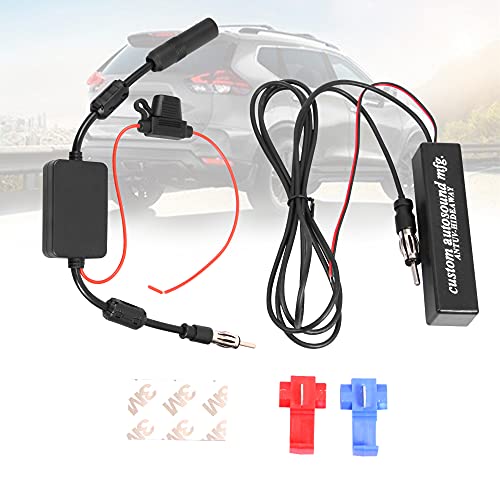
The 12V booster with hidden antenna is the only option here bundled with a separate electric antenna that can replace a damaged factory antenna or suit a custom installation. The maker says the booster enhances AM/FM signal and reduces noise, and its 12V supply is intended for most cars and boats. The two components can be used together, but the electric antenna may be unnecessary when the existing antenna works. Compatibility is not universal, so verify vehicle and stereo connections before buying.
Bottom line: Choose this if you need both a booster and an alternative to a visible factory antenna.
How to choose a car FM antenna booster
Start with the stereo’s antenna socket and power wiring, because boosters cannot compensate for a connector that will not mate or a power lead with no suitable supply. A powered amplifier needs an appropriate 12V feed and ground, and switched power is useful because it turns off with the vehicle. If reception is weak only in one area, a booster may not fix a local coverage gap or a damaged antenna lead.
Use a booster to amplify a weak incoming signal, not as a substitute for correct antenna placement. FM reception is primarily line-of-sight; metal roof structures, tunnels and terrain can interrupt it. A booster can also amplify electrical noise if the antenna, cable or ground is faulty.
Booster versus replacement antenna
An inline booster and a replacement antenna solve different problems: the booster amplifies a signal already received, while an antenna captures radio waves. A windshield patch antenna can be useful when a factory mast is broken or an exposed antenna is unwanted, but it needs a clear glass mounting area and a cable path to the receiver. The 3 dBi gain figure is an antenna specification, not a guarantee of a number of extra stations.
Choose an inline unit when the existing antenna is intact and the stereo connection matches. Choose a separate antenna when the existing aerial or its cable is the likely problem. If the vehicle has an amplified factory antenna, check whether the car’s antenna system already needs a power feed before adding another amplifier.
Installation fit and power checks
Allow room behind the dash for the amplifier body and cable bends; a tight bend can strain a coax connection. Keep antenna wiring away from ignition wiring, chargers and other electrical-noise sources when routing it. For a 12V amplifier, use a fused supply appropriate to the vehicle circuit and secure the ground connection to clean metal; do not leave bare connections exposed to moisture or contact with other wiring.
For a windshield antenna, clean and dry the glass before applying adhesive, and avoid obstructing the driver’s view or interfering with airbags and trim. Route the cable without pinching it under panels. Before taking panels apart, compare the receiver socket and planned power source with the actual vehicle wiring; if either does not match, use a compatible adapter or have an installer assess it.
Common car radio reception problems
Static that changes with engine speed often points to electrical interference, while weak reception across many stations can also come from a loose antenna plug, damaged coax or poor grounding. Test the radio with a known-good antenna connection before assuming an amplifier is needed. A booster installed after a faulty or disconnected antenna cannot restore the signal that never reaches it.
AM and FM also behave differently: AM signals can travel farther at night, while FM reception is more sensitive to obstructions and line of sight. For an AM/FM setup, confirm that the antenna and receiver cover the bands you use. A boosted signal may overload a nearby strong station or increase noise, so select an amplifier only after checking the basic antenna connection and power arrangement.
Frequently Asked Questions
Will a car FM antenna booster improve weak reception?
A booster can raise a weak antenna signal, but it cannot restore a signal blocked by terrain or repair a damaged cable. Check the antenna plug and coax first, especially if reception recently worsened.
Does a 12V antenna booster need switched power?
A powered booster needs a 12V supply, and switched power prevents it from staying energized after the vehicle is off. Use a fused circuit suitable for the vehicle and avoid tapping an unidentified wire.
What connector does a car radio antenna use?
Match the receiver socket and antenna plug physically before installation; a connector adapter only solves plug shape, not a power mismatch.
Can I install a windshield antenna behind tinted glass?
Some metallic or reflective window films can weaken radio reception, so a patch antenna may perform poorly behind them. Mount it on unobstructed glass and keep it clear of the driver’s sightline and airbag deployment areas.
Why does car radio static change with engine speed?
Static that rises or falls with engine speed can indicate electrical interference from the vehicle or an accessory. Separate antenna wiring from power wiring and check grounding and connections before adding amplification.