
LiveScope Transducer Pole Mounts Compared by Fit

For a LiveScope transducer pole mount with a 30-to-60-inch telescoping range and support for several sonar systems, choose Stratum Outdoors Telescoping Pole. Choose WINDFRD Modular Live Sonar Pole if you want a 49.4-inch pole for a kayak or boat and can pair it with a separate compatible adapter.
Stratum Outdoors Deck Stand is a stand rather than a pole, 0-Degree LVS32 Shaft Mount mounts an LVS32 to a trolling-motor shaft, and Millennium Marine Breakaway Pole is a breakaway pole without a LiveScope fit; choose those only if their distinct role matches your setup.
We earn a commission if you buy through links on this page. As an Amazon Associate I earn from qualifying purchases. Products are compared on manufacturer specifications, not hands-on testing.
- Best overall: Stratum Outdoors Telescoping Pole – The pole telescopes from 30 to 60 inches and supports forward, down, and perspective-style orientations.
- Best for modular setups: WINDFRD Modular Live Sonar Pole – The 49.4-inch pole uses a universal interface, but a separate compatible transducer adapter is required.
- Best for LVS32 shaft mounting: 0-Degree LVS32 Shaft Mount – Its 0-degree mount is made for the Garmin Panoptix LVS32 and attaches to a trolling-motor shaft.
| Product | Best for | Reach or size | Compatibility | Adjustment | Shop |
|---|---|---|---|---|---|
| Stratum Outdoors Telescoping Pole | Adjustable boat setup | 30–60 in | Garmin LVS34/LVS32; MEGA Live 1/2 | Forward, down, perspective | Check Price on Amazon |
| WINDFRD Modular Live Sonar Pole | Adapter-based setup | 49.4 in reach; 8 in arm | Garmin LVS34/LVS32/LVS62 | Stowable 360°; adapter required | Check Price on Amazon |
| Stratum Outdoors Deck Stand | Deck-mounted support | 17 × 7 in | Stratum Outdoors deck-mount pole | 360° swivel; sliding arm | Check Price on Amazon |
| 0-Degree LVS32 Shaft Mount | LVS32 shaft mounting | — | Garmin Panoptix LVS32 only | 0° transducer angle | Check Price on Amazon |
| Millennium Marine Breakaway Pole | Impact-tolerant pole | 46 in midsection; 20 in bottom | — | Locks every 90° | Check Price on Amazon |
LiveScope Transducer Pole Mount Options
Compare pole reach, sonar fit, and mounting style before choosing a setup.
Stratum Outdoors Telescoping Pole

The 30-to-60-inch telescoping range and broad stated sonar compatibility distinguish this pole from the fixed or adapter-dependent options. It supports forward, down, and perspective-style modes, with a quick-release pin mechanism and a rotation collar with dual riding points. The pole suits boaters who want to change reach or scanning orientation during a trip. The matching deck stand is sold separately, so this pole alone is not a complete deck-mounted setup; confirm that your chosen stand and mounting surface fit your boat before assembling the system.
Bottom line: Choose this if you want adjustable reach and one of the compatible sonar systems.
WINDFRD Modular Live Sonar Pole

The modular interface is the defining difference: this pole is designed to pair with a separate WINDFRD transducer adapter, rather than providing a complete model-specific transducer connection by itself. It has a 49.4-inch reach and an 8-inch adjustable arm, and the specifications identify compatibility with Garmin LVS34, LVS32, LVS62, and Lowrance ActiveTarget 2 when paired appropriately. It suits buyers who want a stowable pole and are comfortable selecting a separate adapter. The extra adapter is essential; verify the adapter matches both the transducer and pole interface before ordering.
Bottom line: Choose this for a modular setup if you can confirm and source the correct adapter.
Stratum Outdoors Deck Stand

This product is the mounting stand alone, not a transducer pole, making it a supporting component rather than a direct substitute for the other pole options. It bolts to a deck, bench, or gunnel and has three adjustment knobs for 360-degree rotation and tilt; a sliding arm extends for wider gunnels. It suits someone building a compatible Stratum Outdoors deck-mount setup or replacing its stand. Because the pole is not included and the compatibility is limited to the Stratum Outdoors deck-mount pole, it will not complete a setup on its own or necessarily fit another pole system.
Bottom line: Choose this only if you need the stand for the compatible Stratum pole.
0-Degree LVS32 Shaft Mount
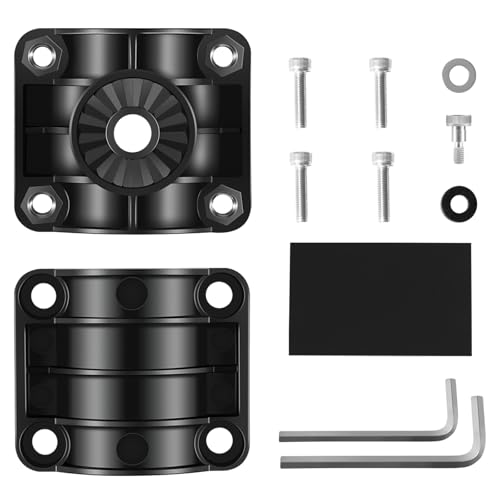
This option attaches an LVS32 to a trolling-motor shaft rather than supplying a free-standing telescoping pole. Its fixed 0-degree orientation is designed for the Garmin Panoptix LVS32 and is identified for ice-fishing bundles as well as open-water use. It suits an LVS32 owner who wants that shaft-mounted arrangement. The fit is exclusive to LVS32, so owners of LVS34, MEGA Live, or ActiveTarget systems should choose another compatible option; check that the mounting location and shaft arrangement match your motor before installing it.
Bottom line: Choose this for an LVS32 system specifically intended for trolling-motor-shaft mounting.
Millennium Marine Breakaway Pole

The breakaway construction and quarter-turn locking positions set this pole apart from the telescoping and modular options. It has an anodized and powder-coated aluminum pole, a 46-inch aluminum midsection, a 20-inch PVC bottom section, an adjustable breakaway pressure, and a foam-grip handle. It suits boaters seeking a pole designed to yield under some impact and return to position.
Bottom line: Choose this only after confirming it fits your LiveScope transducer and boat.
How to Choose a LiveScope Pole Mount
Start with transducer compatibility, then choose the mounting style and reach that match your boat. Live sonar transducers use orientation to scan forward, below the boat, or in a perspective view; the mount must let you point the transducer in the direction your display is interpreting. A pole mount and a trolling-motor shaft mount are different arrangements, even if both hold a transducer. For a boat that needs repositioning, a telescoping pole with a 30-to-60-inch range offers more reach adjustment than a fixed-length assembly. If your setup uses a modular interface, include the correct adapter in the plan: the pole alone may not attach to the sensor. Check transducer model, adapter fit, available deck or gunnel space, and how the pole clears the water when stowed.
Where Pole Mounts Differ from Shaft Mounts
A pole mount places the transducer on a separate support, while a shaft mount attaches it to a trolling-motor shaft. That difference determines how you can position the sensor and whether a separate pole is part of the setup. A pole may offer reach adjustment or a swivel feature; a shaft mount can keep the sensor aligned with the motor, but depends on a compatible shaft and transducer interface. A 0-degree mount describes the sensor angle, not the pole’s length or range of movement. Use the table to narrow the setup type, then confirm the exact sensor model and attachment interface. Do not treat a stand, adapter, pole, and transducer as interchangeable parts.
| Setup need | Type to consider | Confirm first |
|---|---|---|
| Adjustable reach from a deck mount | Telescoping pole | Stand and sonar fit |
| Modular pole connection | Pole with separate adapter | Adapter for sensor and pole |
| Sensor fixed to motor shaft | Shaft mount | Sensor model and shaft fit |
| Replace a support component | Deck stand | Matching pole system |
How to Position and Secure a Sonar Pole
Point the transducer in the intended scanning direction and keep its face clear of the hull, propeller, and other obstructions. Forward, down, and perspective orientations serve different views, so changing the sensor’s physical direction without matching the display setting can make the sonar view confusing. Before launching, check that the pole or shaft mount is firmly secured and that its adjustment points lock in place; a loose mount can shift under water resistance or contact with an obstacle. Keep hands clear of hinges, sliding sections, and clamps while raising or rotating the assembly. If you fish in shallow water or near cover, raise or stow the transducer before moving into an area where it could strike the bottom or debris.
Common LiveScope Mount Buying Mistakes
The most common mistake is matching a mount to the brand but not to the exact transducer model or interface. Compatibility can differ between sensor generations, and a universal pole may still need a model-specific adapter. Another mistake is assuming a stand includes the pole, or that a pole includes the deck hardware; these are separate components in some setups. Measure the available mounting area and the route the pole needs to travel before choosing a longer assembly. For adjustable products, compare their range with the clearance and scan position you need rather than choosing by maximum reach alone. Before ordering, confirm any unstated sensor fit, adapter, and deck attachment requirements for the setup you intend to use.
Frequently Asked Questions
Does a LiveScope pole need a separate transducer adapter?
Some modular poles require a separate adapter selected for the transducer model and pole interface. Confirm both ends match before assembling the system.
What is the difference between forward and down sonar views?
Forward view scans ahead of the boat, while down view scans beneath the transducer. Perspective-style views depend on compatible equipment and the transducer’s orientation.
Can I use a LiveScope transducer mount on a trolling motor shaft?
Yes, if the mount is designed for your exact transducer and shaft arrangement. A mount made exclusively for the LVS32 should not be assumed to fit another LiveScope model.
How much pole reach do I need on a boat?
Choose reach based on the deck or gunnel position and the water depth at the transducer, rather than maximum length alone. A 30-to-60-inch telescoping range gives adjustment across that interval.
How should I protect a transducer pole while underway?
Raise or stow the transducer before moving through shallow water, vegetation, or areas with floating debris. Secure the pole so it cannot swing into the hull or propeller.