
Car Reverse Parking Sensors: 4 Kits Compared

Universal 4-Sensor LED Backup Kit is the strongest all-around match because it pairs four rear sensors with a distance display and beeps that speed up as obstacles get closer. Choose Frostory X60D 4-Sensor Kit instead if a 30–150 cm detection range matters more; check that the sensor size and wiring suit your bumper and installation route.
Reverse parking sensors use ultrasonic pulses to detect nearby objects and alert the driver, but they are an aid rather than a substitute for looking behind the vehicle.
We earn a commission if you buy through links on this page. As an Amazon Associate I earn from qualifying purchases. Products are compared on manufacturer specifications, not hands-on testing.
- Best overall: Universal 4-Sensor LED Backup Kit – Combines four rear sensors, an LED distance display and progressively faster beeps.
- Best for front and rear coverage: ELSNU 8-Sensor Parking Kit – The operation uses rear sensors while reversing and front sensors for additional detection.
- Best for stated range: Frostory X60D 4-Sensor Kit – Gives a detection-distance range of 30–150 cm and a 2.3 m sensor cable.
| Product | Best for | Sensor count | Display and alert | Shop |
|---|---|---|---|---|
| Universal 4-Sensor LED Backup Kit | Visual distance cues | 4 rear | LED distance display; progressive beep | Check Price on Amazon |
| ELSNU 8-Sensor Parking Kit | Front and rear alerts | 8 | Display and sound | Check Price on Amazon |
| Frostory X60D 4-Sensor Kit | Known detection range | 4 | Progressive buzzer | Check Price on Amazon |
| 4-Sensor LED Display Kit, 2.5 m Cable | Long sensor wiring | 4 | LED display and buzzer | Check Price on Amazon |
Car Reverse Parking Sensor Kits
Compare sensor coverage, alert features and range before choosing a kit for your vehicle.
Universal 4-Sensor LED Backup Kit
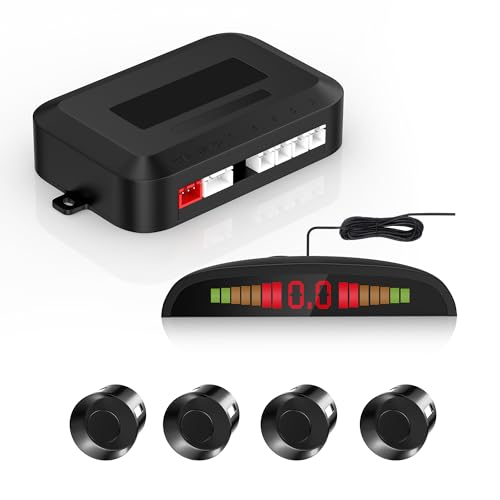
For drivers who want both visual and audible cues, this four-sensor rear kit combines an LED display with beeps that become more frequent as an obstacle gets closer. It includes a hole saw and drill head for bumper installation, and the maker describes it as suitable for most vehicle bumpers. The display is intended to show distance, while the changing beep rate gives a separate proximity cue. This setup suits buyers who want a numeric readout alongside sound; the maker does not give a detection range, so confirm the fit and placement before drilling.
Bottom line: Choose this kit if you want visual distance feedback and progressive audio alerts.
ELSNU 8-Sensor Parking Kit

The eight-sensor layout stands apart from the four-sensor kits by including front and rear sensing. Its operating description says the rear four and front two activate when reversing, and that four front sensors activate during normal driving when braking. The system uses ultrasonic reflections and a control box to estimate distance, then provides display and sound alerts. That broader sensor arrangement may suit a driver seeking coverage beyond the rear bumper.
Bottom line: Choose this if you want a multi-sensor arrangement with front and rear alerts.
Frostory X60D 4-Sensor Kit

The Frostory kit is the only option here with a specific detection-distance range: 30–150 cm. It uses four 22 mm sensors with 2.3 m cables and a buzzer that beeps progressively as an obstacle gets closer. The maker gives a 10–16 V DC working-voltage range and an operating-temperature range of −40 to +80; those ratings may matter when matching the kit to the vehicle and climate. This is a straightforward choice for buyers prioritizing a sensing range and audio alerts, but it does not include a distance display in the product features.
Bottom line: Choose this if a detection range and progressive buzzer matter most.
4-Sensor LED Display Kit, 2.5 m Cable

The 2.5 m sensor wire distinguishes this four-sensor kit from the other options with specified cable lengths. It automatically detects obstacles behind the vehicle when reversing, and the kit name identifies an LED display and audio buzzer. That combination suits drivers who want both visual and sound alerts from a rear-focused setup. The product features do not describe a progressive beep pattern or give a detection range, so this is less suitable if either is a deciding requirement. Plan the cable path before fitting the sensors, especially if the control unit will sit far from the bumper.
Bottom line: Choose this if the 2.5 m sensor wire suits your installation route.
How to Choose a Reverse Parking Sensor Kit
Choose a kit by sensor coverage first, then decide whether distance feedback or simple sound alerts matter more. Four-sensor kits here are rear-focused, while the eight-sensor kit describes front and rear activation. LED displays add a visual cue; buzzers communicate proximity through sound, and progressive beeps increase in frequency as an obstacle nears. Only one kit gives a numeric detection range, so do not assume the others cover the same distance. A sensor count also does not guarantee coverage of every corner or low object. Before drilling a bumper, confirm the sensor diameter, vehicle compatibility and whether the installation position leaves the sensors clear of trim and structural parts.
Sensor Placement and Bumper Fit
Sensor height and spacing affect what an ultrasonic system can detect; many aftermarket kits use four sensors spaced across the rear bumper, with positions selected to reduce gaps while avoiding the vehicle’s corners. An angled sensor can point at the ground and create nuisance alerts, while a sensor too close to a corner can miss nearby objects. The Frostory sensors are 22 mm in diameter, so measure the planned holes and check clearance behind the bumper before drilling. Keep sensors clean and unobstructed after installation; mud, ice and thick snow can interfere with ultrasonic signals. Do not treat any kit as a guarantee against contact, particularly around narrow posts, low objects or irregular surfaces.
Ultrasonic Sensors and Other Parking Aids
Ultrasonic sensors estimate distance from the time it takes sound pulses to reflect from an object; a camera instead provides a visual view of the space behind the vehicle. The sensor kits compared here provide alerts rather than a full visual scene, and only some include an LED distance display. Use the table to match the aid to the cue you want, not as a substitute for checking mirrors and looking around.
| Parking aid | What it provides | Best suited to |
|---|---|---|
| Ultrasonic sensors with buzzer | Sound cues as obstacles approach | Drivers who prefer audio alerts |
| Ultrasonic sensors with display | Sound plus a visual distance cue | Drivers who want a readout |
| Rear-view camera | Visual view behind the vehicle | Drivers who need to see the surroundings |
These technologies can complement one another, but each has blind spots: a sensor may not register a narrow or soft object, and a camera view can be obscured or distorted.
Safe Use of Reverse Parking Sensors
Reverse sensors are a secondary aid, not permission to back up without checking the area. A sensor can miss objects below or above its sensing path, and an alert may be delayed or disrupted by dirt, snow, rain or an angled surface. Reverse slowly, check mirrors and the area around the vehicle, and stop if the alert pattern or surroundings are unclear. Keep the sensors clean and test the system in a clear area after installation so you can recognize its alert behavior. Never rely on a beeper alone when children, pets or people may be behind the vehicle; get a clear view before moving.
Frequently Asked Questions
How far away can reverse parking sensors detect objects?
Ultrasonic systems can have a near-field blind area, so continue checking the space directly behind the bumper.
Can parking sensors detect low objects behind a car?
Some low objects can fall below a sensor’s detection path, especially if the sensors are mounted too high or angled incorrectly. Check the area visually and reverse slowly rather than relying only on an alert.
Do reverse sensors work in rain or snow?
Water, snow and dirt on a sensor can interfere with its signal or create misleading alerts. Clear the sensors before reversing and use mirrors and a direct visual check in poor conditions.
Where should four rear parking sensors be installed?
Four sensors are generally spaced across the rear bumper to cover its width, but height and angle affect detection. Follow the kit’s placement guidance and check behind the bumper before drilling to avoid trim or structural parts.
Are parking sensors a replacement for a backup camera?
No; sensors alert to nearby objects, while a camera shows a visual view that can reveal context a sensor misses. Both can have blind spots, so use mirrors and look around before reversing.