
Best High Temp Paint for Exhaust: 3 Options Compared

For most exhaust touch-ups, Rust-Oleum Automotive High Heat, Flat Black is the strongest starting point because its enamel is rated for intermittent heat up to 2,000°F. Exhaust paint is a coating for metal parts exposed to heat; choose a different option if you need a satin manifold finish or brush-on application.
Temperature ratings do not replace correct surface preparation and curing: coating applied over rust, oil, or too thickly can fail.
We earn a commission if you buy through links on this page. As an Amazon Associate I earn from qualifying purchases. Products are compared on manufacturer specifications, not hands-on testing.
- Best overall: Rust-Oleum Automotive High Heat, Flat Black – Its 2,000°F intermittent-heat rating is higher than the other aerosol’s 1,400°F rating.
- Best for manifold aerosols: Eastwood Satin Black Manifold Coating, 2-Pack – The two-can package is recommended for header systems and covers about 6 sq ft per can.
- Best for brush application: KBS Coatings XTC, Cast Iron Grey, 8 oz – The 8-ounce coating can be brushed, rolled, or sprayed and covers 10 to 12 sq ft at two thin coats.
| Product | Best for | Application | Coverage | Shop |
|---|---|---|---|---|
| Rust-Oleum Automotive High Heat, Flat Black | Intermittent heat | Aerosol spray | Up to 10 sq ft per can | Check Price on Amazon |
| Eastwood Satin Black Manifold Coating, 2-Pack | Header systems | Aerosol spray | About 6 sq ft per can | Check Price on Amazon |
| KBS Coatings XTC, Cast Iron Grey, 8 oz | Brush-on coverage | Brush, roll, or spray | 10–12 sq ft at two coats | Check Price on Amazon |
High temp paint for exhaust compared
Compare the heat rating, application method, and stated coverage to match the coating to the exhaust part and finish you need.
Rust-Oleum Automotive High Heat, Flat Black
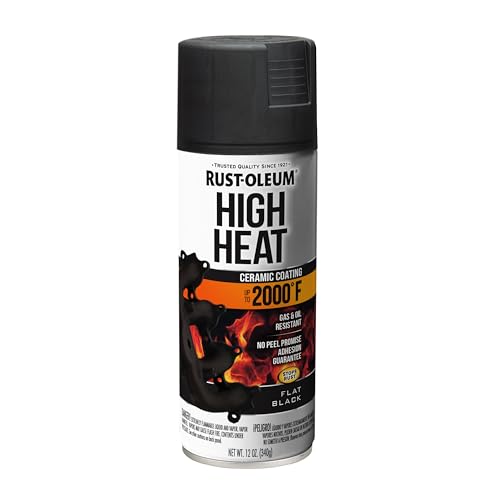
For exhaust parts that see intermittent high heat, this flat black automotive enamel has the highest heat rating among these aerosol options. The maker says it resists rust and exposure to grease, oil, gas, salt, humidity, and solvents; a 12-ounce can covers up to 10 sq ft and dries to the touch in 30 minutes. Its any-angle spray and comfort tip suit small parts and awkward surfaces. The key limitation is that the rating is for intermittent heat, so it is not the right choice if you require a coating rated for continuous operation at 2,000°F.
Bottom line: Pick this for flat black aerosol touch-ups where intermittent heat is the deciding factor.
Eastwood Satin Black Manifold Coating, 2-Pack

For a satin-black manifold finish, this coating comes as two 11.75-ounce aerosol cans and is rated to 1,400°F. Each can is sufficient for two standard cast iron manifolds or about 6 sq ft, and the maker recommends two cans for header systems. That package guidance makes it a practical fit for a larger exhaust assembly than a small spot repair. Its heat rating is lower than the 2,000°F option, so compare the expected part temperature with the rating before choosing it.
Bottom line: Choose this for a satin manifold or header project that fits the two-can recommendation.
KBS Coatings XTC, Cast Iron Grey, 8 oz

Unlike the aerosol choices, this cast iron-gray silicone coating can be brushed, rolled, or sprayed, giving more control on complex metal parts. The maker gives a 500°F to 1,500°F operating range and about 10 to 12 sq ft of coverage for the recommended two thin coats from an 8-ounce container; rough surfaces can reduce coverage by up to 30%. The maker also specifies bare-metal preparation and warns that thick coats blister. The limitation is the extra prep and application care compared with a ready-to-spray aerosol.
Bottom line: Pick this when brush application or a cast iron-gray finish matters more than fast aerosol coverage.
How to choose high temp exhaust paint
Start with the coating’s temperature rating and whether the exhaust part experiences intermittent or sustained heat. These products span 1,400°F to 2,000°F for aerosol coatings and 500°F to 1,500°F for the brushable coating, but a maximum rating alone does not tell you the part’s actual operating temperature. Measure or confirm the expected surface temperature for your application before selecting paint; with a part that can exceed the chosen coating’s rating, do not rely on that coating. Finish and application method also matter: flat and satin black are aerosol options, while cast iron gray is available for brush, roll, or spray application. For a small touch-up, compare the coverage against the area and coat count.
Prepare the exhaust surface before painting
Remove rust, scale, oil, and loose coating before applying high-temperature paint; coatings bond poorly to contamination or unstable material. The KBS maker calls for bare-metal prep by sandblasting or using a wire wheel or 60- to 80-grit sanding, followed by washing. Its instructions also call for stirring 5 to 10 minutes with a drill mixer, two thin coats 1 to 2 hours apart, and application at 50°F to 82°F. Thick coats can blister, so do not try to achieve full opacity in one heavy pass. Let the exhaust cool fully before prep or painting, work with strong ventilation, and use eye and respiratory protection appropriate to the product label.
Exhaust paint types and coverage
Aerosols are convenient for small components and broad, even passes, while brushable coatings can reach intricate surfaces without aerosol overspray. Coverage figures are not directly interchangeable unless coat count and surface texture match. Use this comparison to plan the amount rather than assuming one can covers a complete exhaust system.
| Application | Stated coverage | Useful fit |
|---|---|---|
| Rust-Oleum aerosol | Up to 10 sq ft per can | Small repairs or parts |
| Eastwood aerosol | About 6 sq ft per can | Two-can header project |
| KBS brush, roll, or spray | 10–12 sq ft at two coats | Controlled coating on shaped parts |
Rough metal reduces the area a given amount will cover, and the KBS maker estimates up to 30% less coverage on rough surfaces. For irregular or pitted exhaust parts, plan for less coverage than a smooth-panel estimate.
Heat curing and safe exhaust paint use
High-temperature coatings often require heat to cure; a dry-to-touch time is not the same as a completed heat cure. Follow the specific product’s label for cure timing and temperature rather than assuming the first engine run will cure every coating the same way. Never apply paint to a hot or running exhaust: spray products are flammable, and exhaust components can cause severe burns. Keep aerosols away from flames and ignition sources, ventilate the work area, and allow the painted part to dry before heating it. A coating rated to a certain peak temperature is not a substitute for checking the actual part temperature or for repairing corrosion that has weakened the metal.
Frequently Asked Questions
Can high temp paint go directly on rusty exhaust metal?
No; remove rust and loose scale so the coating can bond to sound metal. For the KBS coating, the maker specifies bare-metal preparation with blasting or 60- to 80-grit abrasion, followed by washing.
How many coats should exhaust paint have?
Use the coat count required by the specific coating; the KBS maker recommends two thin coats 1 to 2 hours apart. Thick coats can blister, so avoid trying to cover a part with one heavy layer.
Can I paint an exhaust while it is warm?
No; let the exhaust cool completely before painting because hot components can burn skin and can ignite aerosol vapors. Work with ventilation and keep spray paint away from flames and ignition sources.
Does a 2,000°F rating mean continuous exhaust use?
Not for the Rust-Oleum option here, whose maker specifies intermittent high heat up to 2,000°F. Match the coating’s rating and use conditions to the part’s actual surface temperature.
How much exhaust paint covers a header?
The Eastwood maker recommends two 11.75-ounce cans for header systems, with each can sufficient for about 6 sq ft. Complex or rough metal can require more coating than a smooth-surface estimate.