
Car Rubber Door Seal Adhesive: 4 Options Compared

For replacing a car door seal with adhesive-backed weatherstripping, alophoty D-Shape EPDM Seal, 10 ft is a straightforward starting point because it combines an EPDM D-shaped strip with a self-adhesive backing. Choose LIKFCBOND Automotive Silicone Sealant, 50 ml instead when you need glue for an existing rubber seal or another compatible trim material, rather than a new strip.
We earn a commission if you buy through links on this page. As an Amazon Associate I earn from qualifying purchases. Products are compared on manufacturer specifications, not hands-on testing.
- Best overall: alophoty D-Shape EPDM Seal, 10 ft – Combines a self-adhesive EPDM D-shaped seal with a 10-foot length.
- Best for seal repairs: LIKFCBOND Automotive Silicone Sealant, 50 ml – A 50 ml silicone sealant is made for bonding weather stripping and other materials.
- Best for longer runs: HOTSYSTEM D-Shape EPDM Seal, 26.25 ft – Provides 26.25 feet of D-shaped EPDM strip with 3M self-adhesive backing.
| Product | Best for | Attachment | Length | Profile or size | Shop |
|---|---|---|---|---|---|
| alophoty D-Shape EPDM Seal, 10 ft | D-shape replacement | Self-adhesive tape | 10 ft | 0.39 × 0.39 in | Check Price on Amazon |
| LIKFCBOND Automotive Silicone Sealant, 50 ml | Repairing loose seals | Silicone sealant | — | 50 ml tube | Check Price on Amazon |
| HOTSYSTEM D-Shape EPDM Seal, 26.25 ft | Long D-shape runs | 3M self-adhesive | 26.25 ft | 0.39 × 0.39 in | Check Price on Amazon |
| alophoty 5-Hole EPDM Seal, 16.5 ft | 5-hole profile fit | Self-adhesive | 16.5 ft | 0.39 × 0.31 in | Check Price on Amazon |
Car Rubber Door Seal Adhesive Options
Compare adhesive-backed replacement strips with a separate automotive sealant for repairs.
alophoty D-Shape EPDM Seal, 10 ft

For a compact D-shaped replacement strip, this option provides a 10-foot EPDM rubber seal with self-adhesive tape. The size is 0.39 × 0.39 inches, which makes matching the existing profile and gap important before installation. The maker says the backing supports a lasting bond and that the seal helps reduce noise and block weather. This format suits a shorter repair or a single door section. Its main limitation is the 10-foot run; measure the full route first if you plan to seal multiple doors or a trunk.
Bottom line: Choose this for a short repair where a 0.39-inch D-shaped profile matches the existing seal.
LIKFCBOND Automotive Silicone Sealant, 50 ml
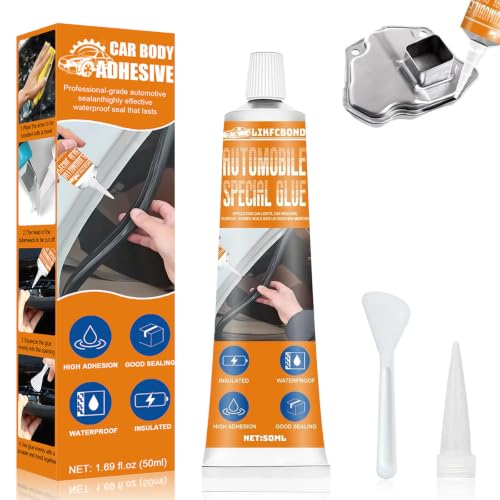
Unlike the pre-backed strips, this product is a separate black silicone sealant for bonding or repairing existing automotive trim. The maker lists weather stripping, rubber seal, metal, plastic and vinyl among its compatible materials, and the pointed nozzle is intended for controlled application and gap filling. A 50 ml tube may suit localized repairs where the original seal remains usable. The product is not a replacement weatherstrip, so it will not provide a new rubber profile or a measured length of sealing material. Confirm the existing material is among the compatible surfaces.
Bottom line: Pick this when the original seal is intact and needs adhesive rather than replacement.
HOTSYSTEM D-Shape EPDM Seal, 26.25 ft

For a longer run of D-shaped weatherstripping, this EPDM strip provides 26.25 feet and a 3M self-adhesive backing. Its 0.39-inch dimensions are intended for vehicle doors, covers, pillars and trunks, but the existing seal’s cross-section still needs to match. The maker says the adhesive can be installed directly without an adhesion promoter. This length suits jobs that need more continuous material than a short strip can supply. The limitation is profile: a D shape will not be the right replacement for a differently shaped original seal.
Bottom line: Choose this for a longer run when the vehicle’s original seal has a matching D-shaped profile.
alophoty 5-Hole EPDM Seal, 16.5 ft

For a non-D-shaped profile, this 5-hole EPDM strip offers 16.5 feet of self-adhesive weatherstripping in a 0.39 × 0.31-inch size. Its multi-hole construction distinguishes it from the D-shaped options, so compare the cross-section with the seal already on the vehicle rather than choosing by length alone. The maker says the design conforms to uneven edges and helps block noise, air and dust. This is a fit-specific replacement, not a universal substitute; the 5-hole profile may not mate correctly with a door built for another seal shape.
Bottom line: Pick this when the existing seal’s cross-section matches the 5-hole profile.
How to Choose Car Door Seal Adhesive
Start by deciding whether the job needs a complete strip or adhesive for a seal that is still usable. Self-adhesive EPDM strips replace the sealing profile as well as its backing; a tube adhesive bonds compatible materials but does not supply a new strip. Match the replacement’s cross-section and dimensions to the old seal, then measure the path around the door before selecting a length. As a practical rule, if the existing profile is not D-shaped, do not select a D-shaped strip just because its width appears close. Check door closure after fitting: added thickness can make a door harder to latch or leave uneven contact. Keep adhesive away from moving latches and hinges.
How to Match Seal Shape and Size
Match the cross-section first, then compare the strip’s dimensions with the gap and mounting surface. These options include D-shaped profiles measuring 0.39 × 0.39 inches and a 5-hole profile measuring 0.39 × 0.31 inches. A few tenths of an inch can change compression and door fit, so do not assume two strips with similar widths are interchangeable. Peel back a small section of the old seal or inspect an exposed end to identify its shape before removing it. Measure the full route with a flexible tape and allow enough length for corners without stretching the rubber. If the current profile is unclear, verify the vehicle’s seal shape before ordering.
Installing Adhesive-Backed Weatherstripping
Adhesive-backed weatherstripping holds best on a clean, dry, smooth mounting surface. Remove old adhesive and dirt, wipe the surface with isopropyl alcohol if the vehicle finish permits it, and let it dry before applying the strip. Work in a warm, sheltered area when possible; cold surfaces can reduce initial tack, while water or cleaner residue can interfere with bonding. Apply a short section at a time and press it firmly without stretching the rubber, especially around corners. Avoid closing the door or washing the area until the adhesive has had time to set according to its package directions. Keep the door open while placing the seal so fingers stay clear of pinch points.
When to Use Sealant Instead of a New Strip
A separate automotive sealant is for bonding or repairing compatible material, not for recreating a missing weatherstrip. A tube can be useful when a small area of an otherwise sound seal has lifted, while a damaged, flattened or incorrectly shaped strip usually calls for replacement. Apply sealant only to surfaces named as compatible, and use ventilation when working with automotive adhesives. Do not use a bead to bridge a large gap or around a latch, drain opening or moving part; excess material can interfere with closure or vehicle drainage. Give the repair the curing time on its package before exposing it to weather or repeated door operation.
Frequently Asked Questions
How do I remove old car door seal adhesive?
Lift the old strip gradually and remove residue with an adhesive remover compatible with the vehicle’s paint or trim. Test the remover on a concealed spot first, and avoid metal scrapers that can gouge painted surfaces.
Can I use any rubber adhesive on a car door seal?
No; choose an adhesive whose maker lists the seal material and mounting surfaces as compatible. Rubber compounds and door finishes differ, so compatibility matters more than using a strong-sounding general-purpose glue.
Should I stretch weatherstripping around door corners?
No; stretching can pull the strip back from corners as it relaxes. Lay it gently around the route, press it down in short sections, and trim only after confirming the full path is covered.
How much weatherstripping do I need for a car door?
Measure the entire path where the strip will sit, then compare that measurement with the product’s length. For corners and any overlap or trimming, leave a small working margin rather than cutting the strip exactly to the first measurement.
Can thicker weatherstripping stop a door from closing?
Yes; a profile that is too thick or shaped differently can prevent the latch from engaging cleanly. If the door needs extra force or sits proud after fitting, stop and check the seal profile and placement before driving.