
Car Wash Pump 220V Washer: Models Compared

For a 220V car wash pump, YANGQI 220V Car Wash Pump is the closest match by its 220V rating and car wash purpose, while KUVRUI 517C 220V Diaphragm Pump adds a self-priming diaphragm design. Choose a 12V option instead if you need vehicle-powered washing, or a pump head if you are replacing that component rather than buying a complete pump.
In the US, household outlets are generally 120V, so verify that your available circuit and the pump’s electrical requirements are compatible before connecting a 220V unit.
We earn a commission if you buy through links on this page. As an Amazon Associate I earn from qualifying purchases. Products are compared on manufacturer specifications, not hands-on testing.
- Best overall: YANGQI 220V Car Wash Pump – The product is identified as a 220V pump for car washing.
- Best for self-priming: KUVRUI 517C 220V Diaphragm Pump – Its features identify a self-priming diaphragm pump and car wash use.
- Best for portable washdown: Moogiantgo 12V Washdown Pump Kit – The 12V kit includes a cigarette-lighter cable and claims up to 170 PSI.
| Product | Best for | Voltage | Max pressure | Flow rate | Shop |
|---|---|---|---|---|---|
| YANGQI 220V Car Wash Pump | 220V car washing | 220V | — | — | Check Price on Amazon |
| KUVRUI 517C 220V Diaphragm Pump | Self-priming washing | 220V | — | — | Check Price on Amazon |
| 220V Car Washer Pump Head | Pump head replacement | 220V | — | — | Check Price on Amazon |
| Moogiantgo 12V Washdown Pump Kit | Portable washdown | 12V | 170 PSI | 1.85 GPM | Check Price on Amazon |
| DP-521 12V Diaphragm Pump | Low-pressure spraying | 12V | 70 PSI | 3.5 L/min | Check Price on Amazon |
Car Wash Pump 220V Washer Options
Compare the voltage and stated pump type first, then match the option to your power source and whether you need a complete pump or a replacement part.
YANGQI 220V Car Wash Pump

This is the most direct match for a 220V car wash pump: the product identifies a 220V supply and car wash use. Its features also describe a self-priming transfer pump for water and other fluids, but give no pressure or flow figure to compare with the other options. It suits a buyer seeking a 220V pump rather than a vehicle-powered 12V washdown kit. The key limitation is that the pump type and performance are not sufficiently defined for matching a specific spray task; confirm the required pump configuration and electrical compatibility before ordering.
Bottom line: Pick this if your setup needs a 220V car wash pump and you can verify its fit for the job.
KUVRUI 517C 220V Diaphragm Pump

The KUVRUI is differentiated by its named 517C model and self-priming diaphragm design, alongside a 220V rating. The maker says it is intended for car washing, garden irrigation, and household or workshop cleaning. A diaphragm pump moves liquid by flexing a membrane, and self-priming designs can draw from a source without manual priming when installed within their operating limits. Choose it when the pump style matters more than a specified spray performance.
Bottom line: Pick this if you want a 220V self-priming diaphragm pump for washing or irrigation.
220V Car Washer Pump Head

Unlike the complete pump options, this product is identified as a car washer pump head assembly, so it is a component rather than a clearly complete washing pump. Its 220V designation makes it relevant to a 220V setup, but the specifications do not identify a flow rate or pressure. It may suit someone replacing a matching pump head; it is not the right choice if you need a ready-to-connect pump. Pump heads are not universal, so verify the replacement part’s physical and electrical match to your existing machine before ordering.
Bottom line: Pick this only when you need a compatible replacement pump head, not a complete pump.
Moogiantgo 12V Washdown Pump Kit
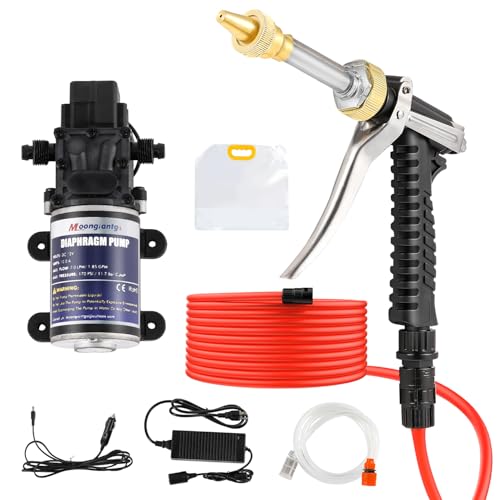
The Moogiantgo differs from the 220V choices by using a 12V DC self-priming pump and including two power connection options: a cigarette-lighter cable and a converter for wall power. The maker says maximum output is 170 PSI and 1.85 GPM; the kit also includes a 19.7-foot hose. It suits portable washing around a vehicle, boat, or RV where a 12V source is useful. It is not a 220V pump, and the included converter should not be treated as evidence that the pump accepts 220V input; verify the converter’s input compatibility for your supply.
Bottom line: Pick this for portable 12V washdown rather than a pump that runs directly on 220V.
DP-521 12V Diaphragm Pump
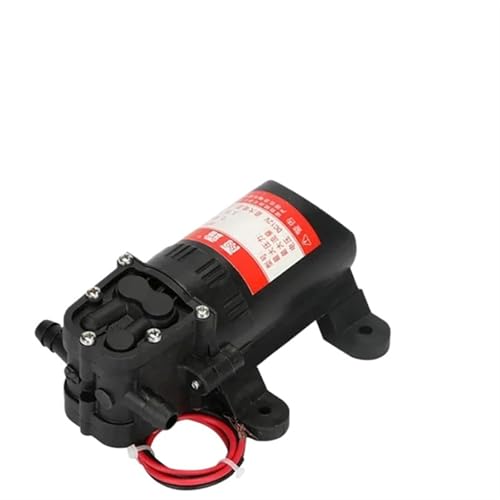
The DP-521 is the low-pressure alternative here: the model name ends in 12V, and the product gives a 70 PSI rating and 3.5 L/min flow. Its uses include agricultural spraying and car washing, but it is not a 220V pump despite the broader voltage range in its title. At 70 PSI, it is better considered for spray or wash tasks that do not require a higher-pressure washer pump. Its 3.5 L/min flow uses metric units, so compare it only after converting to the same unit as another pump’s flow figure.
Bottom line: Pick this for 12V spray work where 70 PSI meets the task, not for a 220V system.
How to choose a 220V car wash pump
Start by matching the pump’s input voltage to the supply available at the installation point; in the US, ordinary household outlets are generally 120V, not 220–240V. A 220V pump needs a compatible circuit and connection, so do not assume a wall converter makes an incompatible pump safe. Next, compare pressure and flow together: PSI indicates pressure, while GPM or L/min indicates water volume, and either alone is an incomplete guide to cleaning output. A practical rule is to reject any option whose voltage does not match the intended supply, then prioritize models with quantified pressure and flow if the nozzle or cleaning task requires a known output. Also distinguish a full pump from a pump head component.
220V power and water safety
Use a ground-fault circuit interrupter (GFCI) on electrical equipment used near water; a GFCI is designed to cut power when it detects current leaking from the circuit. Keep plugs, converters, and connections dry, and use outdoor-rated electrical connections where the equipment is exposed outdoors. A 220V unit connected to the wrong supply can fail or create an electrical hazard, so confirm the pump’s input requirements and have a qualified electrician assess a circuit when needed. Do not handle a live connection with wet hands or stand in water while operating powered equipment. Pressure also matters: even a pump marketed for washing can damage paint or injure skin if a concentrated jet is directed too close.
Complete pump or replacement pump head
A complete pump includes the pumping mechanism intended to move water; a pump head is a component that generally requires a compatible motor and assembly. Before buying a replacement head, match the existing unit’s mounting pattern, shaft or drive arrangement, ports, voltage, and pressure requirements. A mismatch in even one connection can make a part unusable or unsafe. For a full replacement, compare inlet and outlet size along with voltage, pressure, and flow rather than relying on the phrase “high pressure.” Many pressure-washer systems also use a separate motor and pump combination, so check which component has failed before selecting a replacement.
Pressure and flow for washing tasks
Pressure and water flow describe different parts of a wash pump’s output: pressure is measured in PSI, while flow is measured in GPM or L/min. Higher pressure does not automatically mean faster or safer cleaning, because nozzle type, distance, and surface material change the result. For example, delicate automotive paint calls for a wider spray pattern and greater stand-off distance than a concentrated jet on hard outdoor surfaces. Never aim a pressure stream at people, pets, tires, electrical equipment, or fragile trim. A product without a pressure or flow is difficult to compare for a task with a specific output requirement, so choose a model with both figures when those limits matter.
Frequently Asked Questions
Can I plug a 220V washer pump into a US wall outlet?
Most ordinary US household outlets supply 120V, so a 220V pump should not be plugged into one unless the pump’s power equipment explicitly supports that input. Use a compatible circuit and have the connection checked by a qualified electrician if uncertain.
What is the difference between PSI and GPM on a wash pump?
PSI measures pressure and GPM measures water volume per minute. Cleaning output depends on both, as well as the nozzle and spray distance, so a high PSI figure alone does not establish how quickly or safely a surface can be washed.
Is a 12V pump suitable for a 220V washer setup?
A 12V pump is not a direct 220V replacement; it needs a suitable 12V DC source. A converter is usable only when its input matches the supply and its output matches the pump’s requirements.
What should I check before replacing a washer pump head?
Match the head to the existing machine’s mounting, drive arrangement, port connections, voltage, and required pressure. A replacement head is a component, so it may not include the motor or connections needed for a complete pump.
Can a pressure washer damage car paint?
Yes, a concentrated high-pressure jet held too close can damage paint, trim, or seals. Use a wider spray and keep distance from the surface; avoid directing the stream at people, tires, or electrical parts.