
Back Support for Slipped Disc: Brace and Pillow Options

For back support for a slipped disc, the Sparthos brace is the closest match because it includes an adjustable lumbar pad and stabilizing stays. Choose a chair pillow instead if your main need is support while sitting, not a wearable belt.
We earn a commission if you buy through links on this page. As an Amazon Associate I earn from qualifying purchases. Products are compared on manufacturer specifications, not hands-on testing.
- Best overall: Sparthos Adjustable Back Brace, Large – Adjustable lumbar pad and vertical stays provide wearable lower-back support.
- Best for adjustable compression: BraceUP Dual-Strap Back Brace, L/XL – Dual adjustment straps let you customize the fit; its L/XL size fits 35–43 inches around the navel.
- Best for low-profile wear: TitanGuard Ultra-Thin Back Brace, M/L – The maker describes an ultra-thin, breathable mesh brace designed to fit under clothes.
| Product | Best for | Support type | Fit or size | Weight | Shop |
|---|---|---|---|---|---|
| Sparthos Adjustable Back Brace, Large | Wearable lumbar support | Brace with lumbar pad | Large | 0.9 lb | Check Price on Amazon |
| BraceUP Dual-Strap Back Brace, L/XL | Adjustable compression | Dual-strap brace | 35–43 in at navel | 0.6 lb | Check Price on Amazon |
| TitanGuard Ultra-Thin Back Brace, M/L | Low-profile wear | Thin mesh brace | M/L, 33–43 in | — | Check Price on Amazon |
Back Support for Slipped Disc
These options cover wearable lumbar braces and cushions designed for sitting; choose by where and how you need support.
Sparthos Adjustable Back Brace, Large
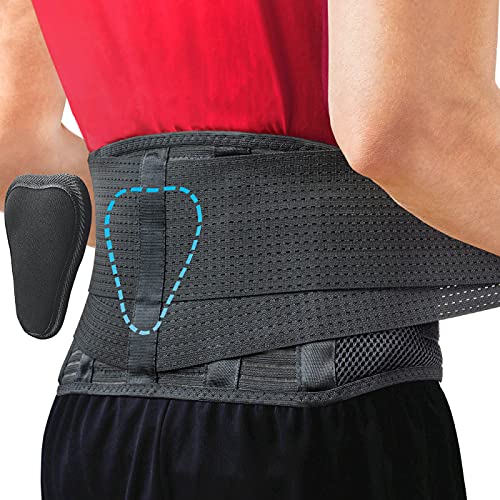
The Sparthos brace stands out for its adjustable lumbar pad and vertical support stays, which distinguish it from the simpler strap design of BraceUP Dual-Strap Back Brace, L/XL. The mesh belt is intended for walking, bending, stretching, work, and lifting, and its Large size suits buyers whose measurements match that size. The maker claims support for herniated discs and other back conditions; that is not a promise of treatment or recovery. Unlike the chair cushions, a wearable brace can move with you, but its fit under clothing and comfort during extended wear are personal considerations.
Bottom line: Choose this if you want a wearable brace with a separate adjustable lumbar pad.
BraceUP Dual-Strap Back Brace, L/XL

BraceUP’s clearest differentiator is its dual adjustment straps, which let the wearer vary compression rather than relying on a single adjustment. The L/XL fits a 35–43-inch circumference measured around the navel, so measure there rather than using pant size. The maker describes the belt as breathable and says it is intended for lower-back concerns including herniated discs. It has fewer specific structural features in the specifications than Sparthos Adjustable Back Brace, Large, which adds a lumbar pad and vertical stays; choose accordingly if targeted padding is important to you.
Bottom line: Pick this when a measured L/XL fit and adjustable compression are priorities.
TitanGuard Ultra-Thin Back Brace, M/L

TitanGuard differentiates itself with an ultra-thin mesh construction intended for low-profile wear under clothes. Its features describe stays for targeted support and elastic fabric for customized compression, while the M/L size is given as 33–43 inches. The maker says it is designed for mild to moderate back pain, including pain associated with a slipped disc, but that claim does not establish medical effectiveness. Unlike BraceUP Dual-Strap Back Brace, L/XL, the sizing does not say where to measure; confirm the fit measurement before ordering, especially if you are near a size boundary.
Bottom line: Choose this if a thinner under-clothes profile matters more than detailed sizing guidance.
How to choose slipped-disc back support
Choose support by the activity: a brace wraps the trunk for movement, while a lumbar cushion changes the contact between your back and a chair. A brace can be adjusted for compression, but it must fit the torso without restricting breathing or causing numbness. A cushion is useful only where you can position it behind your lower back. For a measurable decision rule, choose a wearable option when you need support while standing or walking; choose a chair pillow when your discomfort is mainly during seated work or driving. Neither type repairs a disc, and new weakness, saddle numbness, or loss of bladder or bowel control calls for urgent medical care.
How to size a lumbar brace
Measure your waist at the location specified for the brace; BraceUP specifically instructs measuring around the navel, not using pant size. Its L/XL range is 35–43 inches, while TitanGuard M/L is given as 33–43 inches but without a measurement location in the specifications, so confirm that point before ordering. A brace that is too loose can shift, while one that is too tight can cause pressure or interfere with normal breathing. Put it on over a thin layer if needed, and avoid tightening it enough to cause tingling or numbness.
Brace or lumbar pillow for sitting
Braces and lumbar pillows address different situations: a brace is worn around the waist, while a pillow supports the back against a seat. A standard chair lumbar roll is often about 4 inches in diameter; its position matters more than forcing a pronounced arch. Place support at the beltline rather than high between the shoulder blades, and keep feet flat with hips close to knee height. Seat depth and backrest shape affect which cushion stays in place.
The table separates the support types by where they are used and the practical fit check.
| Support type | Where it works | Fit check |
|---|---|---|
| Wearable brace | Standing and moving | Torso measurement and comfortable breathing |
| Lumbar pillow | Chair or car seat | Fits the backrest and seat depth |
Safe use and common fit mistakes
Back braces should feel supportive, not painful: loosen or remove one if it causes numbness, tingling, skin irritation, or breathing restriction. Extended bracing can reduce normal trunk movement, so a belt should not replace advice from a clinician or a gradual return to ordinary activity. Avoid selecting by the broad condition claims in marketing alone; a slipped disc is a medical diagnosis, and pain patterns can have other causes. Keep a cushion low enough to support the lumbar curve rather than pushing the upper back forward. Stop and seek urgent assessment for progressive leg weakness, numbness around the groin, or bladder or bowel changes.
Frequently Asked Questions
Can a back brace fix a slipped disc?
No brace can be assumed to fix a slipped disc; these products provide external support or compression. New weakness, groin-area numbness, or bladder or bowel changes need urgent medical assessment.
How tight should a lumbar back brace feel?
A brace should feel secure without restricting normal breathing or causing tingling, numbness, or pain. Loosen or remove it if any of those symptoms occur.
Where should a lumbar pillow sit in a chair?
Place the support at the beltline, in the inward curve of the lower back. A typical lumbar roll is about 4 inches in diameter, but seat shape and body size affect the best position.
How do I measure for a back support belt?
Measure at the location specified by the belt maker; BraceUP calls for circumference around the navel and gives 35–43 inches for L/XL. Pant size is not a reliable substitute for that measurement.
When should back pain with a slipped disc be urgent?
Progressive leg weakness, numbness around the groin, or loss of bladder or bowel control requires urgent medical care. These warning signs matter regardless of which brace or cushion you use.