
Cargo Trailer Floor Coatings: 3 TK64 Options Compared

For most cargo trailer floors, TK64 Gray, 3 Gallons is the most versatile choice because its maker says it can coat floors, ramps and walls and it comes in gray. Choose TK64 Gray Anti-Slip Paint, 2 Gallons for a smaller format, or TK64 Black, 1 Gallon if you want a black finish; confirm the package quantity before ordering because the name and size conflict for TK64 Gray Anti-Slip Paint, 2 Gallons.
These roll-on coatings leave a textured surface and are intended for several substrate types, including wood and metal.
We earn a commission if you buy through links on this page. As an Amazon Associate I earn from qualifying purchases. Products are compared on manufacturer specifications, not hands-on testing.
- Best overall: TK64 Gray, 3 Gallons – Its maker names floors, ramps and walls, and it comes in gray.
- Best for black finish: TK64 Black, 1 Gallon – It is the black one-gallon option.
- Best for smaller format: TK64 Gray Anti-Slip Paint, 2 Gallons – It is supplied as a two-pack of 32 fl oz containers.
| Product | Best for | Color | Package format | Named application | Shop |
|---|---|---|---|---|---|
| TK64 Gray, 3 Gallons | Floors and ramps | Gray | 3 × 128 fl oz | Floors, ramps, walls | Check Price on Amazon |
| TK64 Gray Anti-Slip Paint, 2 Gallons | Small-format coating | Gray | 2 × 32 fl oz | Trailer floors | Check Price on Amazon |
| TK64 Black, 1 Gallon | Black finish | Black | 1 × 128 fl oz | Trailer floors | Check Price on Amazon |
Cargo trailer floor coatings
Compare these TK64 roll-on options by color, package format and intended use.
TK64 Gray, 3 Gallons

TK64 Gray, 3 Gallons stands out for its range of trailer surfaces: its maker says the gray coating protects floors, ramps and walls. The package contains three 128 fl oz containers, and the water-based formula is applied with the included 3/8-inch foam roller. The maker says to apply outdoors or in a well-ventilated area and to avoid temperatures below 60°F during application and curing. This larger package suits buyers coating multiple surfaces or a larger trailer; it may be more than needed for a small floor-only job.
Bottom line: Choose this option when you want gray coating for several trailer surfaces.
TK64 Gray Anti-Slip Paint, 2 Gallons

TK64 Gray Anti-Slip Paint, 2 Gallons is the gray two-container option, with each container holding 32 fl oz. Its maker describes the coating as textured and flexible, and lists compatibility with metal, wood, concrete, painted surfaces, plywood, treated plywood and OSB. The maker recommends applying with the included 3/8-inch foam roller outdoors or in a well-ventilated area, while avoiding temperatures below 60°F during application and curing.
Bottom line: Choose this option for a limited area, after verifying the package quantity.
TK64 Black, 1 Gallon
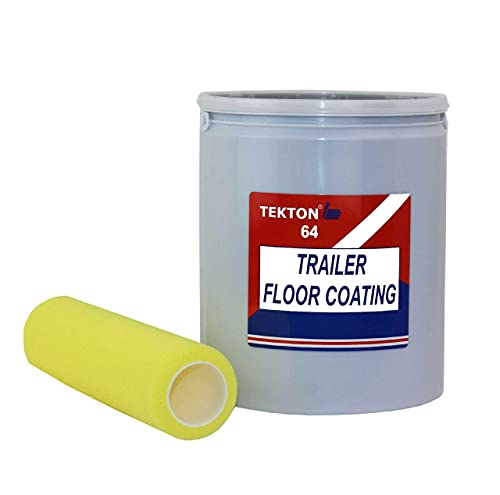
TK64 Black, 1 Gallon is the only black option among these products, in a one-gallon container. The coating is described as thick and flexible, and the maker lists use on metals, wood, concrete, painted surfaces, plywood, treated plywood, OSB and bare wood. Application uses a 3/8-inch foam roller; the maker advises working outdoors or in a well-ventilated area and avoiding temperatures below 60°F during application and curing. Its single-gallon package is a useful choice when black is preferred, though buyers covering multiple surfaces may need a larger package.
Bottom line: Choose this one-gallon option if black is the finish you want.
How to choose a cargo trailer floor coating
Choose by substrate, surface area and application conditions before comparing color. These TK64 coatings list compatibility with wood, metal, concrete, painted surfaces, plywood, treated plywood and OSB, so identify the floor material first. Remove oil, fuel residue and loose dirt from a used floor; new floors need at least a light sweep according to the maker. Apply only when the temperature is at least 60°F during application and curing. For a floor-only project, estimate coverage from the container label rather than assuming one gallon covers a fixed area; texture, porosity and floor condition affect coating use. A roll-on textured coating is different from a smooth paint: its finish adds surface texture, but does not replace cargo tie-downs or safe loading practices.
Prepare a trailer floor before coating
A clean, dry surface is the key preparation condition: oil or fuel residue can interfere with adhesion, and moisture can compromise coating work. Sweep new floors; for used floors, clean thoroughly and remove oil and fuel residues as the maker directs. Check seams, fasteners and damaged boards before coating, since a surface coating is not a substitute for repairing loose or deteriorated flooring. Bare wood, plywood and OSB are listed substrates, as are metal and concrete, but those materials absorb or hold coating differently. Avoid working below 60°F during application or curing. Use ventilation outdoors or in a well-ventilated work area, keep ignition sources away from fuel-cleaning materials, and follow the coating container’s safety directions for protective equipment and cleanup.
Roll-on coating versus other trailer floor finishes
Roll-on textured coating is suited to buyers who want a continuous coating rather than a loose mat or separate floor panel. A coating follows the floor’s contours, while a mat can be removed for cleaning and replacement; a rigid panel can cover worn flooring but adds a separate layer and edge transitions. This comparison covers roll-on TK64 options, not the performance of other finish types. For each, the maker calls for a 3/8-inch foam roller and a temperature of at least 60°F during application and curing. Check the container instructions for coverage and recoat timing because the maker gives no verified square-foot coverage or cure duration. Pick the package by the actual area to coat, not by the number of containers alone.
Safe use and upkeep for coated trailer floors
A textured coating does not make cargo secure: use rated tie-down points and restraints appropriate to the load, and keep weight within the trailer’s rating. Inspect the floor regularly for peeling, cracks, exposed substrate or damage around fasteners, especially after hauling heavy or abrasive cargo. Repair underlying wood or metal problems before applying more coating; a new layer cannot restore structural strength. Clean spills promptly with a method compatible with the coating, and avoid assuming that fuel or solvent exposure is harmless just because the coating is intended for automotive and industrial settings. The maker calls for well-ventilated application and temperatures of at least 60°F during application and curing; product-specific cure and cleaning directions should guide return to service.
Frequently Asked Questions
Can trailer floor coating go over plywood?
Yes, the TK64 options list plywood and treated plywood among compatible surfaces. Remove dust and any oil or fuel residue before coating, and apply at 60°F or warmer during application and curing.
Can I coat a trailer floor in cold weather?
The maker advises against applying or curing these coatings below 60°F. Plan for the floor and work area to remain at or above that temperature through the coating and curing period.
What roller should I use for TK64 coating?
The maker specifies a 3/8-inch foam roller for application. Apply outdoors or in a well-ventilated area, and use the container directions for the exact application process.
Does textured trailer coating replace cargo tie-downs?
No. A textured floor finish is not a cargo restraint, so secure loads with appropriate rated tie-downs and keep cargo within the trailer’s capacity.
How should I prepare a used trailer floor?
Clean used floors thoroughly and remove oil and fuel residue before applying coating. New floors need a light sweep, and the surface should be clean and dry before work begins.