
Cast Iron Potato Baker: 5 Models Compared by Fit

The 11-inch cast iron potato baker is the most direct match because it includes a removable rack and states capacity for 2 large or 3 medium potatoes. Choose a different shape or type if you want a larger oval pan that doubles as two open pans, or a general-purpose Dutch oven rather than a dedicated potato roaster.
We earn a commission if you buy through links on this page. As an Amazon Associate I earn from qualifying purchases. Products are compared on manufacturer specifications, not hands-on testing.
- Best overall: 11-Inch Cast Iron Potato Baker – The 11-inch body includes a removable rack and fits 2 large or 3 medium potatoes.
- Best for split-pan cooking: SmithEra Oval Cast Iron Baker – Its lid and base separate into two open pans, and hanging handles suit tripod cooking.
- Best for small batches: Pinra Cast Iron Garlic Potato Roaster – The compact garlic-and-potato roaster measures 6.2 by 4.7 inches.
| Product | Best for | Shape or size | Weight | Cooking feature | Shop |
|---|---|---|---|---|---|
| 11-Inch Cast Iron Potato Baker | Rack roasting | 11 in round | 9.0 lb | Removable 304 stainless rack | Check Price on Amazon |
| SmithEra Oval Cast Iron Baker | Split-pan cooking | 15.47 × 7.09 in oval | 12.52 lb | Lid separates into two pans | Check Price on Amazon |
| Pinra Cast Iron Garlic Potato Roaster | Compact roasting | 6.2 × 4.7 in | 4.45 lb | Lidded ramekin pot | Check Price on Amazon |
| OLLAKOK 3.8-Quart Cast Iron Dutch Oven | Bread and frying | 3.8 qt oval | 12.1 lb | Lid doubles as skillet | Check Price on Amazon |
| Stansport 1-Quart Flat-Bottom Dutch Oven | Stovetop versatility | 1 qt; 5 × 5 in | — | Flat bottom; heavy lid | Check Price on Amazon |
Cast Iron Potato Bakers Compared
Compare dedicated potato roasters with related cast iron pots by size, rack setup and cooking versatility.
11-Inch Cast Iron Potato Baker

The 11-inch round roaster is the clearest fit for roasting potatoes because its removable rack lifts food above the base. The maker says it holds 2 large or 3 medium potatoes, and describes a center vent and raised interior texture. At 9.0 pounds, it is sized for grill, oven or campfire use without the larger footprint of the oval roaster. Remove the rack when you want more browning against the cast iron surface. The 11-inch diameter may be limiting for larger batches or oversized vegetables.
Bottom line: Choose this for rack-raised roasting of a small potato batch.
SmithEra Oval Cast Iron Baker

The SmithEra stands apart with an oval, two-piece design: its lid can serve as a second open pan. The 12.52-pound pre-seasoned cast iron body is sized for more than potatoes, including bread, fish and other roasting. Its hanging handles are intended for campfire tripod use, while the covered setup can trap heat. This makes it a more flexible cooking vessel than a dedicated rack-style potato baker. The long 15.47-inch footprint and 12.52-pound weight make it a substantial choice where storage space or lifting weight matters.
Bottom line: Pick this if you want one oval baker that splits into two pans.
Pinra Cast Iron Garlic Potato Roaster

The Pinra is a compact lidded ramekin-style pot rather than a full-size potato roaster. Its 6.2-by-4.7-inch footprint and 4.45-pound weight suit small portions of potatoes or garlic, and its pre-seasoned cast iron is described for kitchen oven or outdoor grill cooking. Extra-wide handles are part of its design for transferring the pot. It may suit a side dish better than a batch of whole large potatoes; the size is notably smaller than the 11-inch dedicated baker.
Bottom line: Choose this for a compact garlic or small potato side dish.
OLLAKOK 3.8-Quart Cast Iron Dutch Oven
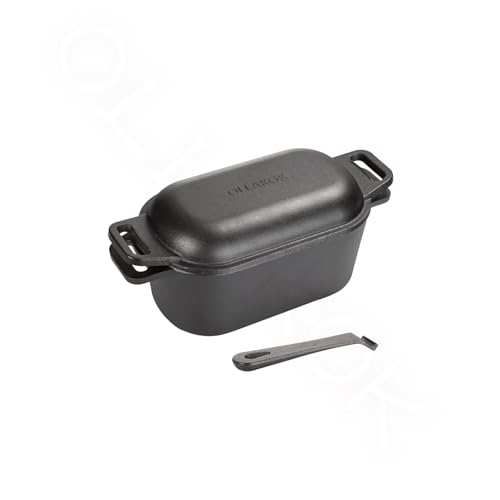
The OLLAKOK is a general-purpose 3.8-quart Dutch oven whose lid doubles as a skillet or grill pan, not a dedicated potato roaster. The maker describes it as pre-seasoned and suited to bread baking, frying and camping, with dual loop handles and a lid lever. Its 12.1-pound weight and 13.8-inch length put it closer to the larger oval baker in heft than the compact roaster. Choose it when bread or pan-frying matter alongside occasional potato cooking; it does not include a potato rack.
Bottom line: Pick this for a bread-baking pot that can also fry.
Stansport 1-Quart Flat-Bottom Dutch Oven

The Stansport differs from potato-specific bakers with a 1-quart, flat-bottom pot designed for stovetop, grill or oven cooking. Its 5-by-5-inch footprint and heavy lid make it a small general-purpose vessel for braising, roasting or baking, while the flat base distinguishes it from campfire-oriented forms. The maker says the lid retains heat and moisture. The one-quart capacity is suited to small portions rather than a family-sized batch of whole potatoes, and no rack is included.
Bottom line: Choose this for small stovetop cooking as well as occasional roasting.
How to choose a cast iron potato baker
Start with batch size and whether you need potatoes elevated above the pan surface. The 11-inch model specifies capacity for 2 large or 3 medium potatoes and includes a removable rack; a rack can keep food off direct contact with the base, while removing it allows more contact browning. For a dedicated potato baker, prioritize a round or oval cooking chamber with room around each potato rather than assuming the outside dimensions equal usable capacity. A lid helps retain heat and moisture, but a heavy cast iron lid adds handling weight. If you expect to move a hot pan, use dry, heat-resistant mitts and keep a stable landing surface ready.
As a practical rule, choose a roaster whose potato capacity covers your usual batch, then allow space for air and heat to circulate between pieces.
Round roaster, oval baker or Dutch oven
A round rack-equipped roaster favors small batches of whole potatoes, while an oval baker offers a longer cooking area and may have other uses. Dutch ovens are broader-purpose pots; their capacity and lid shape matter more than a potato-specific rack. Use this comparison to match the vessel to the cooking job.
| Cooking need | Useful form | Why it fits |
|---|---|---|
| Lift potatoes above the base | Round roaster with rack | Rack raises food for roasting |
| Use lid separately | Two-piece oval baker | Lid can function as open pan |
| Cook bread or fry too | Dutch oven with skillet lid | Lid has a second cooking role |
Cast iron stores heat and releases it gradually, so preheating takes longer than with a thin pan. The tradeoff is steadier heat once the vessel is hot, but abrupt temperature changes can stress cast iron; avoid pouring cold liquid into a very hot pot.
Using cast iron over a grill or campfire
Cast iron works on a grill or campfire when the cooking vessel is stable and its handles can be reached safely. A hanging-handle design is intended for a tripod, but the tripod, suspension and load must all be secure before heating. Keep hands and face away when lifting a lid because trapped steam can burn. Cast iron remains hot well after the fire or burner is off, so use dry heat-resistant mitts and set the pot on a heat-safe surface. Do not assume every cast iron pot can hang: use a tripod only with handles intended for that arrangement.
For grill use, leave room around the pan for airflow and position it away from direct flare-ups when possible. Check that the grill grate can support the combined weight of the pot and food before heating.
Seasoning and cleaning cast iron
Pre-seasoned cast iron has an initial oil-based layer, but routine care still matters. Wash after cooking with warm water and a nonabrasive brush, dry completely, then wipe on a very thin layer of cooking oil before storage. Water left on the surface can promote rust, and thick oil layers can become sticky rather than protective. Avoid prolonged soaking and putting cast iron away damp. If rust forms, scrub it away, dry the pan thoroughly and restore a light seasoning layer. Check whether the maker’s care directions permit soap or dishwasher cleaning before using either; hand washing and prompt drying are the safer default for maintaining seasoning.
Frequently Asked Questions
How many potatoes fit in an 11-inch cast iron baker?
The 11-inch model is specified for 2 large or 3 medium potatoes. For a different potato size, leave space between pieces so heat can circulate around them.
Should potatoes sit on a rack while roasting?
A rack raises potatoes above the pan base and allows heat to reach more of their surface. Remove a rack when you want greater contact with the cast iron for browning.
Can cast iron potato bakers go on a campfire?
Some are intended for campfire use, but the setup must be stable and the handles suitable for the cooking method. Keep a hot vessel supported securely, and use dry heat-resistant mitts because cast iron stays hot after cooking.
How do you keep a cast iron baker from rusting?
Dry it fully after washing and apply a very thin coat of cooking oil before storage. Avoid soaking or storing it while damp, since lingering moisture can lead to rust.
Can I use a potato baker for bread?
A lidded cast iron vessel can also bake bread when its size and shape suit the loaf. Dutch ovens and the split-pan oval baker have broader bread uses than a small rack-style potato roaster.