
Men’s Oakley Ski Jackets Compared by Features and Fit

The Oakley Men’s Range Recycled Jacket 2.0 suits skiers who want a helmet-compatible hood and pit vents in one jacket. Choose another model if insulation or a snow skirt matters more, since those features distinguish other options in this group.
Ski jackets are outer layers built for snow and changing activity levels; features such as vents, weather barriers and snow skirts affect comfort and coverage.
We earn a commission if you buy through links on this page. As an Amazon Associate I earn from qualifying purchases. Products are compared on manufacturer specifications, not hands-on testing.
- Best overall: Oakley Range Recycled Jacket 2.0, X-Large – Combines a helmet-compatible adjustable hood, pit vents and two hidden zip pockets.
- Best for insulated coverage: Oakley TNP TBT Insulated Jacket – Identified as insulated and uses an FNDry 10K laminate.
- Best for snow-skirt integration: Oakley Core Divisional RC Insulated Jacket – Includes a snow skirt and jacket-to-pant integration.
- Best for medium sizing: Oakley Range Recycled Jacket 2.0, Medium – Offers the Range Recycled Jacket 2.0 feature set in medium size.
| Product | Best for | Size | Weather or snow features | Ventilation or integration | Shop |
|---|---|---|---|---|---|
| Oakley Range Recycled Jacket 2.0, X-Large | Helmet-ready ventilation | X-Large | Hydrofree DWR | Pit vents | Check Price on Amazon |
| Oakley TNP TBT Insulated Jacket | Insulated layering | Medium | FNDry 10K laminate; O Protect DWR | — | Check Price on Amazon |
| Oakley Core Divisional RC Insulated Jacket | Pant integration | Large | O Protect DWR | Snow skirt; pant integration | Check Price on Amazon |
| Oakley Range Recycled Jacket 2.0, Medium | Medium hood fit | Medium | Hydrofree DWR | Pit vents | Check Price on Amazon |
Men’s Oakley Ski Jackets
Compare the sizes and snow-specific features to choose the jacket that best fits your layering and resort needs.
Oakley Range Recycled Jacket 2.0, X-Large

The Range Recycled Jacket 2.0 is the option here with both pit vents and a helmet-compatible hood. Oakley says its Hydrofree DWR repels water; the jacket also has an adjustable hood with a bound peak, a front zip with flap, snap and Velcro closure, and two hidden side zip pockets. This X-Large version suits skiers who want those features and need that size. Its features do not identify an insulation layer, so buyers looking specifically for insulated warmth should compare an insulated option instead.
Bottom line: Choose this if you want an adjustable helmet-compatible hood and pit vents in X-Large.
Oakley TNP TBT Insulated Jacket

The TNP TBT is the only option here that combines an insulated build with an FNDry 10K laminate. Oakley says its O Protect DWR treatment repels water, and the jacket has a full zip with flap plus a waterproof zip chest pocket. The Medium size may suit a skier seeking an insulated jacket with a dedicated chest pocket. The features do not include pit vents or a snow skirt, so skiers prioritizing those functions should consider another model in this comparison.
Bottom line: Choose this for a Medium insulated jacket with a chest pocket and FNDry laminate.
Oakley Core Divisional RC Insulated Jacket
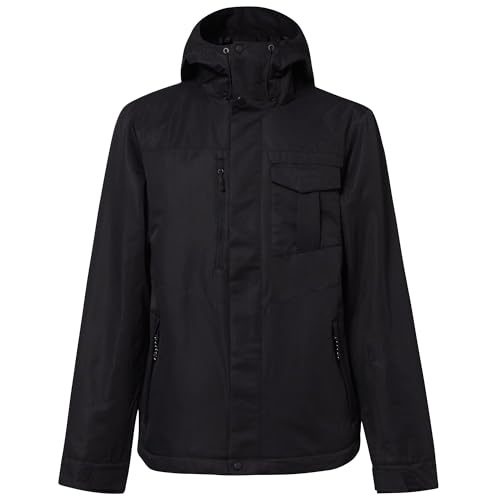
The Core Divisional RC stands out for its snow skirt and jacket-to-pant integration, features not called out for the other jackets here. Oakley says its O Protect DWR treatment repels water. The insulated jacket also has an RFID pass pocket and adjustable Velcro cuffs, making it a fit for skiers who value pass access and a linked jacket-and-pant setup. Its distinguishing features center on integration rather than ventilation; buyers who want pit vents should choose a different option.
Bottom line: Choose this if snow-skirt coverage and jacket-to-pant integration are priorities.
Oakley Range Recycled Jacket 2.0, Medium

The Medium Range Recycled Jacket 2.0 shares the hood and vent features of the X-Large version, but offers a different size and color. Oakley says its Hydrofree DWR repels water; the adjustable hood is helmet-compatible and has a bound peak. Other features include pit vents, two hidden side zip pockets, and a front zip with flap, snap and Velcro closure. This model suits skiers looking for the Range design in Medium.
Bottom line: Choose this for the Range feature set in Medium.
How to choose a men’s ski jacket
Choose a ski jacket by matching its weather barrier, warmth and ventilation to your conditions and activity. DWR is a water-repellent treatment on the fabric surface; a waterproof membrane is a separate barrier, and one does not automatically mean the other. For wet snow or prolonged exposure, prioritize a jacket with a waterproof construction rather than relying on DWR alone. Insulation adds warmth, while an uninsulated shell leaves more room to adjust warmth with base and midlayers. Pit vents can release heat during active skiing. A practical rule: if you routinely overheat on uphill or high-output sections, favor pit vents; if you ski mostly in cold conditions and want built-in warmth, compare insulated jackets first.
What jacket features matter on the mountain
A snow skirt is an internal barrier intended to limit snow entering around the waist, while jacket-to-pant integration helps connect compatible garments. Helmet-compatible hoods are cut to fit over a helmet; check hood adjustment and visibility with your helmet before committing to a fit. Pass pockets keep an RFID pass accessible without taking it out, and waterproof zip pockets help protect contents, though pocket placement and capacity still affect usability. Adjustable cuffs help close the sleeve around gloves. For this group, decide first whether you need a snow skirt, a hood suited to your helmet, or venting; those features change the choice more than color does.
Layering and fit for ski jackets
A ski jacket should leave room for a base layer and a midlayer without restricting shoulder movement or raising the hem when arms lift. Try the intended layers together and mimic a ski stance: reach forward, bend at the knees and raise both arms. Sleeves should continue to cover the wrists when reaching, while the hem should remain over the waist. A helmet-compatible hood should turn with the head without blocking peripheral vision. Size labels alone do not guarantee layering room, so fit the jacket over the clothing you plan to ski in. If you are between sizes, compare the garment’s actual fit and sleeve reach rather than assuming a larger size always improves comfort.
Weather protection terms and care
DWR helps water bead on the outer fabric, but wear, dirt and abrasion can reduce its water-shedding effect; a saturated face fabric may feel clammy even when a membrane remains functional. Waterproof-breathable membranes are commonly described with a hydrostatic-head rating in millimeters and a moisture-vapor rating, but numeric ratings are comparable only when the test method and units are clear. Follow the care label, since fabric softener and harsh heat can impair water-repellent finishes. After washing, many technical garments use low heat to reactivate DWR, but only when the care instructions allow it. Dry jackets fully before storage to avoid trapped moisture and odor.
Frequently Asked Questions
Is DWR the same as a waterproof membrane?
No. DWR is a water-repellent finish on the outer fabric, while a membrane is a separate barrier within the garment. For persistent wet snow, look for a waterproof construction rather than treating DWR alone as proof of full waterproofing.
Should I wear a midlayer under a ski jacket?
A midlayer is useful when the jacket is a shell or when temperatures change through the day. Start with a moisture-managing base layer, then add fleece or another insulating layer; avoid layers tight enough to restrict arm movement or compress insulation.
How should a ski jacket fit over a helmet?
A hood should fit over the helmet and turn with your head without pulling the jacket collar or blocking side vision. Check the hood while wearing your actual helmet, since helmet volume and hood adjustment affect fit.
What does a snow skirt do in a ski jacket?
A snow skirt is an internal waist barrier intended to reduce snow entry if you fall or ski through deep snow. It can add bulk when unneeded, so consider whether you want that extra barrier and whether it can be adjusted or stowed.
How often should I wash a ski jacket?
Wash a ski jacket when dirt or body oils build up or water no longer beads well, rather than on a fixed seasonal schedule. Use the care label’s detergent and drying directions; avoid fabric softener because it can interfere with water-repellent finishes.