
Castle Nut Wrench AR-15: 4 Tools Compared

For AR-15 buffer-tube nut work, Multifunction Buffer-Tube Wrench is the clearest match because its features specifically identify a buffer tube nut wrench. Choose another tool only if its head matches your nut’s notches; the other options describe general castle-nut or locknut use rather than an AR-15-specific fit.
A castle nut wrench engages the notches on the receiver-extension nut so it can be tightened or removed without improvised tools. Before working, unload the firearm, remove the magazine, and verify the chamber is empty.
We earn a commission if you buy through links on this page. As an Amazon Associate I earn from qualifying purchases. Products are compared on manufacturer specifications, not hands-on testing.
- Best overall: Multifunction Buffer-Tube Wrench – Its functions include a buffer tube nut wrench and its length is 11.5 inches.
- Best for 3/8-inch drive: 3/8-Inch Drive Hook Spanner – It has a 3/8-inch drive opening and a hook-style profile.
- Best for a rubber grip: C-Spanner Locknut Wrench – Its C-spanner design is paired with a red rubber handle.
| Product | Best for | Wrench design | Material | Shop |
|---|---|---|---|---|
| Multifunction Buffer-Tube Wrench | Buffer-tube work | Multifunction spanner | Alloy steel | Check Price on Amazon |
| 3/8-Inch Drive Hook Spanner | 3/8-inch drive use | Hook-style; 3/8-in drive | 45 steel | Check Price on Amazon |
| C-Spanner Locknut Wrench | Rubber-grip handling | Hook-style C-spanner | 45high-carbon steel | Check Price on Amazon |
| Compact Rubber-Handle Spanner | Compact storage | Spanner | High-carbon steel | Check Price on Amazon |
Castle Nut Wrenches for AR-15 Work
Compare the described wrench heads and dimensions with the notches on your receiver-extension nut before choosing.
Multifunction Buffer-Tube Wrench

Unlike the general-purpose spanners here, this tool specifically includes a buffer tube nut wrench, making it the closest match for AR-15 receiver-extension work. The steel body measures 11.5 inches and combines a spanner, buffer-tube nut wrench, and nut-removal tool. Its broad maintenance focus may suit someone handling more than one type of mechanical task. The tradeoff is that the features do not identify the exact notch pattern or fit dimensions for a particular castle nut, so compare the head with your nut before applying force.
Bottom line: Pick this for buffer-tube work if its wrench head matches your nut.
3/8-Inch Drive Hook Spanner
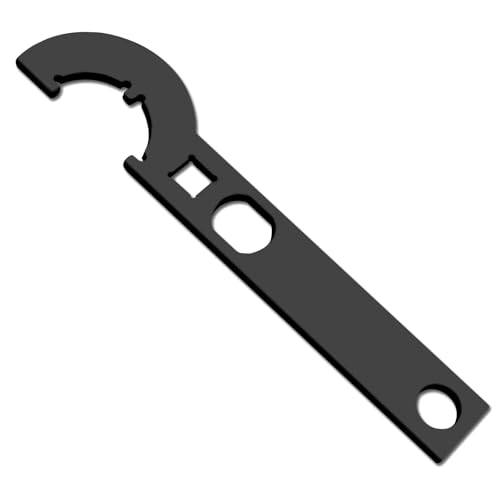
This wrench stands out for its 3/8-inch drive opening and hook profile, rather than a buffer-tube wrench function. It is made from 45 steel and is described for DIN 1804 castle nuts and other maintenance tasks. That makes it a possible choice when the nut and tool interface are a match, but the features do not establish AR-15 castle-nut compatibility. Check the head against the nut’s notches; a mismatched hook can slip or damage the nut when force is applied.
Bottom line: Choose it only when the hook and drive interface match your task.
C-Spanner Locknut Wrench

The C-shaped hook head and red rubber grip set this spanner apart from the other options. Its features cover slotted round locknuts and castle nuts, and it is made from 45high-carbon steel. The grip may be useful when a bare metal handle is less comfortable to hold. Confirm that the head seats fully in the receiver-extension nut’s notches before using it.
Bottom line: Pick it for a compatible slotted nut when a rubber grip matters.
Compact Rubber-Handle Spanner

This is the most compactly described option: its features emphasize toolbox, car, or garage storage and a non-slip rubber handle. That makes it less clearly suited to AR-15 work than a tool explicitly named for a buffer tube nut. Its general-purpose description may fit other maintenance tasks; for a receiver-extension nut, verify the head shape against the nut before use.
Bottom line: Choose it for general maintenance, not unless its head fits your AR-15 nut.
How to Choose an AR-15 Castle Nut Wrench
Choose by the shape and engagement of the wrench head, not by the word “spanner” alone. A receiver-extension castle nut has notches around its edge; the wrench must seat in those notches without rocking or contacting adjacent parts. AR-15 castle nuts commonly use a 1 3/8-inch outside diameter, but notch geometry and wrench design still matter, so check the firearm or component maker’s fit guidance. Do not substitute pliers or a loose hook wrench: slipping can mar the nut or receiver end plate. For installation, common torque guidance for a standard carbine receiver-extension castle nut is 38–42 ft-lb, but confirm the applicable component instructions. The wrench descriptions here do not establish a torque rating.
Buffer-Tube Nut Fit and Safe Setup
Confirm the receiver-extension nut’s notch pattern before ordering or applying force. A tool advertised for a buffer-tube nut is a closer category match than a general locknut spanner, but the head still needs to engage cleanly. Work only with the firearm unloaded: remove the magazine, lock the action open, and visually and physically verify the chamber is empty. The castle nut secures the receiver extension against the end plate, so loosening it can affect the assembly’s position. Keep the tool aligned with the nut and avoid using an extension for extra leverage unless the wrench and component instructions allow it. If the wrench slips, stop and reassess fit rather than forcing it.
Castle Nut Wrench Types Compared
The useful distinction is whether a wrench is explicitly intended for a buffer-tube nut or only for general castle nuts and locknuts. A dedicated buffer-tube wrench description gives a stronger reason to consider the tool for AR-15 work, while a hook or C-spanner description requires closer fit checking. Length also affects leverage: a longer handle can make force easier to apply, but it does not prove compatibility or a safe torque value. Use this comparison to identify what each design claims to handle, then confirm head fit on the specific nut.
| Wrench description | Best match | Fit check |
|---|---|---|
| Buffer-tube nut wrench | Receiver-extension nut task | Head seats fully in nut notches |
| Hook or C-spanner | Compatible slotted round nut | Hook profile matches notch geometry |
| General spanner | Unspecified maintenance task | Verify intended nut and dimensions |
Castle Nut Installation and Common Mistakes
Use the correct wrench and the component maker’s torque procedure when installing a receiver-extension castle nut. A common reference range for a standard carbine castle nut is 38–42 ft-lb; hardware variations can change the applicable instruction, so do not treat that range as universal. Many AR-15 assemblies also use staking at the end plate to resist loosening, but staking is a separate step and should not be improvised if you are unfamiliar with the assembly. Avoid tightening by feel alone, striking a loose tool, or using a wrench that contacts only one edge of a notch. Those approaches can cause slipping, damaged parts, or an incorrectly secured extension.
Frequently Asked Questions
What does an AR-15 castle nut secure?
An AR-15 castle nut secures the receiver extension against the end plate at the rear of the lower receiver. Loosening it can affect that assembly, so verify the firearm is unloaded before working.
How tight should an AR-15 castle nut be?
A common reference torque for a standard carbine receiver-extension castle nut is 38–42 ft-lb. Confirm the applicable component instructions because that range may not apply to every setup.
Does a castle nut need to be staked?
Many AR-15 assemblies use staking, where displaced end-plate material engages a castle-nut notch to help resist loosening. Staking is separate from tightening; use the component maker’s procedure rather than improvising.
Can I use pliers on a castle nut?
A properly fitting castle-nut wrench is preferable because its head engages the nut’s notches. Pliers can slip or damage the nut, especially when the jaws do not seat securely.
How do I know if a castle nut wrench fits?
The wrench should seat fully in the nut’s notches without rocking or slipping. AR-15 castle nuts commonly have a 1 3/8-inch outside diameter, but the wrench head still needs to match the notch geometry.