
Decon 30 Kill Mold: Products Compared by Use

For a botanical disinfectant rather than a mold-removal spray, Benefect Decon 30 is the closest match, but its claims focus on germs and food-contact surfaces, not mold removal. Choose a mold-control product instead when addressing visible mold or mildew.
We earn a commission if you buy through links on this page. As an Amazon Associate I earn from qualifying purchases. Products are compared on manufacturer specifications, not hands-on testing.
- Best overall: Benefect Decon 30 Botanical Spray – Ready-to-use botanical disinfectant intended for food-contact surfaces.
- Best for mold prevention: Concrobium Mold Control Aerosol – EPA-registered aerosol described as helping prevent regrowth.
- Best for visible stains: 30 SECONDS Pro Mold & Mildew Remover – Designed to lift mold and mildew stains without scrubbing.
| Product | Best for | Format | Size | Intended use | Shop |
|---|---|---|---|---|---|
| Benefect Decon 30 Botanical Spray | Botanical disinfection | Ready-to-use spray | 14 fl oz | Disinfecting surfaces | Check Price on Amazon |
| Concrobium Mold Control Aerosol | Mold control | Aerosol | 14.1 fl oz | Mold control | Check Price on Amazon |
| 30 SECONDS Pro Mold & Mildew Remover | Stain removal | Cleaner spray | 32 fl oz | Mold and mildew stains | Check Price on Amazon |
| MOLD ARMOR Mold Kill & Control | Hard surfaces | Spray | 32 fl oz | Hard, non-porous surfaces | Check Price on Amazon |
| Bioesque Botanical Disinfectant | Broad disinfection | Spray-trigger bottle | 32 fl oz | Disinfection and fungi | Check Price on Amazon |
Decon 30 kill mold alternatives
These products differ in whether they disinfect surfaces, treat mold, or remove visible staining.
Benefect Decon 30 Botanical Spray

Benefect Decon 30 is the named botanical disinfectant, not a mold-removal spray. The 14-ounce ready-to-use formula is described as killing more than 99.99% of germs and bacteria in 30 seconds and as suitable for food-contact surfaces without rinsing or wiping. That makes it a fit for buyers prioritizing routine disinfection of counters, toys, or cutting boards. Its key limitation for mold concerns is that the product claims do not identify mold removal or mold control as its purpose, so choose another type for visible mold.
Bottom line: Choose this for botanical surface disinfection, not visible mold removal.
Concrobium Mold Control Aerosol

Concrobium is the clearest match here for mold control rather than a general disinfectant. The 14.1-ounce aerosol is EPA-registered for mold control when used as directed, and its maker says it eliminates existing mold and helps prevent regrowth with an invisible barrier. The bleach-free, odorless, VOC-free formula is intended for surfaces including drywall, wood, tile, grout, concrete, and fabric; test an inconspicuous spot first. The limitation is its aerosol format, which may not suit buyers who prefer a trigger spray or need to clean a broad stained area.
Bottom line: Choose this when indoor mold control and prevention are the priority.
30 SECONDS Pro Mold & Mildew Remover
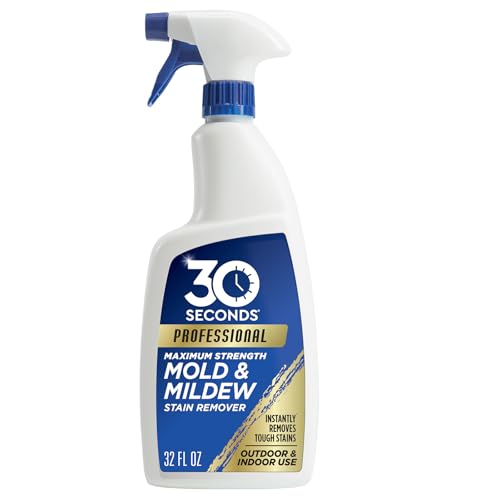
30 SECONDS Pro focuses on visible mold and mildew stains across indoor and outdoor surfaces, unlike Decon 30’s germ-disinfection emphasis. Its 32-ounce formula is described as lifting stains without scrubbing, and the uses include siding, fences, decks, concrete floors, and brick. That makes it relevant for buyers tackling stained exterior or hard surfaces. The product is a stain remover and multipurpose cleaner, so buyers seeking a dedicated indoor mold-control barrier rather than visible stain treatment should consider a different type.
Bottom line: Choose this for visible mold or mildew stains on listed surfaces.
MOLD ARMOR Mold Kill & Control

MOLD ARMOR is aimed at killing and cleaning mold and mildew on hard, non-porous surfaces, a narrower target than the other mold-control options. Its 32-ounce spray is intended for laminate, linoleum, sealed grout, stainless steel, and plastic, with visible results in minutes according to the maker. The directions in the features call for testing a hidden area, waiting 10 minutes after application, then rinsing or wiping with a damp cloth. It is not the fit for porous materials such as fabric or drywall.
Bottom line: Choose this for mold cleanup on the hard, non-porous surfaces it names.
Bioesque Botanical Disinfectant

Bioesque combines botanical positioning with a broad disinfection role and includes fungi and mold among its claims, unlike Decon 30’s claims centered on germs and bacteria. The 32-ounce bottle has a spray trigger; its maker gives contact times of two minutes for bacteria, three minutes for fungi and molds, and four minutes for viruses. This may suit buyers who want a multi-purpose disinfectant with mold and fungi claims. The longer mold contact time and broad-disinfection focus make it a different choice from a product specifically positioned for mold removal or regrowth control.
Bottom line: Choose this for broad disinfection that includes fungi and mold claims.
How to choose a mold product
Choose by the job: disinfection, mold control, or stain removal are different tasks. Disinfectants use a labeled contact time, meaning the surface must remain wet for that period; a shorter germ claim does not automatically establish a mold claim. Mold-control products may target existing growth or regrowth, while stain removers focus on visible discoloration. On hard, nonporous surfaces, a surface cleaner can address staining; porous drywall or fabric needs a product explicitly suited to that material. For any mold problem, fix the moisture source as well as treating the surface, because persistent dampness supports regrowth. Never mix cleaners, especially products containing bleach with ammonia or acids.
When to use a spray for visible mold stains
Visible staining calls for a product whose purpose and surface list match the job, not simply a disinfectant label. A 32-ounce stain remover may be more practical for decks, siding, or concrete than a small aerosol, while an aerosol can reach corners and tight spaces. Check compatibility before applying any cleaner to painted finishes, textiles, or delicate materials; use a hidden test area when directed. Keep children and pets away during application, ventilate indoor work areas, and use gloves and eye protection when the label calls for them. Do not dry-brush mold, which can spread spores and debris into the air.
How surface type changes the choice
Surface porosity is a key decision rule: use a product only on material types it identifies, and do not assume a hard-surface spray is suitable for drywall or fabric. Hard, nonporous materials such as sealed tile and plastic are generally easier to clean than porous materials, which can retain moisture and growth below the surface. If growth covers more than about 10 square feet, the EPA advises considering professional remediation rather than treating it as a small household cleanup. Water-damaged building materials may need removal if they cannot be dried promptly; treating visible marks without correcting leaks or condensation does not solve the moisture problem.
Contact time and safe application
Contact time is the period a treated surface must stay visibly wet for the product claim to apply; the time varies by organism and formula. Bioesque’s claims give three minutes for fungi and molds, while Benefect Decon 30 gives 30 seconds for germs and bacteria, not mold. Follow the specific label for application and ventilation, and avoid using a disinfectant on food-contact surfaces unless its directions allow that use. Keep sprays away from eyes and skin, and never mix different cleaners. If a surface is used to prepare food, follow its labeled directions for rinsing or wiping before use.
Frequently Asked Questions
Does Benefect Decon 30 remove visible mold?
The product claims describe germ and bacteria disinfection, not visible mold removal. For mold stains, choose a product specifically intended for that purpose and compatible with the surface.
How long should a mold spray stay wet?
Use the contact time on the product label because it varies by formula and target organism. Bioesque’s mold and fungi claim specifies three minutes.
Can mold spray be used on drywall?
Only use a formula whose directions identify drywall as a suitable surface. Porous drywall that remains damp or has extensive mold may require removal or professional assessment.
What should I do before cleaning a mold stain?
Fix the leak, condensation, or other moisture source first, then check that the cleaner is suitable for the surface. For areas larger than about 10 square feet, EPA guidance recommends considering professional remediation.
Can I mix mold cleaners with other products?
No; do not mix cleaning products. In particular, bleach mixed with ammonia or acids can release dangerous gases, so apply products separately and follow their labels.