
Best Window Fans for Horizontal Sliding Windows Compared

For most rooms, shinic 9-Inch Twin Reversible Fan is the most flexible choice because its two fans can be set independently to intake or exhaust and its expander spans 23.5 to 37 inches. Choose 19.7–21.6-Inch Vertical Exhaust Fan or GODNOEI 31.5–33.5-Inch Vertical Exhaust Fan instead if your frame height matches its narrow vertical fit and you want exhaust-only airflow.
A window fan moves air through an open window; horizontal sliders need a model that can sit vertically and fit the opening securely.
We earn a commission if you buy through links on this page. As an Amazon Associate I earn from qualifying purchases. Products are compared on manufacturer specifications, not hands-on testing.
- Best overall: shinic 9-Inch Twin Reversible Fan – Two independently controlled fans offer intake, exhaust or mixed airflow, with a 23.5-to-37-inch expander.
- Best for shorter frames: 19.7–21.6-Inch Vertical Exhaust Fan – Its vertical frame fits 19.7 to 21.6 inches and it is designed for exhaust only.
- Best for taller frames: GODNOEI 31.5–33.5-Inch Vertical Exhaust Fan – Its vertical adjustable frame fits 31.5 to 33.5 inches and has stepless speed control.
| Product | Best for | Frame fit | Airflow | Speed control | Shop |
|---|---|---|---|---|---|
| shinic 9-Inch Twin Reversible Fan | Flexible airflow | 23.5–37 in wide | Independent intake/exhaust | Two knobs | Check Price on Amazon |
| 19.7–21.6-Inch Vertical Exhaust Fan | Short frame openings | 19.7–21.6 in high | Exhaust only | Variable speed | Check Price on Amazon |
| GODNOEI 31.5–33.5-Inch Vertical Exhaust Fan | Tall frame openings | 31.5–33.5 in high | Exhaust only | Stepless speed | Check Price on Amazon |
Window Fans for Horizontal Sliding Windows
Measure the inside frame opening and match both the fan’s orientation and airflow mode to your room.
shinic 9-Inch Twin Reversible Fan
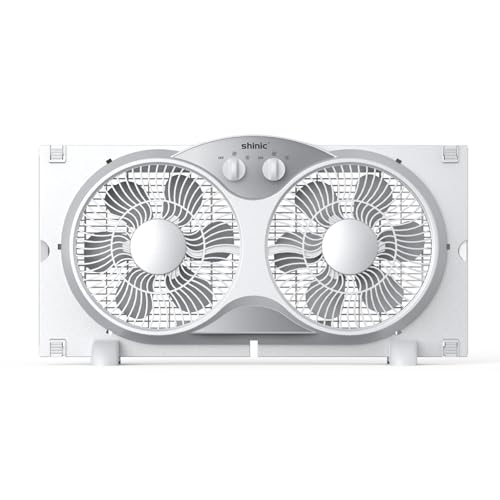
Independent airflow direction is the key distinction: each of the two fans can be set to intake or exhaust, so the pair can bring air in, send air out, or do both at once. The fan measures 23.5 inches wide and its auto-locking expanders extend to 37 inches; removable feet support vertical or horizontal placement. That makes it a flexible option for a sliding window when the opening matches its range. The limitation is that the minimum width is 23.5 inches, so it will not fit a narrower opening.
Bottom line: Pick this when you want independently controlled airflow and your frame is 23.5 to 37 inches wide.
19.7–21.6-Inch Vertical Exhaust Fan

A compact vertical fit sets this exhaust-only model apart: it is sized for an inside frame height of 19.7 to 21.6 inches. The maker says it is intended to expel heat, smoke, smells and humidity, and the variable-speed control lets users adjust airflow. It suits a short horizontal slider when the frame height falls within that narrow range and the goal is to move indoor air outward. The limitation is its one-way operation: it cannot bring fresh air in, so choose another model if intake or reversible airflow is needed.
Bottom line: Choose this for an exhaust-only setup when the inside frame height is 19.7 to 21.6 inches.
GODNOEI 31.5–33.5-Inch Vertical Exhaust Fan

A taller adjustable frame distinguishes this vertical exhaust fan, which fits horizontal sliders with an inside frame height of 31.5 to 33.5 inches. Its speed control is stepless, and the maker says its hydraulic-bearing motor reaches 2,800 RPM while operating quietly. The wider height range makes it relevant when shorter vertical units do not span the opening. It remains an exhaust-only choice, however, so it does not provide fresh-air intake or independently balanced airflow; select a reversible fan if those modes matter.
Bottom line: Pick this for a tall slider in the 31.5-to-33.5-inch range when exhaust is the goal.
How to Choose a Window Fan for a Sliding Window
Start with the opening’s inside frame dimensions, then choose airflow direction. Horizontal sliders generally need a vertically positioned fan or a model whose frame can expand across the opening; a fan intended only for a double-hung window may not fit securely when turned. Measure the clear opening, not the glass, and compare the relevant dimension against the fan’s range. If the opening is outside that range, choose a different size rather than forcing the frame.
Airflow mode matters as much as fit. Intake draws outdoor air in, exhaust pushes indoor air out, and reversible or independently controlled fans can handle either direction. For exhaust to work well, provide a path for replacement air, such as an open door or another window. With no replacement-air path, the exhaust fan can move less air through the room.
Match Fan Orientation to Frame Measurements
Measure the clear frame opening in the direction the fan will span: a vertical unit in a horizontal slider needs a matching frame height, while an expandable twin fan usually spans the window width. A 1-inch measurement error can put an opening outside a narrow adjustment range, so use a tape measure at the top, middle and bottom and work from the tightest measurement. Check that the sash can close against the installed fan or that the opening can be secured without relying on a loose fit.
Use this quick decision rule: if the opening height is under 22 inches, the 19.7-to-21.6-inch model is a match; if it is over 31 inches and no more than 33.5 inches, consider the taller vertical model. For widths from 23.5 to 37 inches, the expandable twin unit is an option. Keep the fan stable and do not block its intake or exhaust face.
Compare Exhaust and Reversible Window Fans
Exhaust-only fans remove indoor air, while reversible fans can bring outside air in. A twin fan with independent controls can also run one side in each direction, which supports cross-room circulation when another air path is available. The right mode depends on the room: use exhaust to move stale indoor air outward, and intake when the goal is to draw outdoor air into the space. A fan’s mode does not guarantee a particular cooling result; outdoor temperature and airflow paths also matter.
The table maps the main need to the feature that serves it. Match the opening before deciding on airflow, because a fan that does not fit cannot be safely relied on for circulation.
| Need | Feature to choose | Fit to confirm |
|---|---|---|
| Send indoor air out | Exhaust-only mode | Vertical frame height |
| Bring outdoor air in | Intake mode | Fan orientation and opening |
| Set direction by side | Independent twin controls | Expandable width |
Install and Use a Window Fan Safely
Place the fan in a stable, secure frame and keep its airflow openings clear. An electric fan should be kept dry; do not expose it to rain or use it where water can reach the motor or plug. Check that the sash or another secure barrier prevents the fan from shifting, and keep cords away from pinch points where a sliding sash could damage them.
Exhaust fans need replacement air, and rooms with fuel-burning appliances require added caution: strong exhaust can contribute to backdrafting if the home lacks adequate makeup air. Avoid running a powerful exhaust fan in a closed home with a fireplace, furnace or water heater unless the appliance and ventilation setup are confirmed safe. Stop using a fan that vibrates, shifts or has a damaged cord.
Frequently Asked Questions
How do I measure a horizontal sliding window for a fan?
Measure the clear frame opening where the fan will sit, not the glass pane. Take measurements in three places and use the smallest one, since frames can vary slightly from top to bottom.
Can a window fan cool a room without air conditioning?
A fan can improve air movement, but it does not refrigerate air. Intake can help when outdoor air is cooler than indoor air; when outdoor air is hotter, exhaust and shading may be more useful than drawing more heat inside.
Should a window fan blow air in or out?
Use intake when you want outdoor air brought into the room, and exhaust when you want indoor air pushed outside. For exhaust, leave a path for replacement air, such as an open door or another window.
Can I leave a window fan running in the rain?
No; keep an electric window fan dry and do not expose it to rain unless its manufacturer explicitly permits that use. Water near a motor, plug or cord creates an electrical hazard.
How can I reduce drafts around a window fan?
Choose a fan whose adjustment range fits the opening, then close gaps around the frame with a removable, nonflammable seal. Do not cover the fan’s air openings or obstruct the motor while sealing.