
Ceiling Vents for Air Conditioner: 5 Options Compared

EZ-FLO 12 x 6 Steel Register is the best fit for most buyers replacing a ceiling register with a 12-by-6-inch duct opening, thanks to its adjustable dampers and three-way louvers. Choose a different option if your opening is 10 by 6 inches, or if you want to redirect air from an existing register rather than replace it.
We earn a commission if you buy through links on this page. As an Amazon Associate I earn from qualifying purchases. Products are compared on manufacturer specifications, not hands-on testing.
- Best overall: EZ-FLO 12 x 6 Steel Register – Its 12-by-6-inch duct fit, five adjustable dampers, and three-way louvers combine replacement and airflow control.
- Best for 10-by-6 openings: 10 x 6 Modern Aluminum Register – The aluminum-alloy register is sized for a 10-by-6-inch duct opening.
- Best for drop ceilings: 24 x 24 Adjustable Ceiling Deflector – The 24-by-24-inch panel is made to fit standard drop-ceiling grates and redirect airflow.
| Product | Best for | Fit or size | Type | Material | Shop |
|---|---|---|---|---|---|
| EZ-FLO 12 x 6 Steel Register | 12 x 6 openings | 12 x 6 in. duct | Register cover | Steel | Check Price on Amazon |
| 10 x 6 Modern Aluminum Register | 10 x 6 openings | 10 x 6 in. duct | Linear slot register | Aluminum alloy | Check Price on Amazon |
| 24 x 24 Adjustable Ceiling Deflector | Drop-ceiling airflow | 24 x 24 in. ceiling grid | Air deflector | — | Check Price on Amazon |
| Binazon Adjustable Magnetic Deflector, 2-Pack | 9–14 in. vents | 9–14 in. wide vents | Magnetic deflector | Plastic | Check Price on Amazon |
| Adjustable Magnetic Deflector, 2-Pack | 8.5–15 in. vents | 8.5–15 in. vents | Magnetic deflector | Transparent plastic | Check Price on Amazon |
Ceiling vents for air conditioner use
Start by matching the duct opening or ceiling grid, then decide whether you need a replacement register or an air deflector.
EZ-FLO 12 x 6 Steel Register

For a 12-by-6-inch duct opening, this steel register combines a replacement cover with adjustable airflow direction. It has 19 louvers, five adjustable dampers, and a matte white powder-coated finish; its overall face measures 13.75 by 7.75 inches. The three-way design suits buyers who want a conventional register that can direct air across a room. The face is larger than the duct opening, so measure the opening rather than choosing by the visible grille alone. Its 12-by-6-inch fit makes it unsuitable for other opening sizes without a verified match.
Bottom line: Choose this for a 12-by-6-inch opening when you want adjustable airflow from a steel replacement register.
10 x 6 Modern Aluminum Register

For a 10-by-6-inch duct opening, this aluminum-alloy register uses adjustable linear blades rather than a traditional multi-louver face. Its neck measures about 9.96 by 5.83 inches, while the face is 12.2 by 8.19 inches. That difference matters: the neck must enter the opening, while the wider face covers the surrounding ceiling cutout. The modern slot style suits rooms where a low-profile appearance is desired alongside airflow adjustment. It does not match the 12-by-6-inch opening served by EZ-FLO 12 x 6 Steel Register, so confirm the duct opening before selecting it.
Bottom line: Pick this for a 10-by-6-inch opening and a linear-slot look.
24 x 24 Adjustable Ceiling Deflector

Unlike a duct-opening register, this large adjustable panel fits a 24-by-24-inch drop-ceiling grate and redirects air from an existing ceiling vent. Its dimensions are 23.68 by 23.68 inches, making the ceiling grid—not a small duct neck—the key fit check. The design suits offices where someone wants to steer airflow away from a desk while leaving the existing vent in place. It is not a replacement for a standard 10-by-6- or 12-by-6-inch register, so buyers with a small ceiling opening should choose a register sized for that opening instead.
Bottom line: Choose this for a 24-by-24-inch drop-ceiling grate when redirection, not register replacement, is the goal.
Binazon Adjustable Magnetic Deflector, 2-Pack

This two-pack redirects air from an existing vent instead of replacing the grille, and its adjustable width spans 9 to 14 inches. The clear plastic deflectors attach with magnets, making them a removable option for metal vent faces on ceilings, walls, or floors. They suit buyers trying to move cool air away from a particular spot without changing the duct opening. Magnetic attachment depends on a metal surface and adequate magnet contact, so this design is not the right choice for a nonmetal grille. Measure the vent width before relying on the adjustable range.
Bottom line: Pick this two-pack when a metal vent face is 9 to 14 inches wide and airflow needs redirecting.
Adjustable Magnetic Deflector, 2-Pack
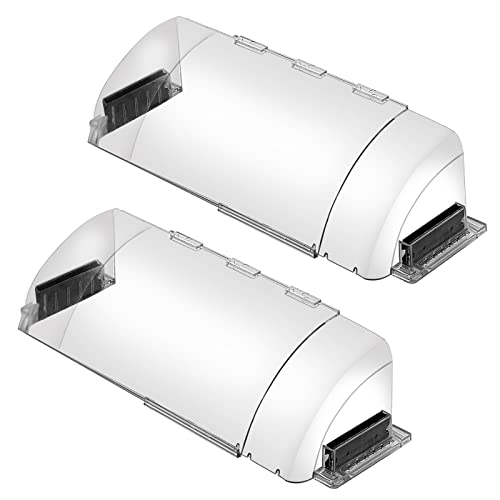
This two-piece transparent deflector adjusts from 8.5 to 15 inches, giving it a wider stated span than the 9-to-14-inch option. Built-in magnets attach it to metal registers, and the expandable two-part design can be adjusted or removed without tools. It is a redirection accessory for an existing floor, wall, or ceiling vent, not a replacement grille for a duct opening. Choose it when the vent width falls within its range and the register surface is magnetic; a nonmetal surface will not provide the intended magnetic hold.
Bottom line: Choose this when a metal vent is wider than 14 inches but no more than 15 inches.
How to choose a ceiling vent for an air conditioner
Choose by the duct opening first, then by whether you need a replacement register or a deflector. A register covers the opening and uses louvers or blades to direct air; a deflector attaches over an existing register to steer its discharge. Measure the opening where the duct meets the grille, not just the outside face, since a register face typically extends beyond its neck. For the products here, the fixed register fits are 10 by 6 inches and 12 by 6 inches, while magnetic deflectors use vent-width ranges. If your opening is 10 by 6 inches, select a matching register; if the existing vent is metal and airflow needs redirecting, a magnetic style may suit better.
Measure ceiling vent openings and face dimensions
Measure the clear duct opening in inches across its width and height, then compare it with the register’s neck or stated duct size. The register face is intentionally larger: EZ-FLO 12 x 6 Steel Register has a 12-by-6-inch duct fit and a 13.75-by-7.75-inch outer size, while 10 x 6 Modern Aluminum Register has a 10-by-6-inch fit and a 12.2-by-8.19-inch face. Those numbers describe different parts, so comparing a face measurement against an opening can lead to a mismatch. For a drop ceiling, measure the grid space instead; the 24-by-24-inch panel is intended for that larger format. Confirm the opening dimensions before ordering if the old grille obscures the edges.
Register covers versus air deflectors
A register replaces or covers an opening; a deflector redirects air while the existing grille stays in place. That distinction determines whether you should compare duct dimensions or the accessory’s width and attachment method. Steel and aluminum registers in these options use adjustable airflow elements, while the clear plastic magnetic accessories rely on a metal vent face. A magnetic deflector cannot serve as a secure replacement grille because it is designed to attach over a vent. Use the table to match the job: replacement means a duct-opening fit, while redirection means checking deflector span and surface material.
| Need | Check first | Relevant option |
|---|---|---|
| Replace a register | Duct opening width and height | 10 x 6 or 12 x 6 in. register |
| Redirect room airflow | Vent width and metal surface | 9–14 or 8.5–15 in. magnetic deflector |
| Cover a drop-ceiling grate | Ceiling grid dimensions | 24 x 24 in. panel |
Airflow direction and ceiling comfort
Ceiling registers distribute conditioned air through louvers or blades, and changing their direction can reduce a direct stream across a seating or work area. A deflector redirects that stream without changing the duct opening, while dampers or adjustable blades on a register control the discharge direction or volume. Avoid closing multiple registers to compensate for an uncomfortable room; restricting too much supply airflow can affect HVAC operation. A practical choice is to redirect a troublesome stream first, then use a register’s adjustable elements to tune direction. For ceiling installation, make adjustments from a stable step ladder and keep hands clear of sharp grille edges.
Frequently Asked Questions
How do I measure a ceiling air vent opening?
Measure the duct opening width and height in inches after removing or opening the grille enough to see the edges. Do not substitute the outer face measurement: a register face can be several inches wider than its neck.
Can a magnetic vent deflector attach to every ceiling register?
No; magnetic deflectors require a metal surface that holds the magnets. Measure the register width too, since the options here cover 8.5 to 15 inches depending on model.
Should I replace a ceiling register or add a deflector?
Replace the register when the grille is damaged or its duct-opening size needs matching; add a deflector when the existing grille is sound but airflow needs redirecting. A deflector sits over the vent rather than replacing it.
What does a 12-by-6-inch vent measurement refer to?
A 12-by-6-inch register size refers to the duct opening, not necessarily the visible face. Measure the opening itself and allow for the face to extend beyond it.
Is it safe to close an air conditioner ceiling vent?
Avoid closing multiple supply vents, because restricting system airflow can affect HVAC operation. For an uncomfortable direct draft, redirect the air with adjustable louvers or a compatible deflector instead.