
Loctite Epoxy Weld Bonding: 5 Adhesives Compared

Loctite LocWeld Epoxy Bonding Compound is the closest match for Loctite epoxy weld bonding because it is a two-part adhesive and filler that sets in 15 minutes and is intended for metal repair. Choose another option if you need a plastic-focused adhesive, a clear finish, or a faster five-minute set.
We earn a commission if you buy through links on this page. As an Amazon Associate I earn from qualifying purchases. Products are compared on manufacturer specifications, not hands-on testing.
- Best overall: Loctite LocWeld Epoxy Bonding Compound – The Loctite adhesive is made for metal bonding and has over 3,000 psi shear strength on steel.
- Best for plastic repairs: J-B Weld Plastic Bonder Black, 25 ml – Its 1:1 urethane formula bonds thermoplastics, carbon fiber composites, and coated metals.
- Best for clear repairs: Gorilla 2-Part Epoxy, Clear, 0.85 oz – The clear epoxy sets in five minutes and can fill gaps on uneven or vertical surfaces.
| Product | Best for | Set time | Color | Package size | Shop |
|---|---|---|---|---|---|
| Loctite LocWeld Epoxy Bonding Compound | Metal bonding | 15 minutes | Bronze | 1 oz, 2-pack | Check Price on Amazon |
| J-B Weld Plastic Bonder Black, 25 ml | Composite repairs | 15 minutes | Black | 25 ml | Check Price on Amazon |
| Gorilla 2-Part Epoxy, Clear, 0.85 oz | Clear repairs | 5 minutes | Clear | 0.85 oz | Check Price on Amazon |
| J-B Weld Plastic Bonder Tan, 25 ml | Tan plastic repairs | 15 minutes | Tan | 25 ml | Check Price on Amazon |
| J-B Weld ClearWeld 5-Minute Epoxy, 2-Pack | Clear multipurpose bonds | 5 minutes | Clear | 25 ml, 2-pack | Check Price on Amazon |
Loctite Epoxy Weld Bonding Alternatives
Compare the metal-focused Loctite compound with adhesives for plastic, clear finishes, and shorter set times.
Loctite LocWeld Epoxy Bonding Compound

Loctite LocWeld Epoxy Bonding Compound is the direct match for a metal-bonding compound: its two-part adhesive and filler is intended to avoid welding or brazing, with over 3,000 psi shear strength on steel. It is also suited to aluminum, brass, bronze, castings, and stampings, and can be drilled, sanded, painted, or filed once cured. Choose it for repairs where a 15-minute set and post-cure shaping are useful. Its bronze color may be a poor fit when the repair needs a clear or color-matched finish.
Bottom line: Choose this for metal repairs where a 15-minute set and machinable cured bond suit the job.
J-B Weld Plastic Bonder Black, 25 ml
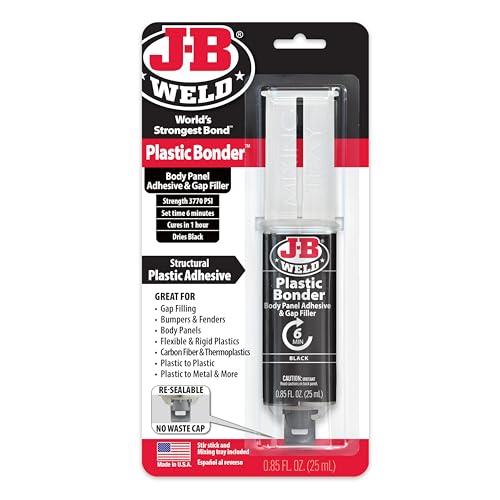
J-B Weld Plastic Bonder Black, 25 ml differs from the metal-oriented Loctite compound by using a two-part urethane system aimed at plastics and composites. The 1:1 mix sets in 15 minutes, can be sanded after 30 minutes, and has a tensile strength of 3,770 psi. Its bonding materials include thermoset materials, carbon fiber composites, thermoplastics, coated metals, and concrete. This is a sensible alternative for mixed-material or body-panel repairs, but its black color and plastic-first purpose make it less suitable when the repair calls for a metal-focused, bronze-colored compound.
Bottom line: Choose this for plastic or composite repairs where a black urethane bond is appropriate.
Gorilla 2-Part Epoxy, Clear, 0.85 oz

Gorilla 2-Part Epoxy, Clear, 0.85 oz stands apart with a clear finish and a five-minute set, rather than the Loctite compound’s metal-specific positioning. The syringe keeps resin and hardener in separate barrels and dispenses them together; the epoxy can fill gaps and bond uneven or vertical surfaces. The maker says the cured bond resists moderate water exposure. This option suits household or automotive repairs where appearance and a quicker set matter. Its features do not give the metal shear-strength figure provided for the Loctite compound, so do not assume equivalent performance for a load-bearing metal joint.
Bottom line: Choose this for a clear repair on uneven surfaces when a five-minute set fits your working time.
J-B Weld Plastic Bonder Tan, 25 ml
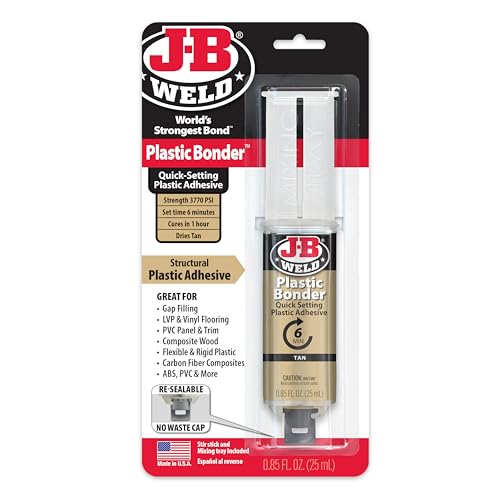
J-B Weld Plastic Bonder Tan, 25 ml is another plastic-focused alternative, but its tan cured color distinguishes it from the black Plastic Bonder. It uses a two-part urethane adhesive and gap-filling system with a 1:1 syringe mix, and the maker gives a 15-minute set and 30-hour cure time. The uses include DIY plastic repairs, filling dents, and bumper repairs. Pick it when the tan finish is a better visual match for the repair. Its plastic-repair focus makes it a less direct choice than the Loctite compound for metal joints.
Bottom line: Choose this for plastic repairs where a tan finish and longer cure period work for the job.
J-B Weld ClearWeld 5-Minute Epoxy, 2-Pack
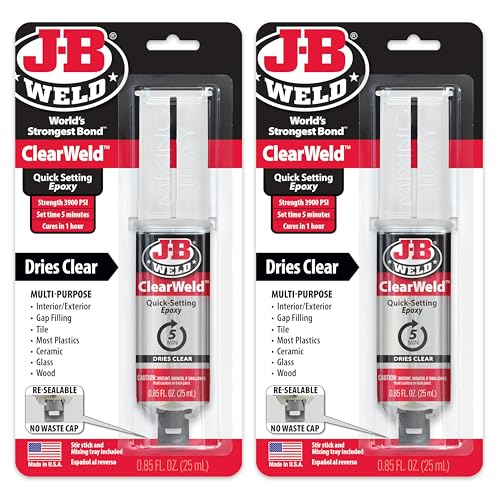
J-B Weld ClearWeld 5-Minute Epoxy, 2-Pack pairs a clear appearance with a five-minute set and a one-hour cure, making it distinct from the metal-centered Loctite compound and the plastic-specific urethanes. The two-part epoxy uses a 1:1 syringe mix and is intended for metal, most plastics, PVC, wood, tile, ceramic, and glass. Its tensile strength is 3,900 psi. This multipurpose choice suits repairs across several common materials when a clear finish matters. The tensile figure is not the same measurement as the Loctite product’s steel shear-strength figure, so they should not be treated as directly comparable.
Bottom line: Choose this for clear, multipurpose repairs that benefit from a five-minute set.
How to Choose an Epoxy Weld Bonding Adhesive
Choose by substrate first, then by working time, finish, and the kind of strength figure given. The Loctite compound is aimed at metals and gives a steel shear-strength figure; the plastic-focused products use urethane, while the clear epoxies list broader material uses. Set time is not full cure time: a product can become firm enough to handle well before reaching its cured state. For a repair that will carry a load, match the adhesive’s strength measure and substrate to the joint rather than comparing unlike figures. A tensile-strength number and a shear-strength number describe different loading directions and cannot be ranked as if they were the same test.
Surface Preparation and Mixing
Clean, dry, closely fitting surfaces give two-part adhesives a better chance to bond than oily, dusty, or loose material. Remove grease and residue, then lightly abrade compatible non-glossy surfaces and clear away sanding dust before mixing. Follow the package ratio: the products here that specify one use a 1:1 mix. Mix only an amount that can be applied within the product’s working window, and spread it across both mating faces when appropriate. Keep the joint aligned and supported while it sets; a quick set does not mean the bond has reached full cure. Protect skin and eyes and work with ventilation, since uncured adhesive and hardener can irritate.
Set Time, Cure Time, and Working Window
Set time tells you when an adhesive begins to hold shape, while cure time indicates a later stage of hardening. A five-minute set is useful for small, well-aligned repairs but leaves little time to reposition parts; a 15-minute set generally allows more adjustment. Cure schedules differ: the tan Plastic Bonder lists a 30-hour cure, while ClearWeld lists one hour, so do not infer cure time from set time. For a joint that must be drilled, sanded, or put under load, wait for the product’s cure rather than relying on a firm surface. Temperature, mix accuracy, and joint thickness can affect the result.
When Epoxy Bonding Is Not a Welding Substitute
Epoxy bonding joins surfaces with cured adhesive; conventional welding fuses compatible base metals with heat. A bonding compound can avoid welding or brazing for suitable repairs, but it should not be assumed to replace a designed weld on a structural or safety-critical part. Use a 2-part adhesive only where the material, joint geometry, and load suit its intended application. For automotive suspension, steering, lifting points, pressure-containing parts, or other critical structures, use the vehicle or equipment maker’s repair method and a qualified professional. Avoid applying adhesives to hot components unless their temperature rating explicitly covers that use; none of the products here gives a service-temperature figure.
Frequently Asked Questions
Can epoxy bonding replace welding on steel?
Epoxy can join steel surfaces without melting them, but it is not automatically a substitute for a structural weld. The Loctite compound gives over 3,000 psi shear strength on steel; use the specified repair method for safety-critical parts.
How long should epoxy cure before handling?
A set time is not the same as full cure, so use the cure time when one is given. For example, the tan Plastic Bonder lists a 15-minute set and 30-hour cure, while ClearWeld lists a five-minute set and one-hour cure.
Does a 1:1 epoxy ratio mean equal amounts?
Yes, a 1:1 ratio means equal parts of the two components by the specified dispensing method. Mix thoroughly and use the amount within the product’s working time; uneven mixing can leave uncured material.
Can epoxy fill a gap between metal parts?
Some two-part adhesives are formulated as gap fillers, including the Loctite compound and Gorilla epoxy. Keep the gap within the product’s intended use, since a thicker adhesive layer does not guarantee a stronger joint.
Should metal be sanded before epoxy bonding?
A clean, dry, lightly abraded metal surface generally bonds better than a smooth, oily one. Remove sanding dust and contaminants before mixing, and avoid altering coated surfaces unless the coating can be safely removed.