
Celtic Salt 82 Minerals: 4 Options Compared

For Celtic salt with an 82-mineral claim, 82 Minerals French Grey Sea Salt is a coarse French grey finishing salt, while Sante Naturelle Celtic Salt Fine Ground is fine ground and comes in an 18-ounce package. Choose a different option if you want a larger coarse-salt supply or prefer a product claiming 70+ or 80+ minerals instead.
Mineral counts are product claims, not a measure of how much of each mineral a serving provides; salt remains a source of sodium.
We earn a commission if you buy through links on this page. As an Amazon Associate I earn from qualifying purchases. Products are compared on manufacturer specifications, not hands-on testing.
- Best overall: 82 Minerals French Grey Sea Salt – Coarse French grey sel gris in a 4-ounce package, with an 82-mineral claim.
- Best for fine texture: Sante Naturelle Celtic Salt Fine Ground – Fine ground French sea salt in an 18-ounce package, with an 82+ mineral claim.
- Best for bulk coarse salt: Le Marinier Celtic Salt Coarse 5 lb – An 80-ounce pack of coarse French grey salt with an 80+ mineral claim.
| Product | Best for | Mineral claim | Grind | Package size | Shop |
|---|---|---|---|---|---|
| 82 Minerals French Grey Sea Salt | Coarse finishing salt | 82 minerals | Coarse | 4 oz | Check Price on Amazon |
| Le Marinier Celtic Salt Coarse 5 lb | Bulk coarse cooking | 80+ minerals | Coarse | 80 oz | Check Price on Amazon |
| Sante Naturelle Celtic Salt Fine Ground | Fine everyday seasoning | 82+ minerals | Fine-ground | 18 oz | Check Price on Amazon |
| Celtic Sea Salt Light Grey Coarse 5 lb | Bulk cooking salt | 70+ minerals | Coarse | 80 oz | Check Price on Amazon |
Celtic Salt 82 Minerals Options
Compare mineral claims, crystal texture, and package size to match the salt to your cooking.
82 Minerals French Grey Sea Salt

82 Minerals French Grey Sea Salt is the small-pack choice among these salts, with coarse French grey crystals for finishing. The product is described as sun-dried in Guérande and hand-harvested; the maker claims 82 minerals and calls it low-sodium. It is a fit for cooks who want a coarse salt for pinches at the table rather than a fine powder for even distribution. The 4-ounce package is much smaller than the bulk options here, so it may not suit frequent everyday cooking.
Bottom line: Choose this if you want coarse French grey salt in a small finishing-size package.
Le Marinier Celtic Salt Coarse 5 lb
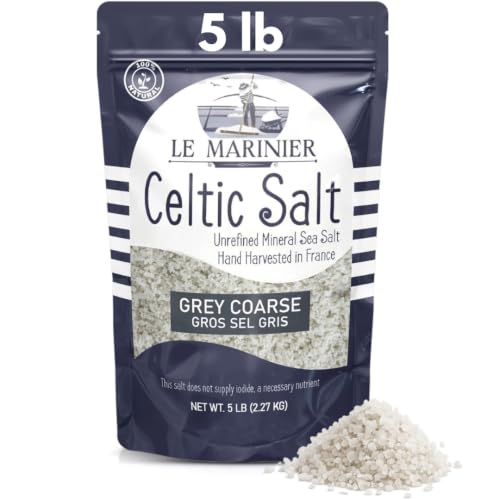
Le Marinier Celtic Salt Coarse 5 lb offers the largest coarse-salt quantity here: an 80-ounce pack, suited to cooks who use coarse salt for both cooking and finishing. The maker describes it as hand-harvested in French ocean marshes using a traditional method, and claims 80+ minerals. Its coarse texture distinguishes it from the fine ground choice, but the product does not make the specific 82-mineral claim in the search. That makes it a partial match for someone prioritizing bulk quantity and coarse crystals over an exact mineral-count claim.
Bottom line: Pick this for a large supply of coarse salt when an 80+ mineral claim is sufficient.
Sante Naturelle Celtic Salt Fine Ground

Sante Naturelle Celtic Salt Fine Ground is the fine ground alternative, making it easier to distribute through batters, sauces, and other dishes where coarse crystals may not blend evenly. It comes in an 18-ounce package and the maker claims 82+ minerals. The product is described as hand-harvested from French ocean marshes and naturally slightly moist. Choose it when texture and a claim above 82 matter more than having coarse crystals for a crunchy finish. Fine ground salt can be easier to over-pour than larger crystals, so measure it rather than seasoning by volume without tasting.
Bottom line: Choose this for fine ground French salt with an 82+ mineral claim.
Celtic Sea Salt Light Grey Coarse 5 lb

Celtic Sea Salt Light Grey Coarse 5 lb is a coarse 5-pound option positioned for everyday cooking, pickling, brining, and crunchy finishing. The maker claims 70+ trace minerals and says the salt is lab tested for purity; the product is also described as non-iodized and grinder-ready. Its 80-ounce quantity matches the other bulk option, but its mineral claim is lower than the 82-mineral target. This is a practical fit when the intended uses and coarse texture matter more than the exact claim in the search. Because it is non-iodized, it is not a replacement for dietary iodine sources.
Bottom line: Pick this for coarse bulk seasoning when 70+ minerals meets your preference.
How to compare Celtic salt mineral claims
A mineral count alone cannot tell you how much of any mineral is in a serving. These products make claims ranging from 70+ to 82+ minerals, but the number does not communicate concentrations or make salt a meaningful mineral supplement. Compare the wording as a label claim, then choose based on texture and intended use. For a target of 82 minerals or more, the products making that claim are the 82-mineral coarse option and the 82+ fine ground option. Salt is still primarily sodium chloride: the FDA’s recommended limit for adults is less than 2,300 milligrams of sodium per day, and a teaspoon of table salt contains about 2,300 milligrams. Crystal size and packing affect volume, so use the package nutrition panel for the specific serving amount.
Choose coarse or fine Celtic salt by use
Coarse salt gives distinct crystals for finishing, grinders, and some brines; fine salt disperses more evenly in doughs, sauces, and seasoning mixes. The 4-ounce coarse choice suits occasional finishing, while the 18-ounce fine ground option fits repeated seasoning where even distribution matters. Bulk 5-pound packages make more sense for frequent cooking or larger batches. For a crunchy surface, choose coarse crystals; for a recipe that measures salt by volume, use the grind specified by the recipe or weigh the salt, since a teaspoon of fine salt packs more crystals than a teaspoon of coarse salt. Coarse crystals may also need grinding or dissolving before they blend smoothly.
Use salt carefully in cooking and brining
Salt quantity matters more than a mineral claim when managing sodium. A teaspoon of table salt has roughly 2,300 milligrams of sodium, near the FDA daily limit for adults, though the sodium in a volume measure varies with crystal size and density. For controlled seasoning, weigh salt when a recipe provides a weight; otherwise, begin below the recipe amount and adjust after tasting. Brines need a measured salt-to-water ratio rather than a casual handful, and the correct ratio depends on the food and method. Do not assume a “low-sodium” label means a salt is suitable for a sodium-restricted diet; check the nutrition panel and ask a clinician when you have a prescribed limit.
What non-iodized salt means
Non-iodized salt does not provide the added iodine found in iodized table salt. Iodine is an essential nutrient, and adults generally need 150 micrograms per day; pregnancy and breastfeeding raise needs. A specialty sea salt’s mineral-count claim is not evidence that it provides a reliable amount of iodine. If you replace iodized salt throughout your diet, make sure iodine comes from other food sources such as dairy, seafood, eggs, or an appropriate supplement. Do not add extra salt just to obtain iodine: sodium intake still matters, and the products have different mineral claims rather than guaranteed iodine content.
Frequently Asked Questions
Does Celtic salt with 82 minerals contain 82 useful minerals in each serving?
The number is a mineral-count claim, not a serving-level amount of each mineral. Look at a nutrition panel for serving size and sodium, and do not treat salt as a mineral supplement.
How much sodium is in a teaspoon of sea salt?
A teaspoon of table salt contains about 2,300 milligrams of sodium, near the FDA’s recommended adult daily limit. Coarse crystals pack differently by volume, so weighing a recipe portion gives a more consistent amount.
Should I use coarse or fine Celtic salt for baking?
Fine ground salt disperses more evenly in dough and batter, while coarse crystals can remain unevenly distributed. If a recipe specifies salt by weight, keep that weight consistent when changing grind.
Is non-iodized Celtic salt a source of iodine?
Non-iodized salt does not have iodine added, and a general mineral-count claim does not establish a dependable iodine amount. Adults need about 150 micrograms of iodine daily, so account for other dietary sources if you use non-iodized salt.
How should I store an open bag of sea salt?
Keep salt in a clean, tightly closed container in a cool, dry place; moisture can cause clumping, especially in naturally moist sea salt. Use a dry spoon to avoid introducing water or food residue.