
Clavicle Brace for Broken Collarbone: 4 Options Compared

For a broken collarbone, the BraceAbility Figure-8 Clavicle Support, XL is the most directly targeted choice because it is a figure-eight clavicle support brace. Choose an arm sling instead if your clinician recommends keeping the arm supported; a posture corrector is for posture support, not fracture immobilization.
A clavicle brace pulls the shoulders back, while a sling supports the arm. A suspected collarbone fracture needs medical evaluation rather than self-treatment with a brace.
We earn a commission if you buy through links on this page. As an Amazon Associate I earn from qualifying purchases. Products are compared on manufacturer specifications, not hands-on testing.
- Best overall: BraceAbility Figure-8 Clavicle Support, XL – Figure-eight clavicle support is the most direct match for collarbone support.
- Best for shower use: BraceAbility Universal Shoulder Sling – The maker says this universal arm sling has a waterproof design.
- Best for adjustable sizing: Velpeau Comfort Shoulder Immobilizer, Large – Its size chart gives underbust and forearm-length ranges.
- Best for low neck pressure: WC Shoulder Immobilizer, Universal – The maker says the sling avoids going over the neck or shoulder.
| Product | Best for | Brace style | Fit | Distinct feature | Shop |
|---|---|---|---|---|---|
| BraceAbility Figure-8 Clavicle Support, XL | Direct clavicle support | Figure-eight brace | Extra large | Padded straps and back pad | Check Price on Amazon |
| BraceAbility Universal Shoulder Sling | Waterproof arm support | Shoulder sling | Universal | Maker says waterproof | Check Price on Amazon |
| Velpeau Comfort Shoulder Immobilizer, Large | Chart-based sizing | T-strap arm sling | Large; underbust 33.5–41 in | Forearm under 13.8 in | Check Price on Amazon |
| WC Shoulder Immobilizer, Universal | Neck-free sling design | Shoulder immobilizer sling | Universal | 5-in base band | Check Price on Amazon |
Clavicle braces for a broken collarbone
Compare the support style and fit first, then use a clinician’s recommendation to decide which type suits an injury.
BraceAbility Figure-8 Clavicle Support, XL
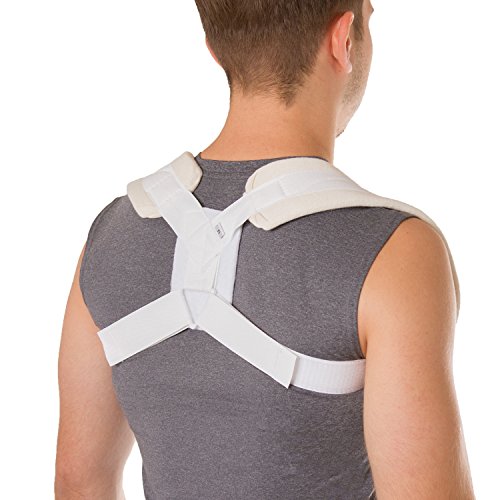
Unlike the arm slings here, this is a figure-eight brace made specifically for clavicle support. Wide padded straps and a felt-covered back pad are intended to help position the shoulders, and the closures allow adjustment. The maker describes the material as breathable and says the brace can be worn during the day or night. Choose it if a clinician recommends a figure-eight brace and the under-chest fit works for you. It is not an arm-support sling, so it may not suit someone told to keep the forearm supported against the body.
Bottom line: Pick this if a clinician recommends a figure-eight brace for clavicle support.
BraceAbility Universal Shoulder Sling
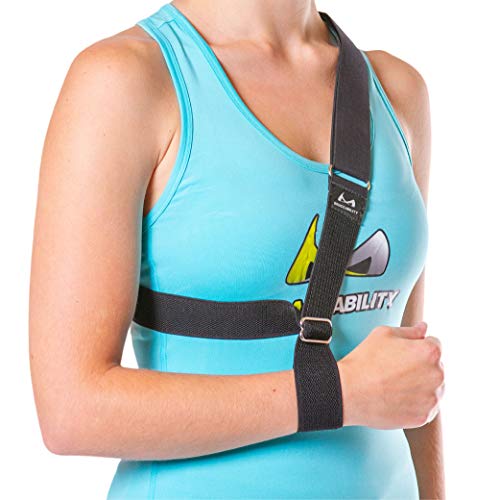
This option differs from the figure-eight brace by supporting the arm rather than drawing the shoulders back. It is a universal sling for either arm, and the maker says its waterproof design is suitable for showering and daily activities. That feature may matter to someone whose care plan calls for arm support and who needs a sling that can get wet. It does not offer the same figure-eight strap arrangement as a clavicle brace, so it is a less direct match when the goal is shoulder positioning.
Bottom line: Choose this if you need an arm sling and waterproof construction matters.
Velpeau Comfort Shoulder Immobilizer, Large

This sling stands out for its separate underbust and forearm measurements, which can help narrow the fit more precisely than a universal-size option. Its T-shaped strap wraps around the waist to hold the arm close to the body, and the maker says the materials are free of neoprene and latex. The large size is listed for an underbust of 33.5–41 inches and a forearm under 13.8 inches. It is an arm immobilizer, not a figure-eight brace, so select it only when a sling fits the care plan.
Bottom line: Pick this if its charted measurements fit and an arm sling is recommended.
WC Shoulder Immobilizer, Universal

Unlike a clavicle figure-eight brace, this design supports the upper arm and forearm with cuffs and a wide base band. The maker says it does not go over the neck or shoulder and is intended to limit shoulder rotation and abduction. The size naming has differing circumference ranges, so confirm the fit range before ordering. This may suit someone seeking an arm-support sling without a neck strap, but it is not the direct shoulder-positioning style of a figure-eight brace.
Bottom line: Consider this if a clinician recommends an arm sling without a neck strap.
How to choose a collarbone brace
Start with the support style your clinician recommends: a figure-eight brace positions the shoulders back, while a sling supports the arm. For a confirmed collarbone fracture, a sling is commonly used; figure-eight braces are not automatically better and may be less comfortable. Ask the clinician who assessed the fracture before substituting one style for another. Measure the body area specified by the manufacturer rather than choosing by clothing size, since underbust, chest circumference, and forearm length are not interchangeable. If a brace causes numbness, tingling, color change, or increased pain, remove it and seek medical advice. Do not use posture correctors as fracture immobilizers.
Clavicle brace styles and what they support
A figure-eight brace wraps over both shoulders and across the upper back, while an arm sling carries the forearm in a pouch or cuffs. These styles do different jobs, so matching the product name alone is not enough. Use this guide to distinguish the support types before discussing a choice with a clinician.
| Style | Main support | When it may fit |
|---|---|---|
| Figure-eight brace | Shoulders drawn back | When specifically recommended |
| Arm sling | Forearm and arm supported | When arm support is prescribed |
| Posture corrector | Posture cueing | Not for fracture immobilization |
Neither brace style can confirm a fracture or show whether the bone is displaced; imaging and a clinical assessment determine that.
How to get the fit right
Measure the body area named in the size chart with a flexible tape, keeping it snug but not tight. A strap that slips can fail to hold the intended position, while one that is overtightened can create pressure or restrict comfortable movement. For the Velpeau sling, the chart uses both underbust and forearm length, so check both measurements rather than relying on one. Universal sizing is not the same across brands: circumference ranges can differ, and product naming can be inconsistent. Resolve any conflicting range with the seller or clinician before ordering. After fitting, check skin and hand sensation; persistent tingling, numbness, or color change calls for prompt medical advice.
Broken collarbone brace safety
A suspected collarbone fracture should be assessed by a medical professional, especially after a fall, collision, or direct blow. Do not try to force the shoulders back or reposition a visible deformity with a brace. Seek urgent care for trouble breathing, severe worsening pain, an open wound, or a hand that becomes cold, pale, numb, or weak. A collarbone brace is not a substitute for diagnosis, and an arm sling should not be selected in place of a prescribed treatment plan. Keep the support snug enough to stay in position without tightening it until circulation or sensation changes, and contact the clinician if the fit causes new symptoms.
Frequently Asked Questions
Can a brace heal a broken collarbone?
A brace does not itself heal a broken collarbone; healing occurs as the bone repairs over time. A clinician should determine whether an arm sling or another approach is appropriate for the specific fracture.
Is a figure-eight brace better than a sling?
Not necessarily; a sling is commonly used for collarbone fractures, and a figure-eight brace can be less comfortable. Follow the treatment recommendation made after the fracture is assessed.
How tight should a clavicle brace feel?
A clavicle brace should stay in place without causing numbness, tingling, color change, or increasing pain. Loosen or remove it and seek medical advice if those symptoms appear.
When should a collarbone injury get urgent care?
Seek urgent care for trouble breathing, an open wound, severe worsening pain, or a hand that becomes cold, pale, numb, or weak. A suspected fracture should be medically assessed even without those warning signs.
Can I use a posture corrector for a fracture?
No; a posture corrector is designed to cue posture, not immobilize a fracture. Use only the support style recommended after a clinician evaluates the injury.